
Roméo et Juliette – maquette de décor – maisons et jardins — History & Facts
Could a single brushstroke hold eternity? In the delicate interplay of color and shadow, one can sense the weight of longing and loss that permeates this exquisite design. Look to the left of the canvas, where soft hues of green and blue intertwine, creating a serene backdrop for the imagined gardens of star-crossed lovers. The intricate details of the houses emerge with an elegant simplicity, their outlines defined by gentle strokes that suggest whispers of history. The composition, punctuated by the delicate curves of the gardens, invites the eye to wander as if exploring the very essence of romance itself, captured within a fleeting moment of time. Notice how the contrasting warmth of the earth-toned structures juxtaposes with the cooler tones of the sky, reflecting the duality of hope and despair inherent in the tale of love.
Each garden’s bloom, though vibrant, signifies the fragility of beauty, echoing the bittersweet fate of its characters. The interplay of light and shadow evokes a profound sense of melancholy—a reminder that love’s promise often teeters on the edge of heartache. In 1937, Georges Pitoëff created this work amid a vibrant theatrical landscape in Europe, where the arts faced an uncertain future. Working in Paris, he was not only a painter but also a stage designer, capturing the essence of Roméo et Juliette through his artistic vision.
The world around him was marked by a growing tension, yet he infused this maquette with a timeless allure, bridging the gap between the stage and the heart of those who would gaze upon it.
More Artworks by Georges Pitoëff
Browse all →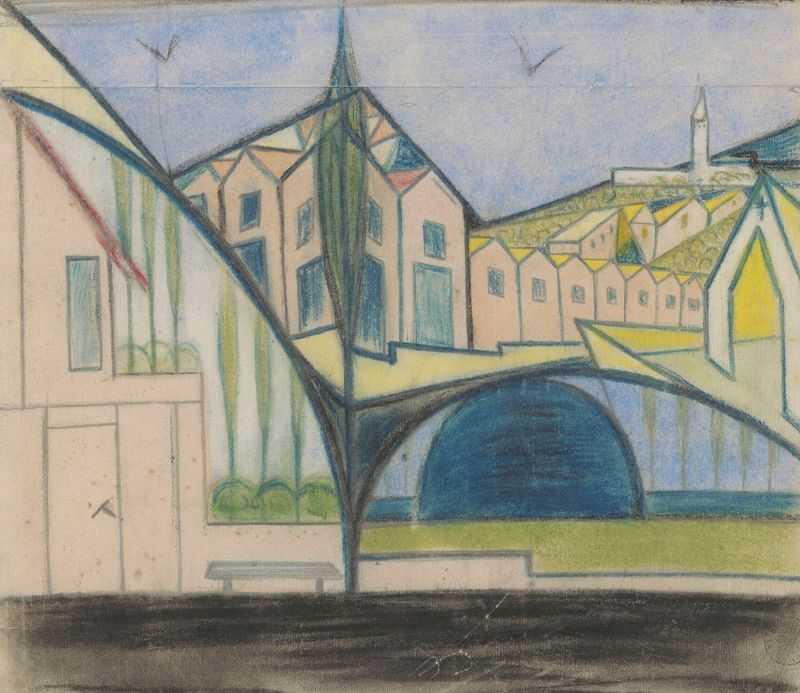
More Architecture Art
Browse all →
The statue of Liberty
Frédéric Auguste Bartholdi

View of Houses in Delft, Known as ‘The Little Street’
Johannes Vermeer

View of Houses in Delft, Known as ‘The Little Street’
Johannes Vermeer

The Cathedral in Rouen. The portal, Grey Weather
Claude Monet

The yellow house
Vincent van Gogh

The Church in Auvers-sur-Oise, View from the Chevet
Vincent van Gogh