
Route blanche a la moliere du Sable — History & Facts
In the quiet embrace of a fleeting moment, life becomes both a canvas and a vessel for mortality's whispers. This painting captures the delicate interplay between existence and oblivion, where each brushstroke holds a poignant truth about our transience. Look to the left at the winding path that leads into a sun-drenched landscape, inviting us to journey deeper into the scene. Notice how the colors blend seamlessly—the warm ochres of the earth juxtaposed against the lush greens of foliage.
The soft play of light, filtered through trees, illuminates the figures in the distance, their gestures hinting at a shared purpose. This vibrant yet melancholic palette draws the eye and pulls on the heartstrings, evoking a sense of longing and reflection. Delve into the tension between the vibrant life displayed and the looming shadows. The path, though inviting, suggests a journey laden with uncertainty.
The figures seem absorbed in their contemplation, creating a contrast between the vitality of the landscape and the stillness of the soul. Each detail, from the gentle rustle of leaves to the distant horizon, beckons the viewer to ponder not only the beauty of life but its inevitable end. Eugen Jettel painted Route blanche a la molière du Sable in 1896, a time marked by a burgeoning interest in Impressionism across Europe. Residing in Paris, he found inspiration in the city’s vibrant art scene, while grappling with personal challenges.
This piece reflects not only his technical mastery but also the underlying existential themes that permeated the artistic discourse of his time.
More Artworks by Eugen Jettel
Browse all →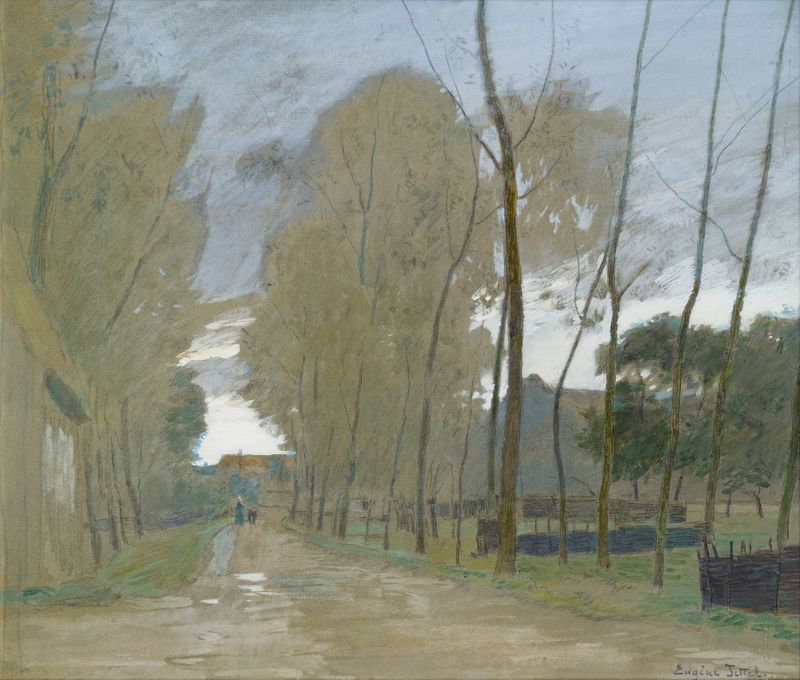
Motiv aus der Bretagne
Eugen Jettel
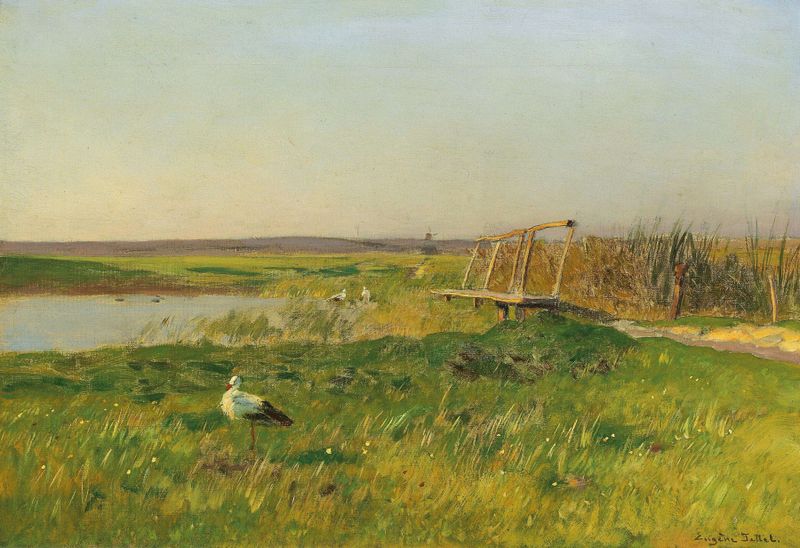
Frühlingslandschaft mit Störchen an einem Weiher
Eugen Jettel

Rinder auf Sommerwiese
Eugen Jettel
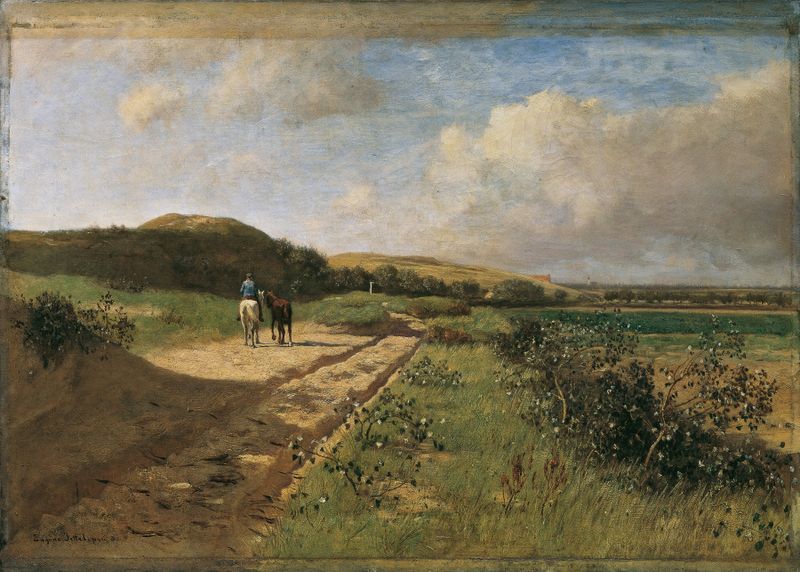
Dünen bei Katwijk
Eugen Jettel
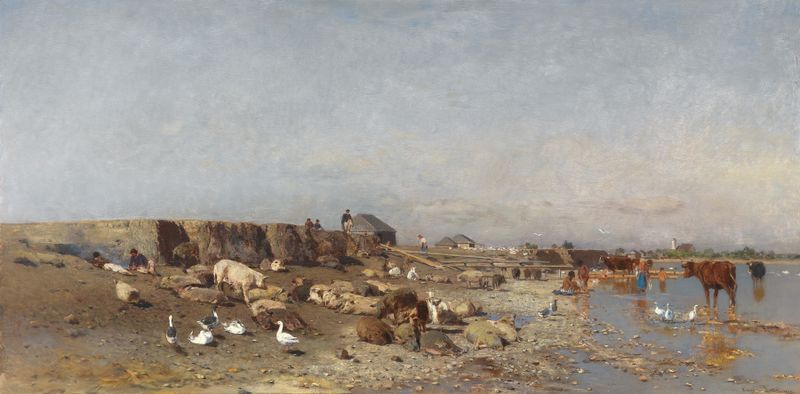
Motiv aus Szered an der Waag
Eugen Jettel
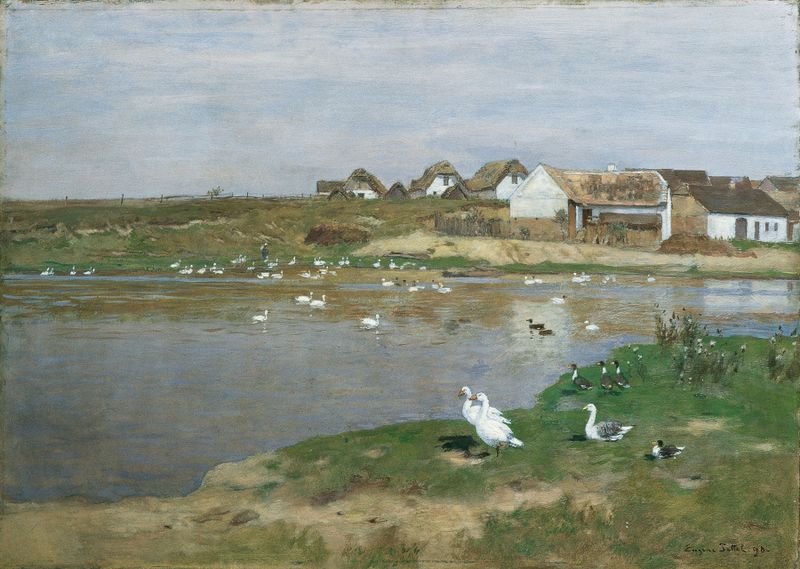
Der Gänseteich in Kotting-Neusiedl
Eugen Jettel

Flusslandschaft Mit Boot
Eugen Jettel

Flusslandschaft mit Kühen
Eugen Jettel

Dorfpartie Strohhütten aus Staatz
Eugen Jettel

Abendlandschaft
Eugen Jettel





