Route De Laon — History & Facts
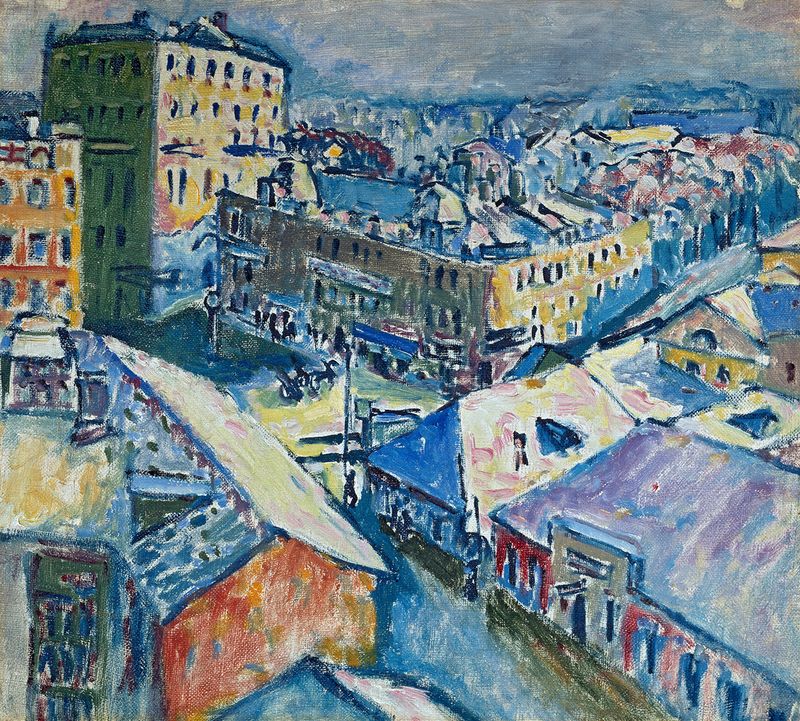
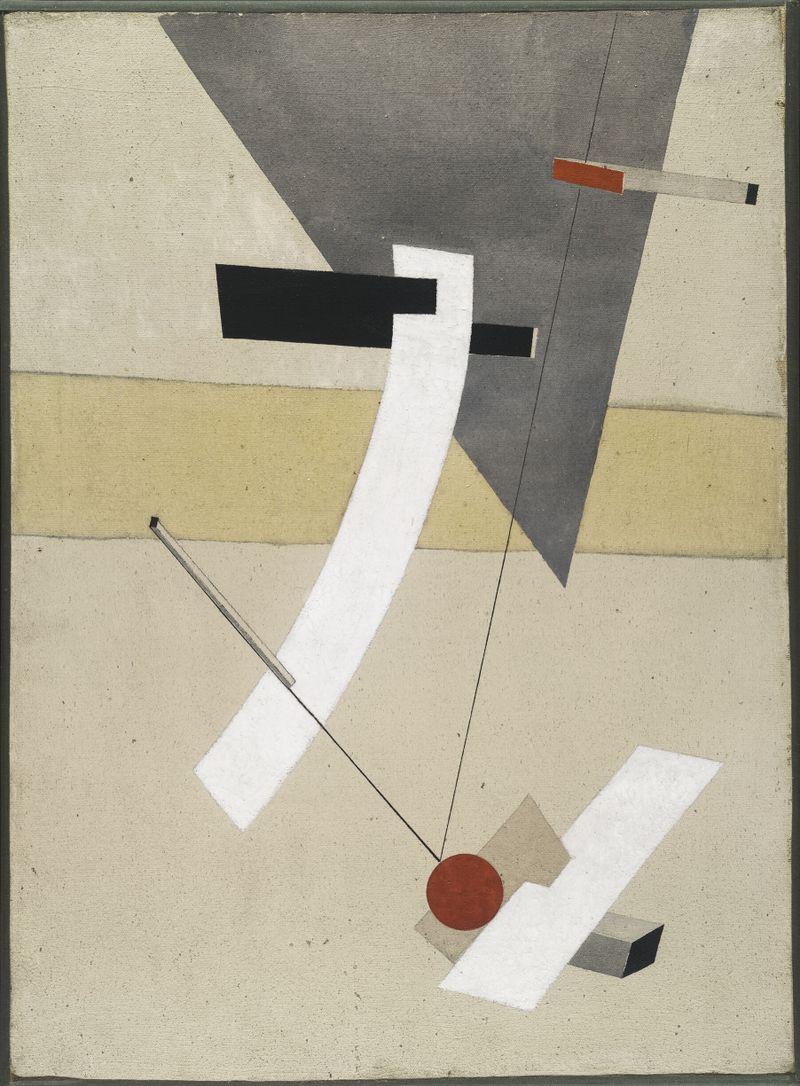
What if beauty was never meant to be finished? In Route De Laon, vibrant colors swirl and intersect in a kaleidoscope of motion, implying that art, much like life, is an ever-evolving journey rather than a final destination. Look to the center of the canvas where bold, geometric shapes collide, forming a dynamic intersection that draws the eye. Notice how the reds and oranges radiate warmth, contrasting with cool blues and greens that hint at the movement of time and space. The circular forms suggest a sense of rhythm, as if the viewer can hear the pulse of the city within the painted lines.
Delaunay’s technique of layering color creates a harmonious yet dissonant blend that invites both admiration and contemplation. In this work, the void emerges as a significant theme, evoking the tension between chaos and clarity. Amidst the vibrant disarray, the viewer might sense a deeper yearning for connection, suggesting that the journey through beauty is often fraught with uncertainty. The dynamic forms could symbolize the ever-shifting nature of modern life, where the search for meaning is as critical as the destination itself, reflecting the artist's exploration of urban existence. Created in 1912, Route De Laon reflects Robert Delaunay's passionate involvement in the burgeoning movement of Orphism, which emphasized the interplay of color and light.
At this time, Delaunay was residing in Paris, where artistic currents were rapidly changing in response to the industrial age. His innovative approach to abstraction was a reaction to the tumultuous yet exhilarating transformations of contemporary life, marking a pivotal moment in the evolution of modern art.