Ruhender Wildbach — History & Facts
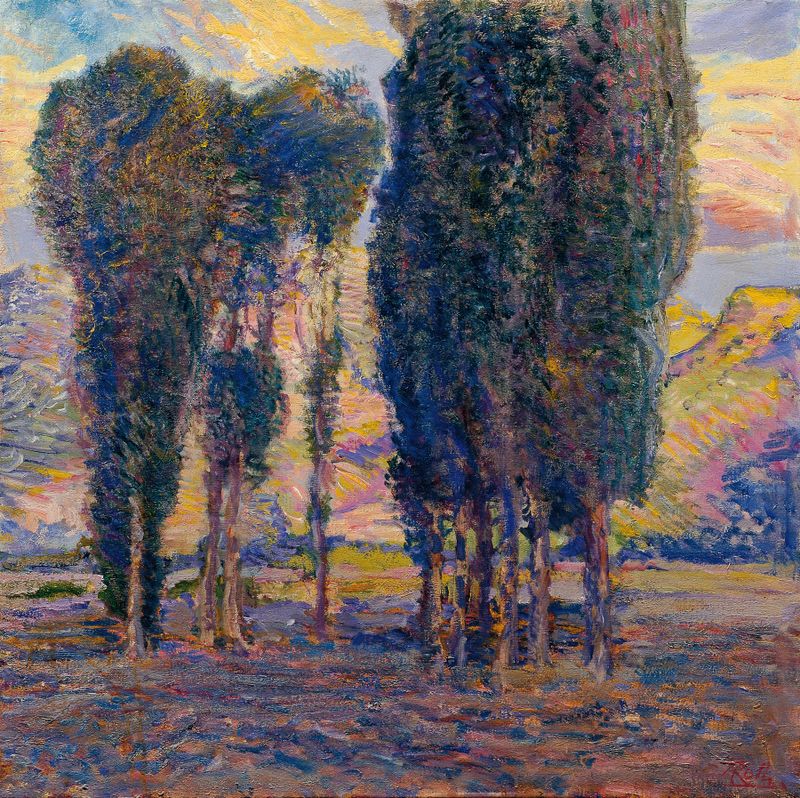
In the stillness of a moment, a river flows, whispering secrets through the verdant embrace of nature's palette. Here, the tumult of the world outside fades, leaving only the essence of peace and the unspoken narratives that linger beneath the surface. Look to the left at the tranquil waters, where gentle ripples catch the light and dance with reflections of deep greens and soft blues. The artist employs a vivid yet harmonious color scheme that draws the eye towards the water, creating a serene focal point amidst the surrounding foliage.
Notice how the brushstrokes vary in intensity, from smooth, flowing lines in the water to more textured strokes in the leaves, emphasizing the contrast between fluidity and solidity. The interplay of light and shadow here suggests a deeper tension, as if the landscape is caught in a moment of quiet upheaval, mirroring the revolutionary spirit of its time. The tranquil scene belies the complexity of nature, hinting at the unseen forces at play—much like the socio-political changes shaping the early 20th century. Each detail, from the sturdy rocks that anchor the riverbank to the delicate blossoms, encapsulates the duality of calm and chaos that defines existence. In 1912, the artist found himself navigating a period of artistic exploration in Germany, where movements like Expressionism began to challenge traditional norms.
This painting reflects not only his personal quest for creative expression but also the broader dialogue of change that was sweeping through the art world, setting the stage for a pivotal era in modern art.