Ruin of the Tiefburg at Handschuhsheim — History & Facts
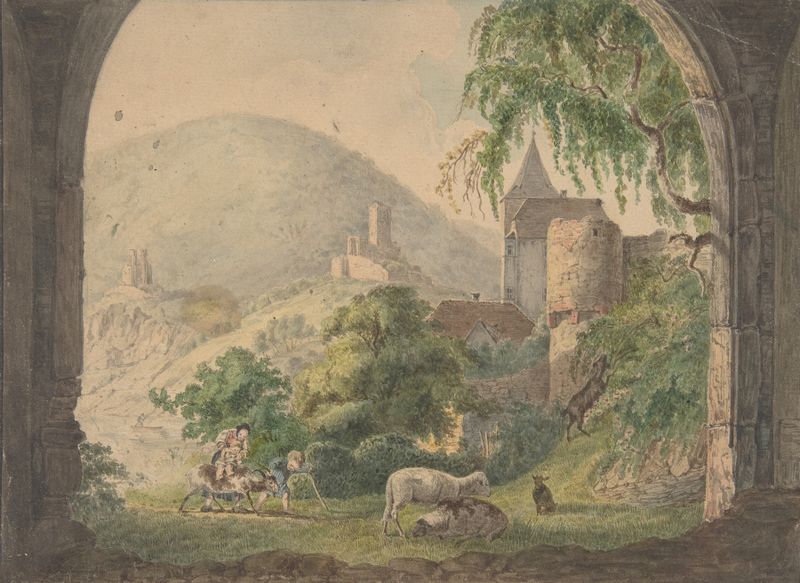
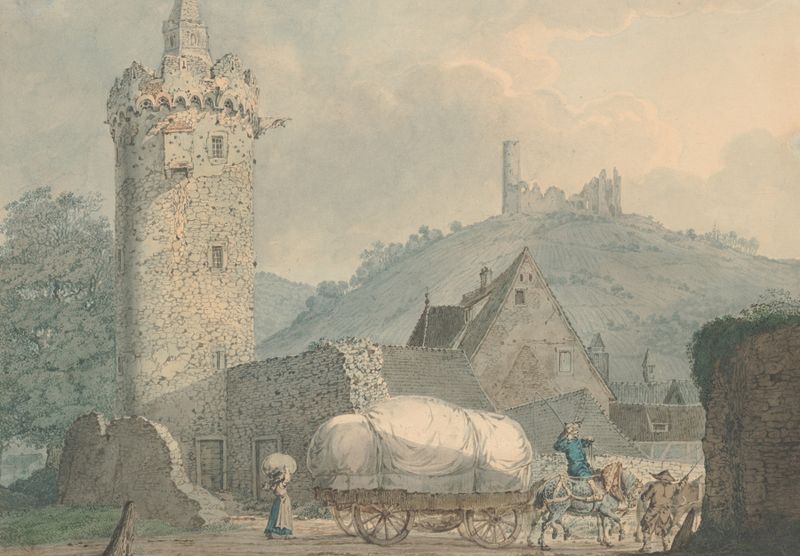
Could beauty survive in a century of chaos? In Ruin of the Tiefburg at Handschuhsheim, an ethereal light bathes a crumbling edifice, suggesting that even amidst decay, divinity lingers, whispering to those who seek its presence. Focus your gaze on the majestic remains of the once-mighty tower, its weathered stones softened by a gentle wash of sunlight. Notice how the artist employs a delicate palette of greens and browns, drawing the eye toward the lush foliage that embraces the ruins like a tender embrace. The skillful brushwork captures the interplay of light and shadow, evoking a sense of nostalgia as the past and present intertwine in this serene landscape. As you delve deeper into the scene, consider the contrast between the fortress's fading grandeur and the vibrant life surrounding it.
This juxtaposition speaks to the resilience of nature, suggesting that beauty endures even as human endeavors crumble. The distant hills, clothed in mist, reflect a divine presence, hinting at a spiritual journey that transcends the physical decay. The ruin, rather than merely a remnant of history, becomes a metaphor for the enduring spirit of creation and reverence. Carl Philipp Fohr painted this work in 1813 during his time in Germany, a period marked by turmoil following the Napoleonic Wars.
As he navigated the shifting landscape of Romanticism, he sought to capture a sense of sublime beauty amidst the ruins of civilization. Fohr’s art resonated with a yearning for spiritual connection, as well as a reflection on the fragility of human achievement in the face of nature’s eternal cycle.