View of Weinheim on the River Neckar — History & Facts
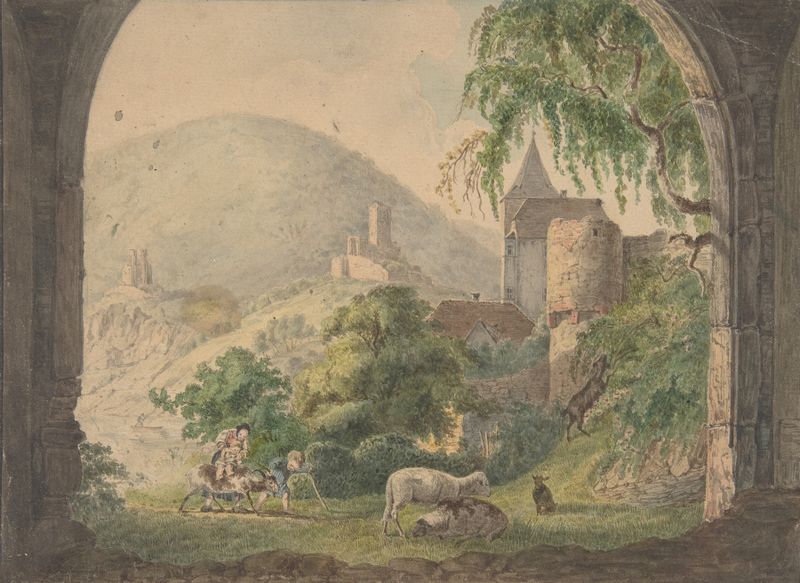
Could beauty survive in a century of chaos? As the echoes of conflict reverberated throughout Europe, the landscapes remained steadfast, whispering tales of resilience and tranquility. Focus first on the gentle curves of the river as it winds through the verdant hills, leading your gaze toward the quaint architecture nestled along the banks. The interplay of light and shadow emphasizes the delicate balance of nature and civilization, while the soft palette—blues and greens intermingled with warm earth tones—evokes a sense of harmony amidst uncertainty. Notice how the wisps of clouds dance across the sky, their reflection shimmering on the water's surface, symbolizing fleeting moments amid the chaos. Beneath its serene exterior, the painting harbors underlying tensions of solitude and serenity.
The stillness of the scene contrasts sharply with the tumultuous history of the time; the viewer can almost sense the weight of the era pressing down on the idyllic setting. The juxtaposition of the tranquil landscape against the backdrop of societal upheaval invites contemplation about the resilience of beauty, as if reminding us that even in times of madness, nature persists in its quiet splendor. Carl Philipp Fohr created this work between 1800 and 1818, during a period marked by the Napoleonic Wars and significant shifts in artistic expression across Europe. Living in Germany, he was influenced by the Romantic movement, which sought to capture the sublime beauty of nature and evoke deep emotional responses.
This piece reflects not only his skillful command of landscape painting but also a yearning for peace in a tumultuous world.