
Ruines, rue Mautroté — History & Facts
In a world increasingly marked by the scars of war, emptiness often becomes a haunting reminder of what once was. The essence of loss and abandonment lingers in the spaces we once filled with vibrant life. Look closely at the foreground, where the cracked stones of the street echo the weight of forgotten footsteps. Notice how the muted tones of gray and brown dominate the canvas, conveying a somber stillness that envelops the scene.
The subtle interplay of light and shadow heightens this sense of desolation, guiding the viewer’s gaze to the vacant windows of the crumbling buildings, which stand like sentinels of a lost era. Within this silence lies a poignant contrast: the architectural remnants suggest the resilience of human creation, yet they are set against the backdrop of decay. Each chipped surface and faded wall speaks of stories untold, of lives interrupted, and of a community that once thrived. The artist captures this tension masterfully, allowing the emptiness to transcend mere absence and evoke a profound sense of nostalgia. Between 1914 and 1918, during the tumult of World War I, Ruines, rue Mautroté was born.
In Paris, where the artist found himself amid a city grappling with the devastation of war, he translated the spirit of the times into his work. The aftermath of conflict permeated artistic expression, and Devambez’s choice to depict the remnants of a bustling street reflects both his personal experiences and the broader cultural shifts occurring in Europe.
More Artworks by André Victor Édouard Devambez
Browse all →
L’Escorte du président Wilson, place Saint-Augustin
André Victor Édouard Devambez
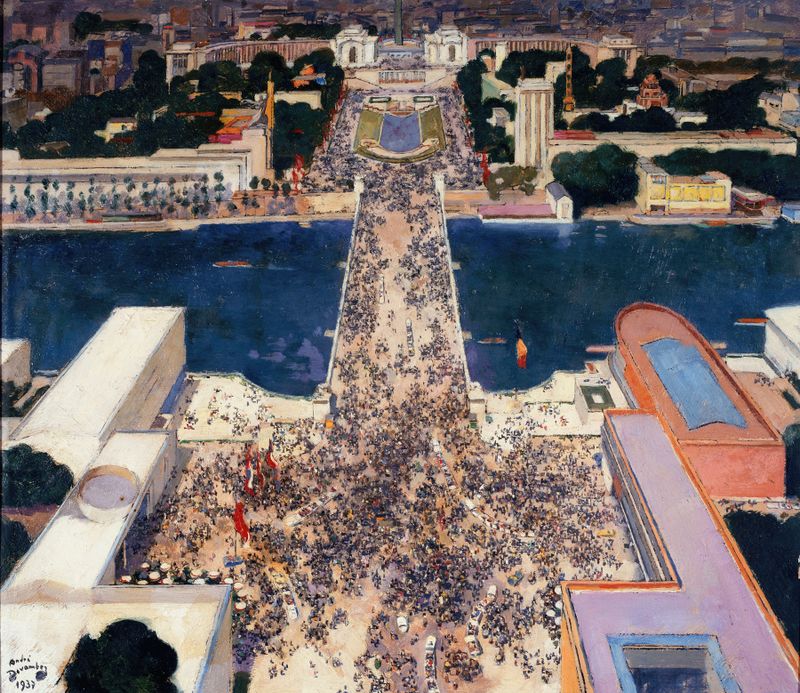
La colline de Chaillot pendant l’exposition Internationale de 1937, vue de la Tour Eiffel.
André Victor Édouard Devambez
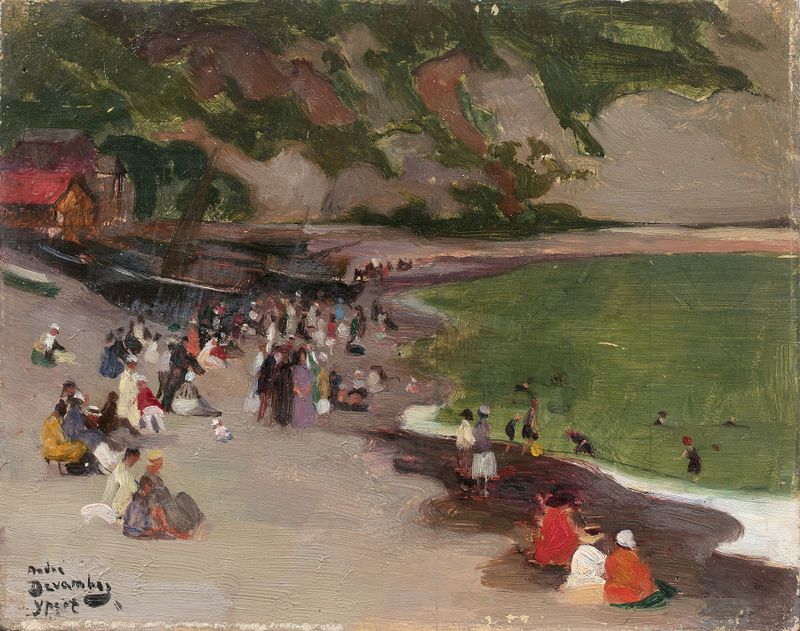
Vue animée de la plage d’Yport
André Victor Édouard Devambez

Afternoon tea in the shade
André Victor Édouard Devambez

Rixe sur une place de village, vue de haut
André Victor Édouard Devambez

L’Assaut
André Victor Édouard Devambez
Le retour de classe
André Victor Édouard Devambez
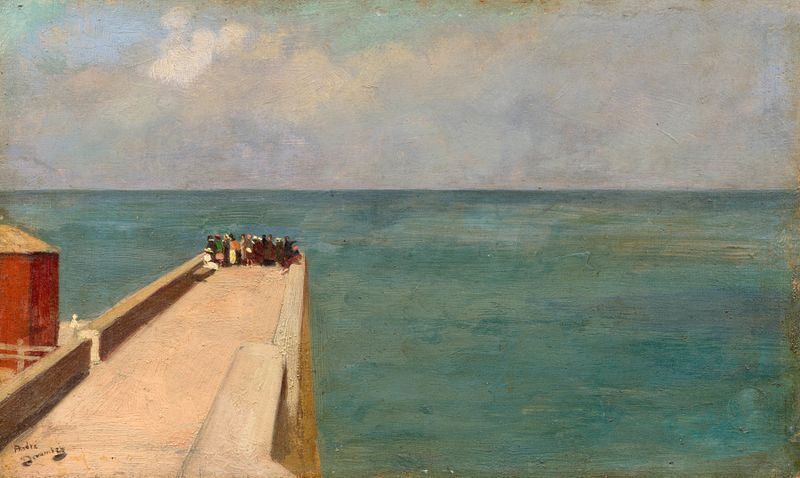
La jetée
André Victor Édouard Devambez

Ruines de la rue Mazel
André Victor Édouard Devambez
More Architecture Art
Browse all →
The statue of Liberty
Frédéric Auguste Bartholdi

View of Houses in Delft, Known as ‘The Little Street’
Johannes Vermeer

View of Houses in Delft, Known as ‘The Little Street’
Johannes Vermeer

The Cathedral in Rouen. The portal, Grey Weather
Claude Monet

The yellow house
Vincent van Gogh

The Church in Auvers-sur-Oise, View from the Chevet
Vincent van Gogh