Ruins in an Italian Landscape — History & Facts
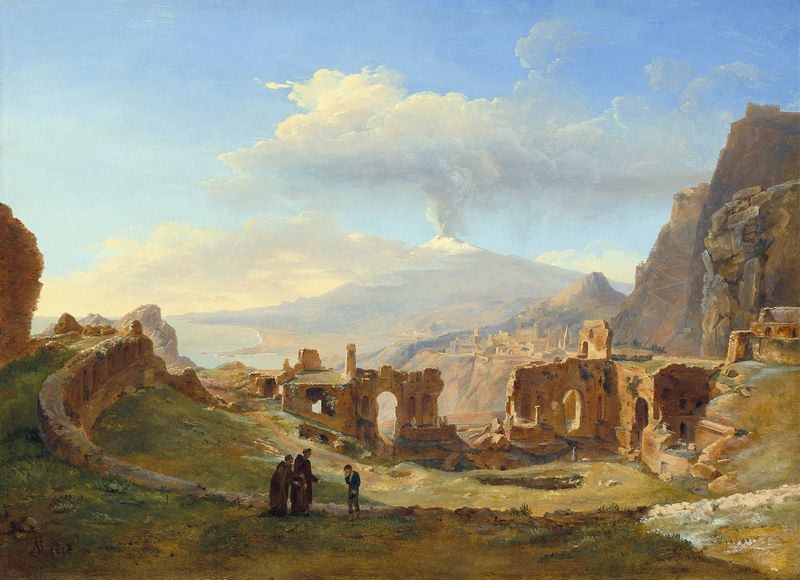
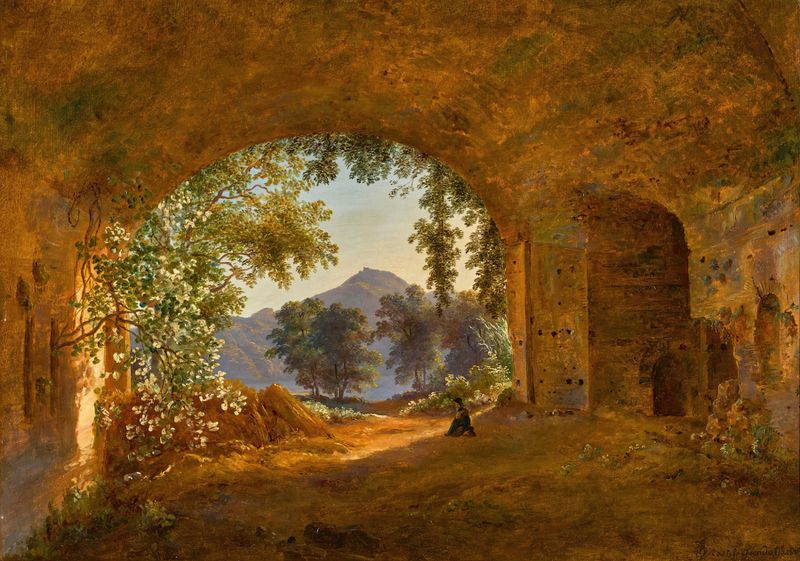
Did the painter know this moment would outlive them? The gentle whisper of sunlight dances across the crumbling stone, casting shadows that tell tales of time lost and dreams abandoned in the heart of Italy. Focus on the warm hues that envelop the landscape; the ochres and umbers breathe life into the ruins themselves, evoking a sense of nostalgia. Notice how the light drapes over the dilapidated structures, highlighting their weathered textures while giving them a vibrant, almost sacred presence. The composition creates a harmonious balance, where the remains of civilization intertwine with nature's reclaiming grasp, inviting you to explore every corner. In the delicate juxtaposition of decay and vibrancy lies a poignant commentary on transience and resilience.
The ruins, while forlorn, are not merely remnants of the past; they stand as witnesses to history, echoing stories of those who once inhabited this landscape. Each blade of grass and every creeping vine signifies life perpetuating despite the passage of time, offering a quiet yet profound reminder of the beauty found in impermanence. Painted in 1853, this work emerged during a period when Louise-Joséphine Sarazin de Belmont was establishing her reputation in a male-dominated art world. Living in France, she sought to capture the serene beauty of foreign landscapes at a time when Romanticism was merging into Realism.
Her approach in this piece reflects an evolving sensibility in art that sought emotional depth alongside technical precision, creating a bridge between the two movements.