
Ruins of the Church of the Virgin with the Tomb of Genevieve and Siegfried, Count Palatine of the Rhine, in the Moselle Valley near Andernack — History & Facts
Did the painter know this moment would outlive them? In the delicate balance between ruin and revival, innocence lingers like a whisper among the remnants of a once-vibrant past. Look to the left, where the skeletal outlines of the church rise against the soft hues of a dawn sky. The interplay of light and shadow caresses the crumbling stones, emphasizing their texture and history. Notice how the painter skillfully uses muted earth tones, inviting a sense of nostalgia and melancholy while drawing the eye toward the central tomb.
Here, the intricate details of the memorial emerge, inviting contemplation on life, death, and memory amid the serene backdrop of the Moselle Valley. Yet, this artwork reveals more than a mere archaeological representation; it reflects the tension between decay and beauty. The tomb, adorned with symbols of both reverence and loss, speaks to a deep-seated yearning for what has been forgotten, while the surrounding ruins echo the fragile nature of existence. In juxtaposing the vitality of nature with the stark reminder of mortality, the piece captures a poignant moment where innocence persists in the face of time’s relentless march. In 1821, Domenico Quaglio the Elder was immersed in the Romantic movement's embrace of the sublime and the historical narrative.
Painting amidst the backdrop of the burgeoning fascination with nature and the past, he sought to memorialize the intersection of humanity and the environment. The work reflects a period marked by a profound exploration of identity and memory, as well as the turbulent changes sweeping through Europe.
More Artworks by Domenico Quaglio the Elder
Browse all →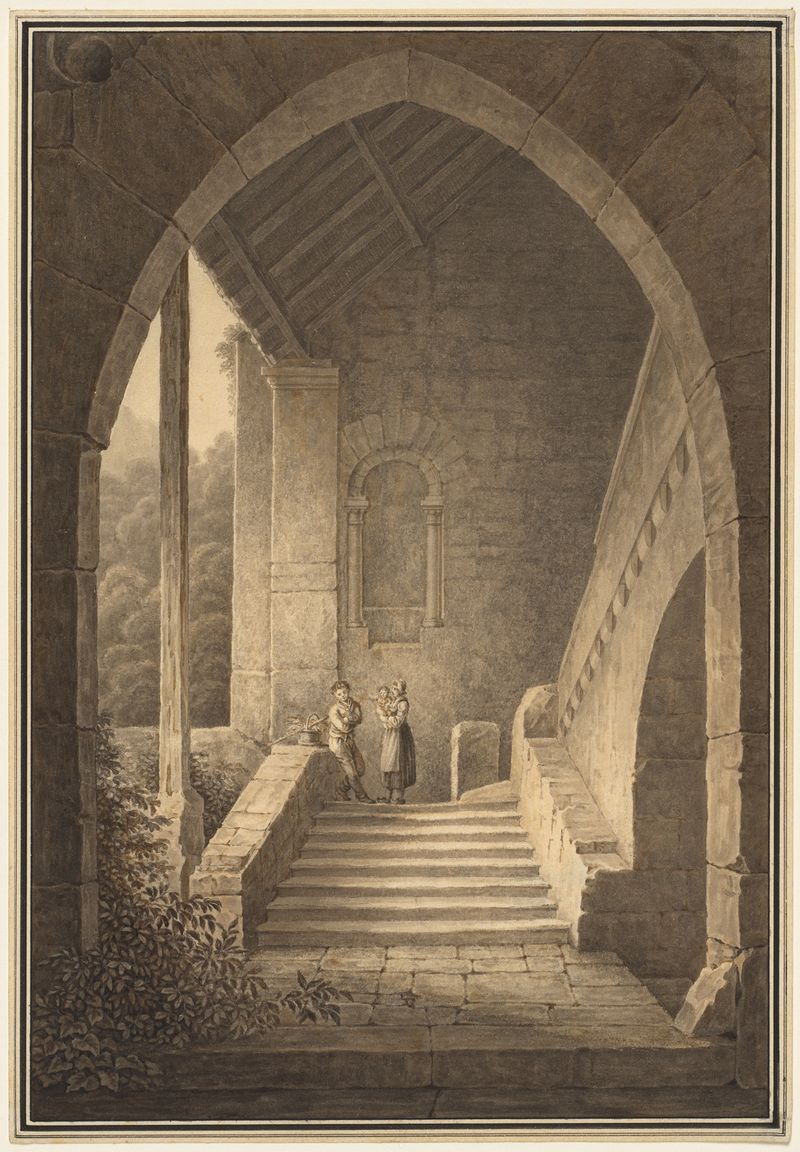


More Architecture Art
Browse all →
The statue of Liberty
Frédéric Auguste Bartholdi

View of Houses in Delft, Known as ‘The Little Street’
Johannes Vermeer

View of Houses in Delft, Known as ‘The Little Street’
Johannes Vermeer

The Cathedral in Rouen. The portal, Grey Weather
Claude Monet

The yellow house
Vincent van Gogh

The Church in Auvers-sur-Oise, View from the Chevet
Vincent van Gogh