Der Sommerremter im Hochmeisterpalast der Marienburg — History & Facts
In Der Sommerremter im Hochmeisterpalast der Marienburg, nostalgia unfurls like the delicate petals of a wilting flower, beckoning us to reflect on ephemeral beauty. Look closely at the center of the composition, where an intricately adorned summer hall invites the viewer into its serene embrace. The warm hues of ochre and soft greens blend seamlessly, while dappled sunlight spills through large windows, casting gentle shadows that play upon the walls. Notice how the ornate details of the furnishings and architectural elements create a harmonious dialogue, revealing Quaglio’s meticulous attention to both form and atmosphere. Beneath the surface, this painting evokes a sense of melancholic longing.
The juxtaposition of light and shadow suggests the passage of time, hinting at both the splendor of the past and the inevitability of change. The absence of figures in this space amplifies the feeling of solitude, inviting contemplation on the memories associated with such a setting. It becomes not just a room, but a vessel for recollections—a space where the echoes of laughter and whispers of history linger in the air. Created between 1835 and 1836, this work emerged during a period of artistic transition in Europe, where Romanticism flourished as a counterpoint to the Enlightenment’s rationalism.
Quaglio, rooted in the tradition of topographical painting, found himself at the intersection of nostalgia and historical representation, capturing the essence of a bygone era while navigating the rapid changes of the time. His work reflects a yearning for the past, a sentiment resonating deeply with the cultural landscape of 19th-century Europe.
More Artworks by Domenico Quaglio the Elder
Browse all →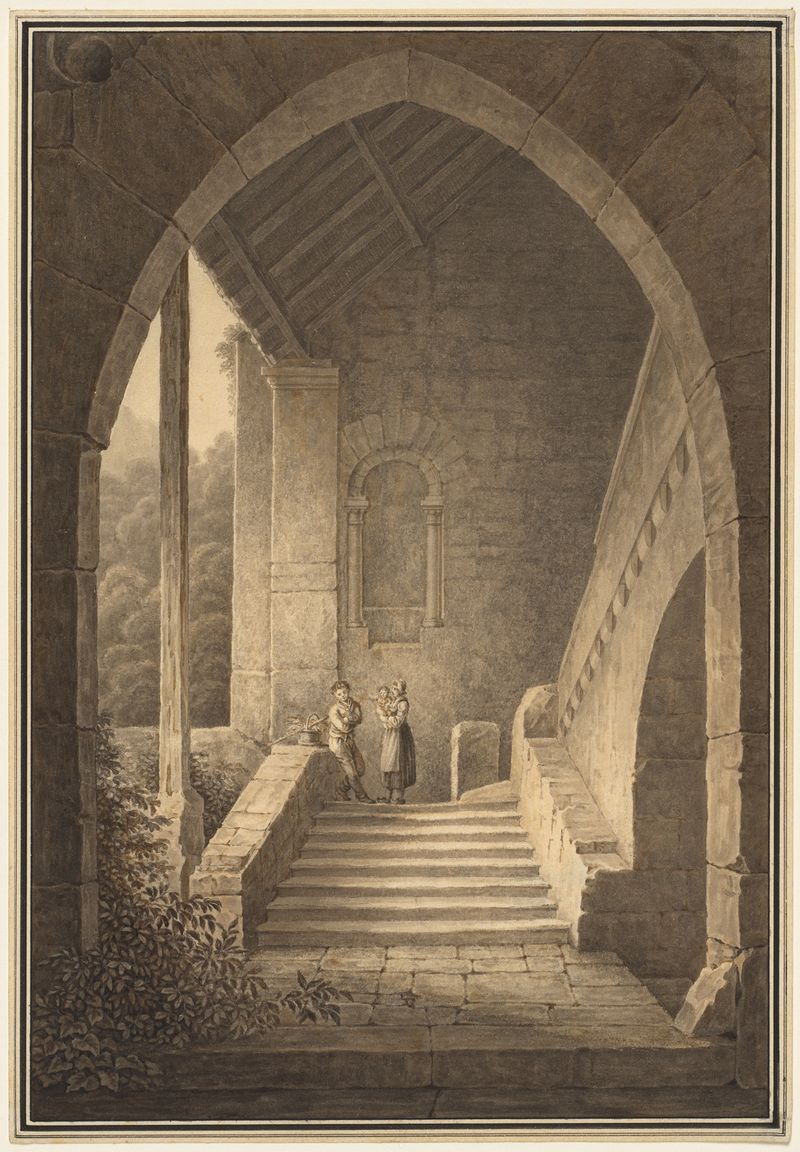
Outer Staircase of a Gothic Ruin
Domenico Quaglio the Elder

Munich-Hohenschwangau, Bavaria
Domenico Quaglio the Elder

St. Margaret’s Chapel in the Imperial Castle at Nuremberg
Domenico Quaglio the Elder
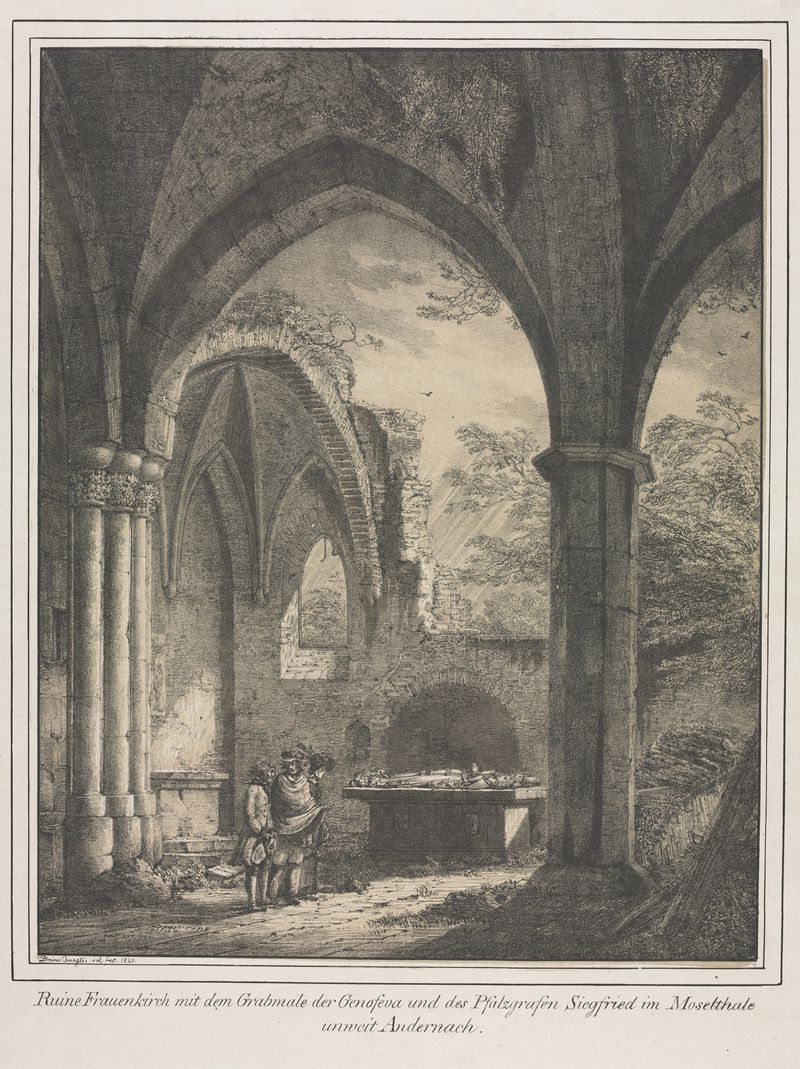
Ruins of the Church of the Virgin with the Tomb of Genevieve and Siegfried, Count Palatine of the Rhine, in the Moselle Valley near Andernack
Domenico Quaglio the Elder