Rural Landscape — History & Facts
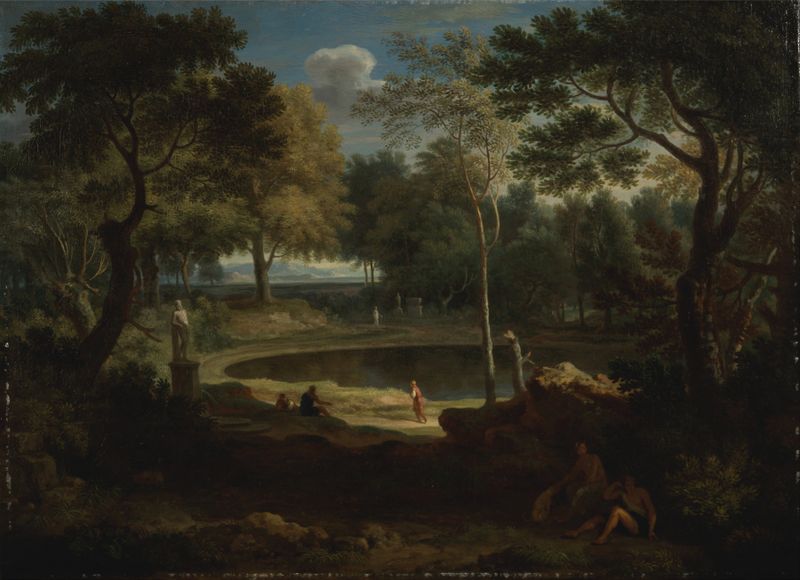
Where does light end, and longing begin? In the quiet embrace of nature, each brushstroke invites us to contemplate our dreams, weaving a tapestry of tranquility and reflection. Look to the horizon, where soft greens and gentle blues meld seamlessly, revealing the breathtaking expanse of a serene countryside. The textured brushwork breathes life into the grassy fields, while wisps of clouds caress the canvas with their ethereal presence. The golden light of a setting sun casts a warm glow, emphasizing the delicate interplay between shadow and illumination.
Notice how the trees stand sentinel-like, their forms both sturdy and graceful, guiding the viewer’s eye towards the distant, rolling hills. At first glance, the painting may appear merely pastoral, yet a deeper inspection reveals a profound exploration of solitude and longing. The idyllic scenery evokes a sense of peace, but it is punctuated by the absence of human figures, suggesting a yearning for connection that remains unfulfilled. The gentle undulations of the landscape mirror the emotional highs and lows of human experience, reflecting the artist's own relationship with nature and the passage of time. William Taverner painted this work between 1750 and 1755 during a period of burgeoning interest in landscape painting in England.
Amidst the Enlightenment's focus on nature and the sublime, Taverner was influenced by the romantic ideals of his contemporaries, seeking to capture not just the beauty of the world around him but also the introspective emotions that such vistas could inspire. This painting is a testament to that exploration, blending technical skill with deep emotional resonance.