Classical Landscape — History & Facts
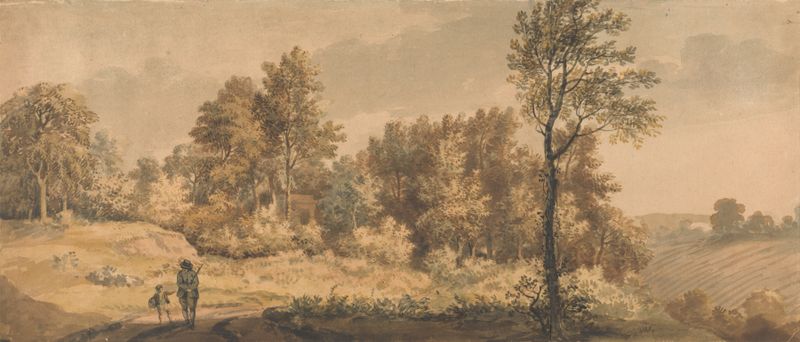
In the golden haze of nostalgia, echoes of the past linger, inviting us to wander through landscapes painted with memory and longing. Look to the center, where the rolling hills stretch endlessly, a tapestry of greens and browns that beckons the eye. Notice how the sky, imbued with soft pastels, seems to cradle the horizon, reflecting the warmth of a fading day. The masterful brushwork creates a sense of texture, while a delicate interplay of light and shadow breathes life into the trees, creating an immersive depth that draws you into the scene. Beneath its tranquil surface, tensions of solitude and serenity pulse within the composition.
The solitary figure on the path hints at a journey both physical and emotional, a contemplation of one's place within nature's embrace. Tiny details, like the rustle of leaves or the distant silhouette of a cottage, whisper stories of time’s passage, evoking a sense of yearning for simpler days. The contrast between vibrant life and the quietude of the landscape suggests a bittersweet reflection on what once was, a moment frozen in the continuum of existence. William Taverner painted this work during a period in which English landscape painting was evolving, although the exact date remains uncertain.
Living amidst the Romantic movement's embrace of nature and emotion, Taverner was influenced by the growing appreciation for the pastoral and the idyllic, aligning his brush with sentiments of nostalgia that echoed throughout the era. His landscapes resonate with a longing for connection to a world that feels both distant and cherished.