Sailing on a Stormy Sea — History & Facts
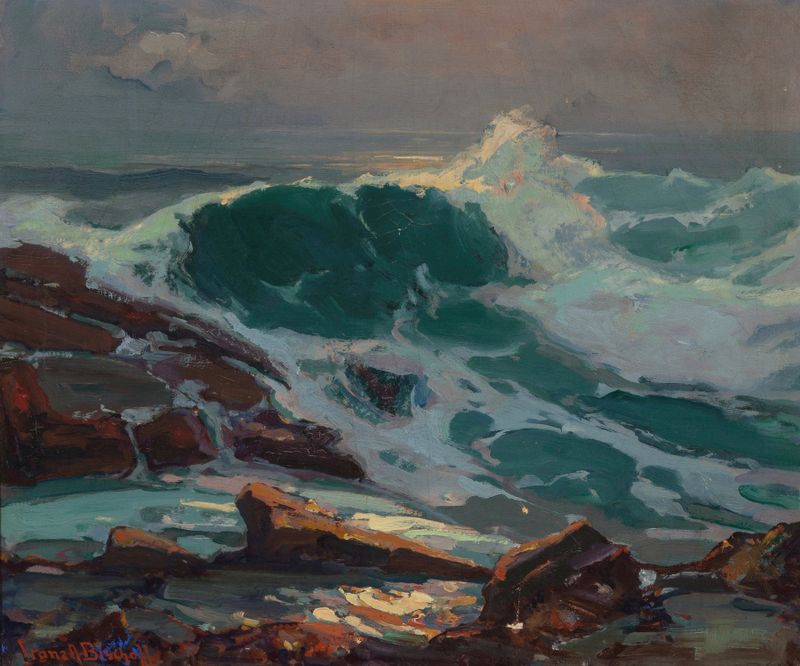
When did color learn to lie? Beauty can be a treacherous tempest, as vibrant hues often obscure the tumult beneath. Look closely at the canvas, where a chaotic interplay of blues and grays captures the essence of an unforgiving sea. Notice how the turbulent waves twist and curl, each brushstroke brimming with energy, pulling you into the heart of the storm. The sunlight, filtered through the dense, roiling clouds, casts shimmering highlights on the cresting waves, creating a stunning contrast that invites awe and trepidation alike. Yet, amid this breathtaking chaos, there’s a deeper narrative unfolding.
The dark, foreboding clouds loom overhead, suggesting not just a physical storm but the emotional turmoil of existence. The vibrant colors, while outwardly beautiful, may mask the underlying struggle between nature’s fury and human frailty. This tension invokes a sense of vulnerability, reminding us that within beauty lies an unpredictable, often daunting, reality. Franz Bischoff painted this piece during a period of personal reflection, likely around the early 20th century when he was exploring the interplay of light and color.
Living in a world that was rapidly changing with industrialization and modernism, Bischoff's romantic style clashed with the evolving art scene, urging him to embrace the beauty of nature even amidst chaos. In Sailing on a Stormy Sea, he captures not only the storm’s fury but also the courage required to navigate through life’s turbulent waters.