Saint Anthony’s Quay in Ghent — History & Facts
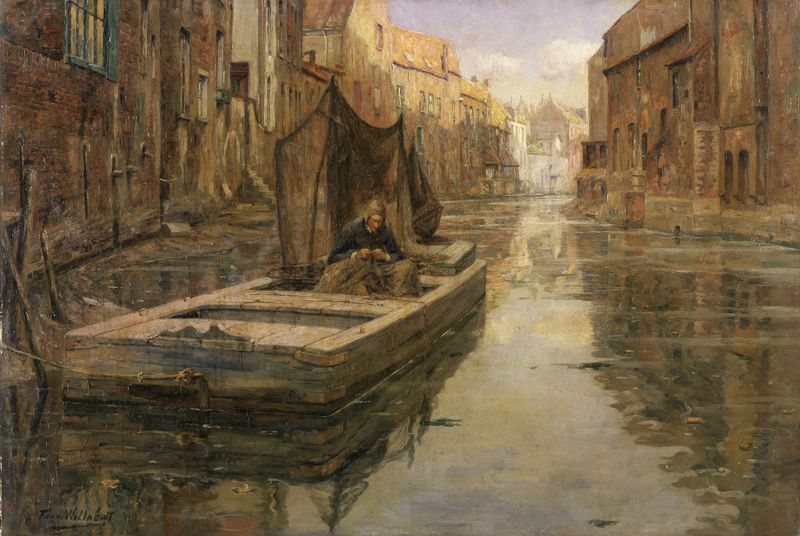
It holds a mirror up to our existence, evoking the delicate dance between life’s vibrancy and its inevitable conclusion. Focus on the shimmering water at the forefront, where boats gently bob as if caught in a fleeting moment of time. Notice how the muted greens and grays of the land blend seamlessly into the soft blues of the sky, creating an unbroken harmony that invites deep reflection. The play of light on the water, illuminated by a gentle sun, casts an ethereal glow, accentuating the fleeting nature of each ripple as they traverse the surface. Beneath the tranquil exterior lies a tension between the vitality of the scene and the shadow of life's transience.
The boats, seemingly bustling with activity, hint at the lives and stories that intertwine on this quay, yet their stillness suggests a moment frozen in time, echoing the quiet certainty of mortality lurking beneath the surface. The juxtaposition of lively colors and subdued tones serves as a reminder that even in the midst of vibrancy, the specter of time is a constant presence. Ferdinant Willaert painted Saint Anthony’s Quay in Ghent in the 19th century, during a time of great change in Belgium. As industrialization reshaped the landscape, artists sought to capture both the beauty of nature and the evolving urban life around them.
Willaert, known for his detailed depictions of waterscapes, used this moment to express a poignant contemplation of life, inviting viewers to reflect on the ebb and flow of existence amid the bustling activities of a growing city.