
Saint Patrick’s Cross, Cashel — History & Facts
When did color learn to lie? In a world steeped in tradition, the vivid hues of Saint Patrick’s Cross, Cashel evoke a haunting sense of betrayal, as they mask the historical truths embedded within their brilliance. Focus on the lush greens and deep blues that dominate the landscape, inviting the viewer to explore the serene, yet deceptive setting. Notice how the cross, a beacon of faith and resilience, stands boldly against the backdrop of a tumultuous sky. The contrasts between light and shadow are not merely decorative; they conjure an atmosphere where hope wrestles with despair, inviting contemplation about the secrets held within the stone. Hidden meanings lie in the intricate details of the cross itself.
The wear on its surface tells a story of time's passage and the burdens of belief. Symbols of faith intertwine with nature, suggesting a unity that is both comforting and confounding — a reminder that devotion can sometimes harbor latent conflict. The colors, while initially vibrant, invoke a sense of foreboding, prompting an exploration of the gap between perception and reality. John Skinner Prout painted this piece during a period when he was deeply engaged with the Romantic movement in the 19th century, focusing on the interplay of nature and history.
Living in England, he sought to capture the essence of the British Isles, reflecting the tumultuous political landscape and the shifting sentiments around identity and faith during that time. This backdrop informed his artistic vision, blending national pride with the complexities of historical narrative.
More Artworks by John Skinner Prout
Browse all →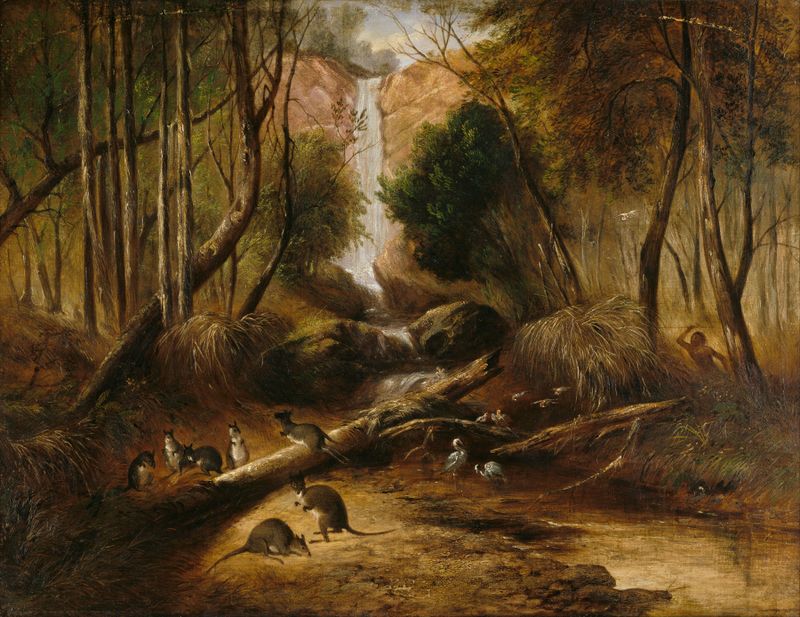
Bush landscape with waterfall and an aborigine stalking native animals, New South Wales
John Skinner Prout
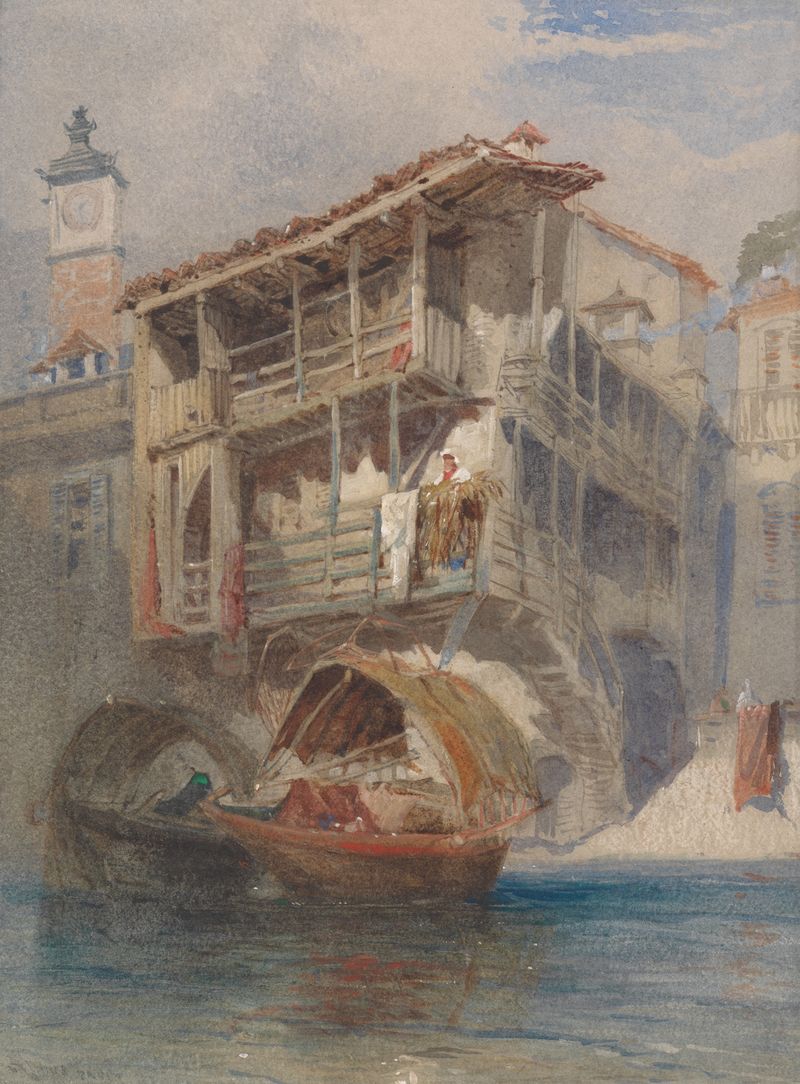
Isola Bella, Lago Maggiore
John Skinner Prout
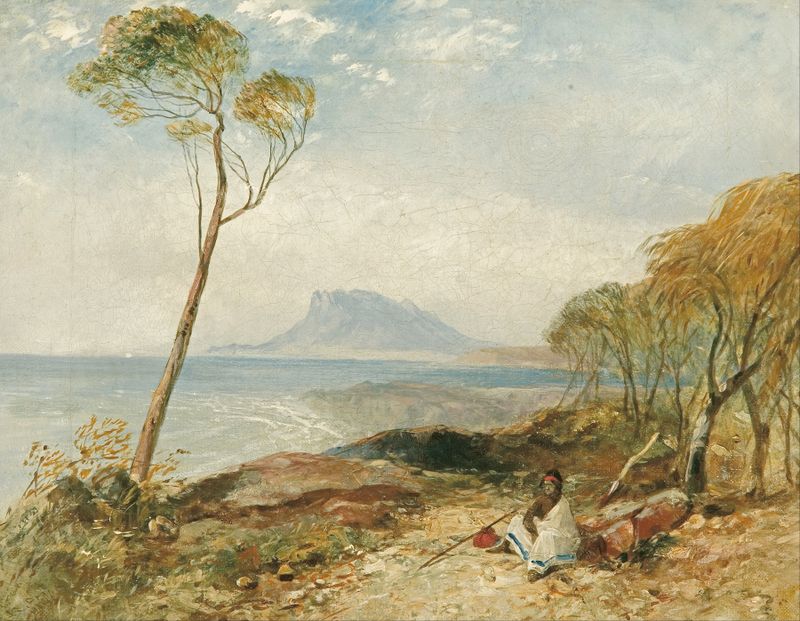
Maria Island from Little Swanport, Van Diemen’s Land
John Skinner Prout
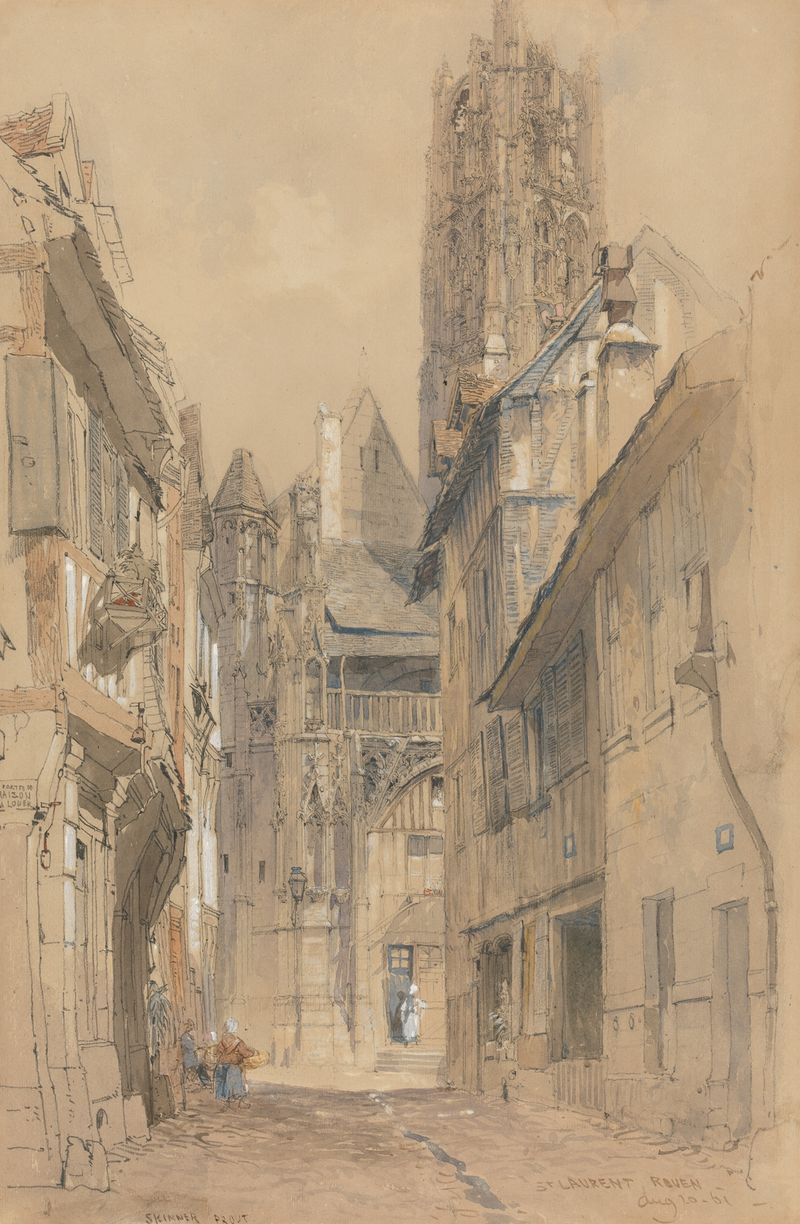
The Church of St. Laurent
John Skinner Prout
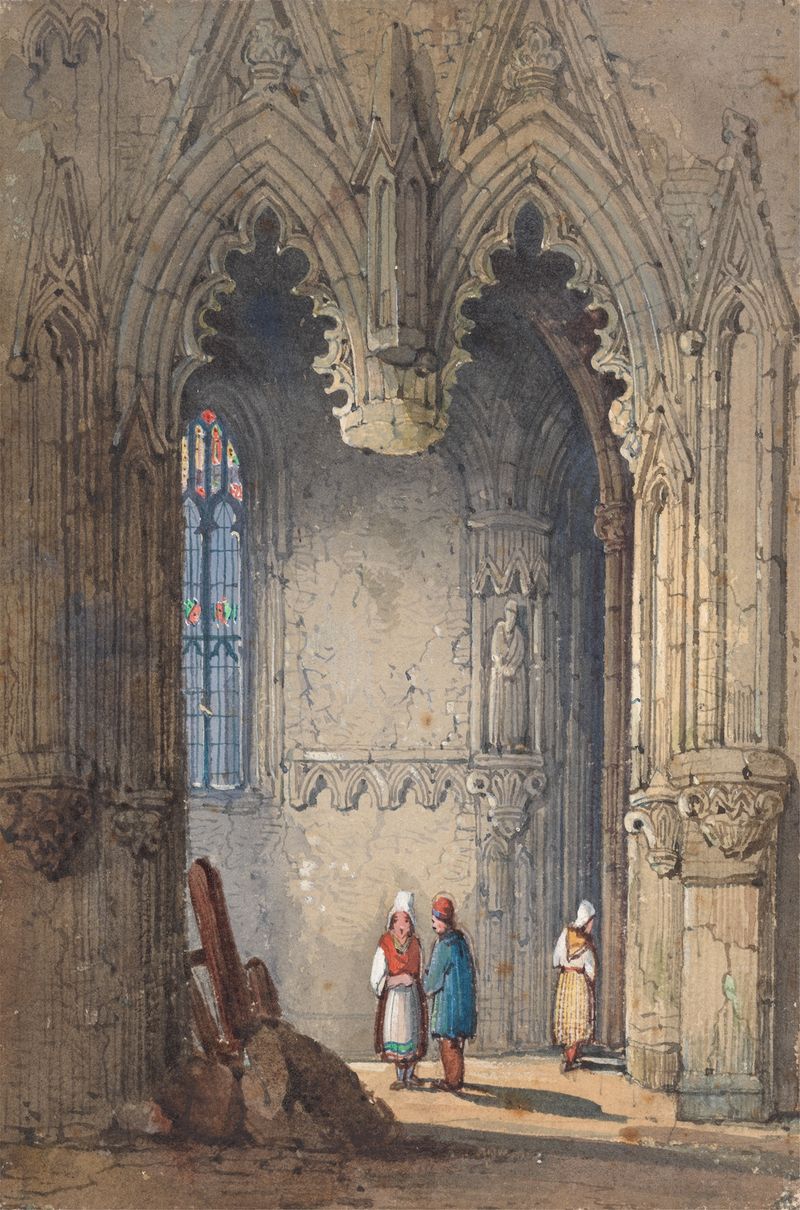
The Church of St. Laurent, Rouen
John Skinner Prout
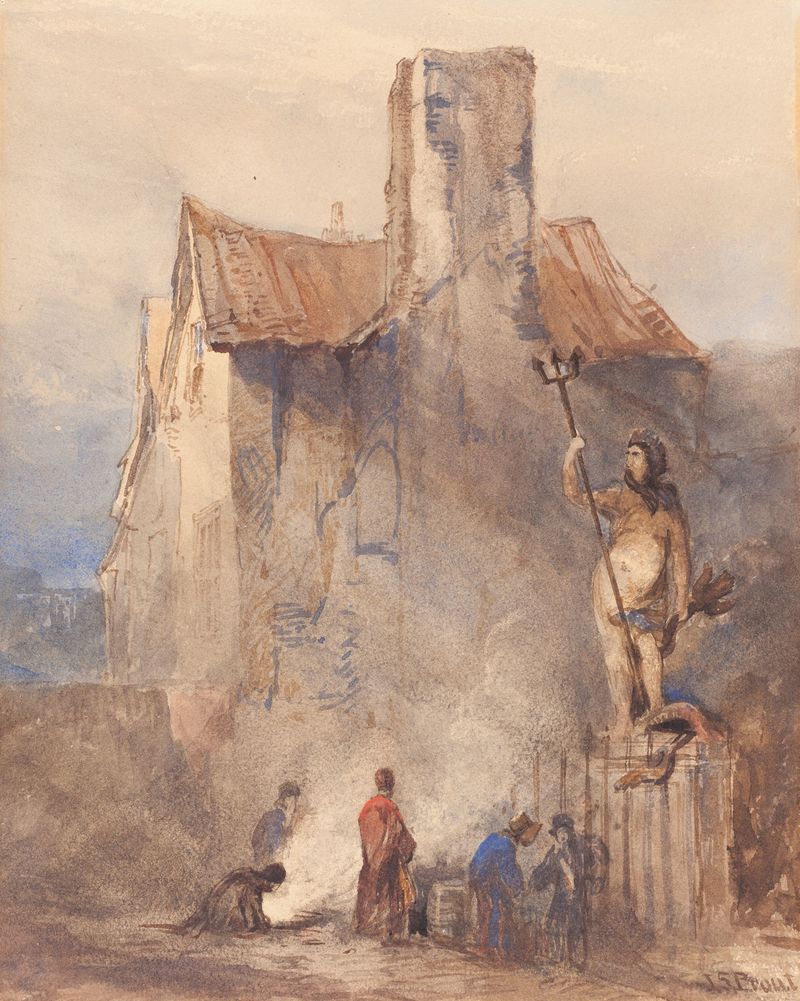
The Bristol Riots – The Burning in the Street
John Skinner Prout





