Salzburg, View of Maxglan and Klessheim — History & Facts
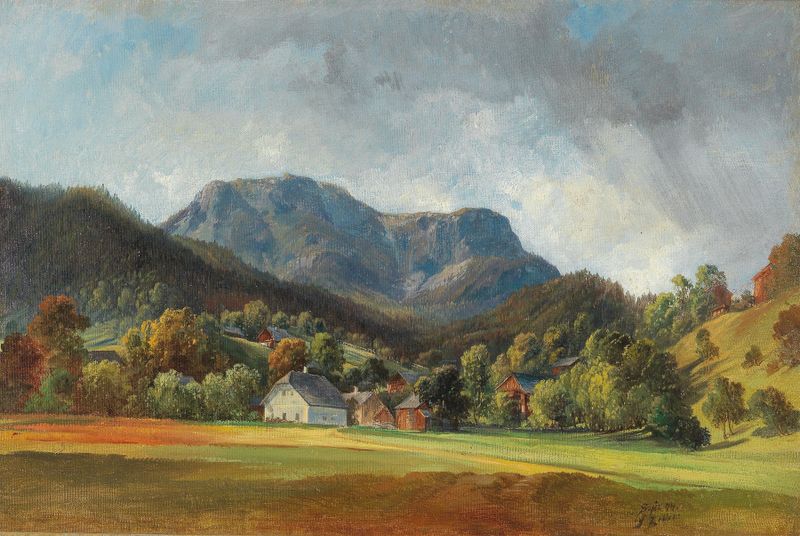
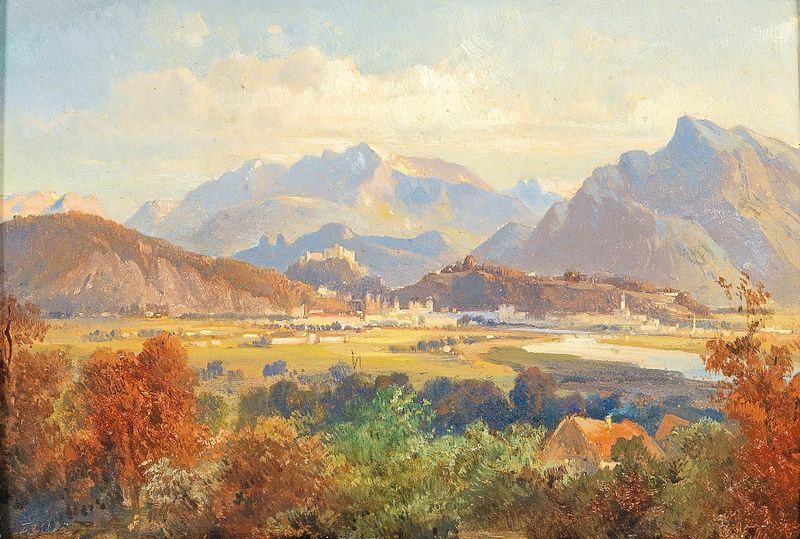
In the stillness of nature, longing often finds its voice through the stroke of a brush, crafting an interplay of beauty and yearning. Look to the center where the quaint rooftops of Maxglan nestle against the hillside, bathed in the soft glow of twilight. The artist’s delicate brushwork creates a tapestry of greens and browns, with hints of ochre that evoke a sense of warmth. Notice how the light gently caresses the landscape, illuminating the contours of the hills and casting a serene ambiance that beckons the viewer into the scene.
Zeller’s use of atmospheric perspective draws your eyes deeper into the canvas, encouraging a sense of exploration and reflection. As you delve further, consider the contrast between the tranquil beauty of the village and the expansive sky above, hinting at the vastness of human experience and emotion. Each brushstroke serves as a vessel for unfulfilled desire, suggesting a longing for connection to both the land and its history. The fluidity in the clouds juxtaposes the solid structures below, capturing the ephemeral nature of memories and dreams, while the distant mountains stand as silent witnesses to the passage of time. Friedrich Zeller painted this piece during a period when Austria was rediscovering its cultural roots, influenced by the Romantic movement surrounding him.
The exact date remains unknown, but his works emerged in a time of transformation, as artists sought to express their inner landscapes alongside the physical beauty of their surroundings, reflecting a burgeoning desire for authenticity in a rapidly changing world.