The Mönchsberg in Salzburg — History & Facts
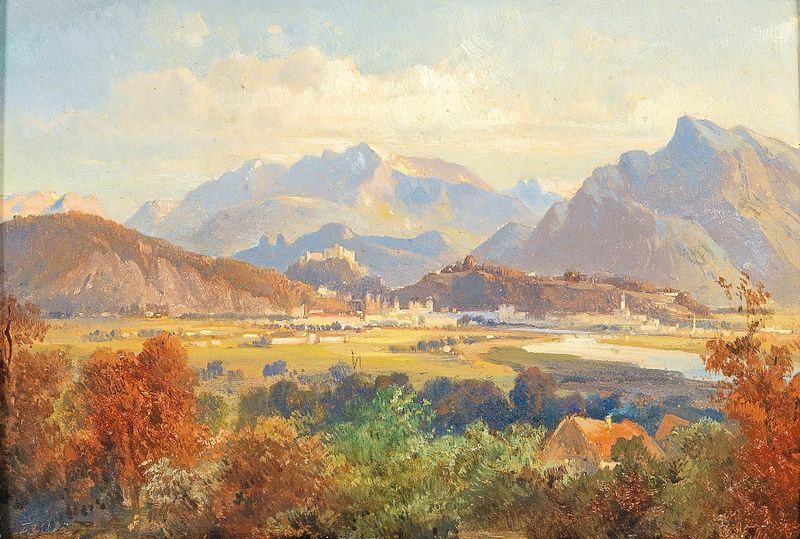
What if beauty was never meant to be finished? Perhaps it exists in the delicate interplay between nature and human longing, forever reaching towards an unattainable ideal. Look to the left at the verdant slopes of the Mönchsberg, where lush greens merge seamlessly with the textured browns of the earth. The gentle brushstrokes evoke a sense of serenity, while the spires of Salzburg emerge on the horizon, captured with a soft focus that both invites and eludes the viewer's gaze. Notice how the light plays across the landscape, illuminating the scene in a warm, golden hue, suggesting the late afternoon sun as it tenderly wraps the entire vista in a dreamy embrace. In the subtle contrasts of color and form lies a deeper narrative.
The distant mountains, majestic yet shrouded in mist, symbolize the eternal pursuit of beauty and aspiration, while the stillness of the foreground captures the quiet yearning of the soul. There’s a tension between the lush, inviting greenery and the invisible barriers of distance, speaking to the desire within us all to connect with what lies beyond our reach. Friedrich Zeller painted this serene landscape in 1868 while residing in Salzburg, a city known for its picturesque beauty and cultural richness. At this time, he was part of a growing movement of artists embracing realism and the representation of nature, reflecting the changing perceptions of beauty in the art world.
His work captures not only the physical landscape but also the emotions that arise from our interactions with such breathtaking environments, marking a significant moment in his artistic journey.