
San Giorgio in Velabro in Rome — History & Facts
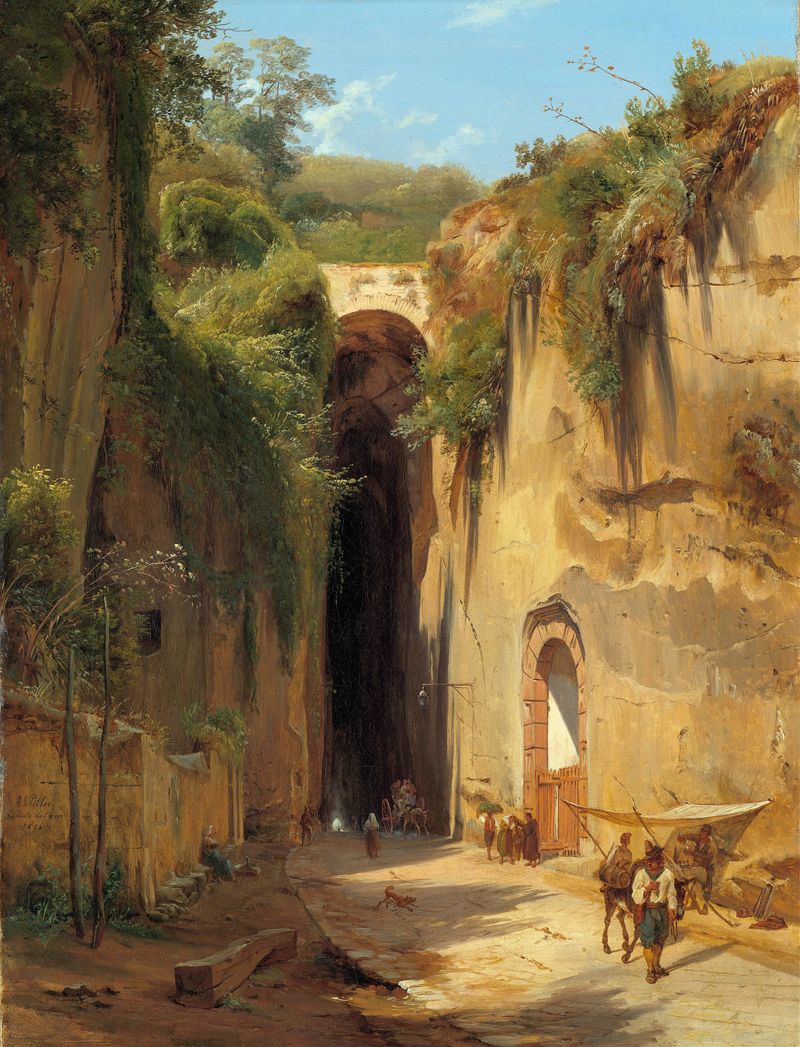
The delicate interplay of light and shadow in San Giorgio in Velabro in Rome unveils the fleeting nature of existence, urging us to ponder our own mortality in the face of time's relentless march. Take a moment to focus on the central structure, the church, standing stoic against the backdrop of a soft, ethereal sky. Notice how the warm hues of ochre and peach blend effortlessly, imbuing the scene with a sense of nostalgia. The gentle strokes of the trees frame the composition, while the reflection of the architecture in the shallow water evokes a connection between the sacred and the ephemeral, drawing the eye toward the horizon where earth meets sky. Beneath the serene surface lies a meditation on the passage of time.
The church’s solid form contrasts with the ever-changing sky, symbolizing permanence amid transience. The delicate touches of light on the water suggest ripples of memory, inviting viewers to reflect on moments lost to time, hinting at the inevitability of mortality that lingers just beneath the beauty. Each element in the painting serves as a reminder that even in stillness, life is in constant flux. In 1820, Antonie Sminck Pitloo painted this work in Rome, a city brimming with artistic revival and cultural richness.
Having moved to Italy from the Netherlands, he was influenced by the vibrant colors and evocative atmospheres of the Italian landscape. This period marked a transition in his career, as he embraced Romanticism’s emotional depth while exploring themes of nature and humanity’s place within it.
More Artworks by Antonie Sminck Pitloo
Browse all →

More Architecture Art
Browse all →
The statue of Liberty
Frédéric Auguste Bartholdi

View of Houses in Delft, Known as ‘The Little Street’
Johannes Vermeer

View of Houses in Delft, Known as ‘The Little Street’
Johannes Vermeer

The Cathedral in Rouen. The portal, Grey Weather
Claude Monet

The yellow house
Vincent van Gogh

The Church in Auvers-sur-Oise, View from the Chevet
Vincent van Gogh