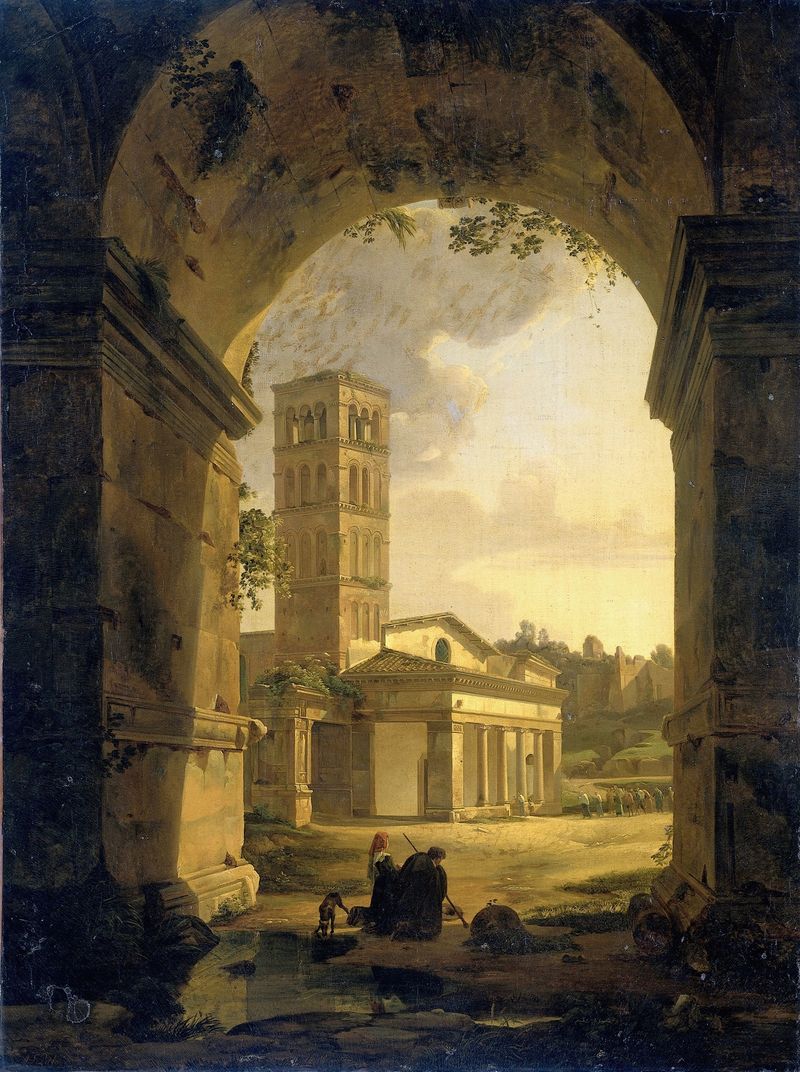
The Grotto of Posillipo at Naples — History & Facts
Did the painter know this moment would outlive them? As time unfurls, the fear of oblivion lingers, captured in the quiet beauty of the natural world. Focus on the foreground, where the lush greenery spills over the rocky terrain, creating a vibrant contrast against the azure waters of Naples. Notice how the light filters through the leaves, casting a dappled glow that dances along the rocks and water, inviting the viewer to explore every nuance. The painter’s brushwork reveals meticulous attention to detail, with soft strokes that animate the foliage and bold touches that delineate the rugged coastline. Beneath the surface, hidden tensions emerge.
The interplay of light and shadow suggests a transient moment, where nature is both serene and foreboding. The open sky hints at freedom, yet the looming cliffs remind us of confinement, an eternal battle between beauty and vulnerability. These contrasts evoke an emotional landscape, amplifying that underlying fear of nature’s daunting vastness and the impermanence of existence. In 1826, while working in Naples, the artist found himself at a pivotal moment in his career.
It was a period marked by burgeoning Romanticism, where artists sought to capture sublime landscapes and the raw emotions that accompany them. As the world was shifting and evolving, Pitloo was immersed in the picturesque scenery of southern Italy, channeling both his passion for nature and the anxieties of his time onto canvas, creating a work that resonates with the echoes of fear and beauty intertwined.