
Santa Maria Della Salute — History & Facts
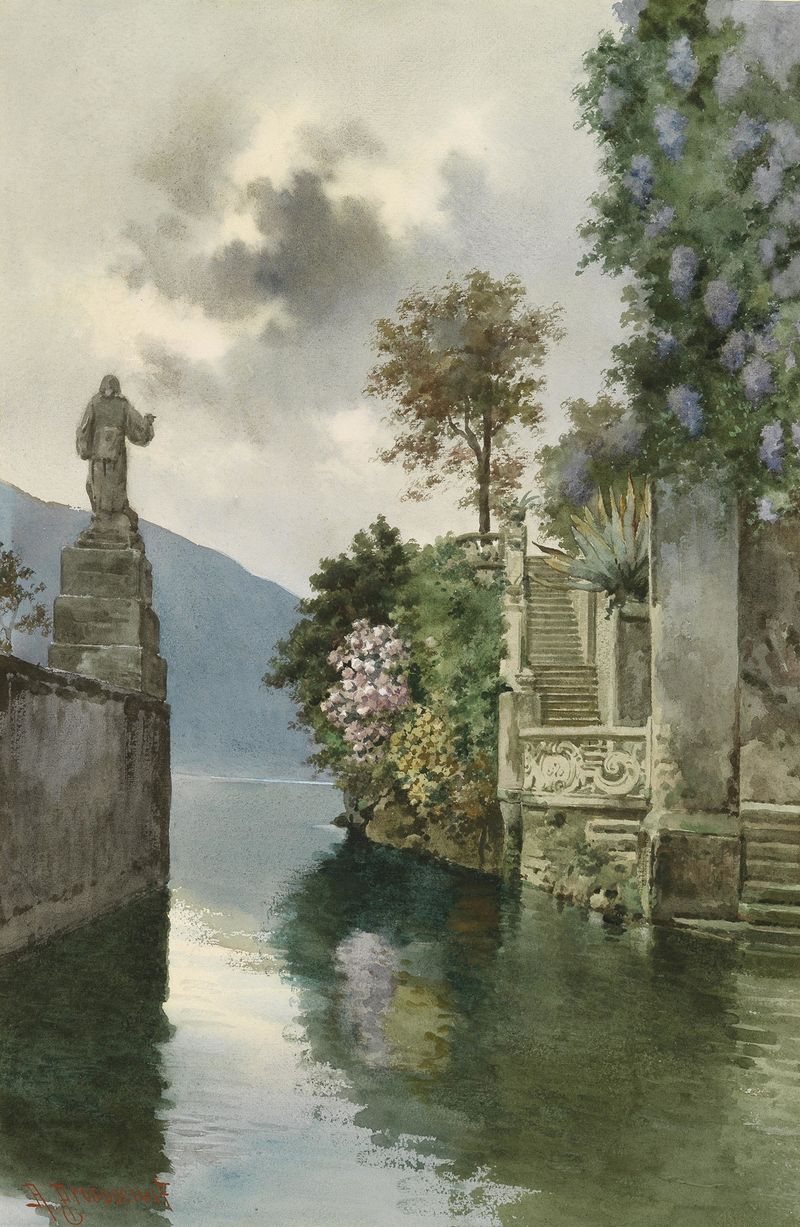
In stillness, it beckons us to explore the ecstasy hidden within its layers. What stories could unfold if we dared to listen closely to its silent whispers? Look to the vibrant hues of blue that dominate the background, suggesting the ebb and flow of water beneath the majestic dome. The light dances delicately across the facade, illuminating intricate details that might otherwise be overlooked — the graceful arches, the subtly etched statues, and the ornate decorations all serve to draw the eye towards a moment frozen in time.
Each brushstroke conveys not just architecture but emotion, harmonizing the solid structure with a sense of reverence and awe. Notice the tension between the serenity of the church and the bustling life surrounding it. The juxtaposition of the tranquil scene with the energetic brushwork reflects the ecstasy of spiritual aspiration amidst the chaos of daily existence. This interplay invites contemplation on the relationship between human endeavors and divine architecture, suggesting that beauty persists even within the fray of life’s tumult. Alberto Prosdocimi painted this work during a period of artistic experimentation, though its exact date remains unknown.
Active in the late 19th century, he was influenced by both the romanticism of his predecessors and the emerging modernist movements, navigating a world fascinated by the interplay of light and emotion. This piece encapsulates a moment of transition, capturing the eternal essence of a place that stands as a testament to faith and artistry.
More Artworks by Alberto Prosdocimi
Browse all →
More Architecture Art
Browse all →
The statue of Liberty
Frédéric Auguste Bartholdi

View of Houses in Delft, Known as ‘The Little Street’
Johannes Vermeer

View of Houses in Delft, Known as ‘The Little Street’
Johannes Vermeer

The Cathedral in Rouen. The portal, Grey Weather
Claude Monet

The yellow house
Vincent van Gogh

The Church in Auvers-sur-Oise, View from the Chevet
Vincent van Gogh