
Venezia Palazzo Soranzo van Axel — History & Facts
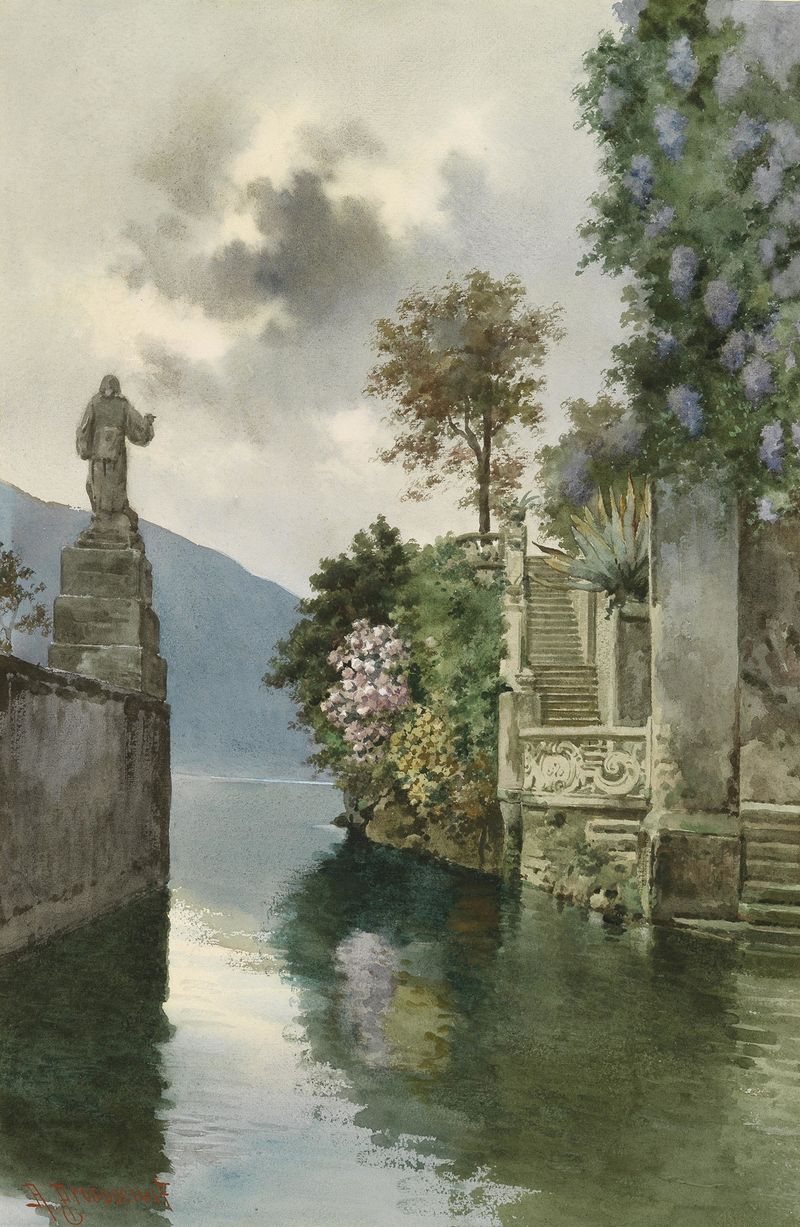
Could beauty survive in a century of chaos? In the vibrant dance between water and architecture, this piece ignites a conversation about the resilience of art amid turbulence. Look to the left at the delicate reflections shimmering on the water's surface, where strokes of blue and green blend seamlessly into one another. The ornate facades of the palazzo rise majestically against a sky brushed with soft pastels, drawing the eye upward. Notice how the composition invites movement — the slight ripples in the canal mimic the gentle sway of gondolas, suggesting a world in constant flux, yet anchored by the elegance of the structures. Beneath the surface beauty, there lies an emotional tension.
The juxtaposition of the serene reflection and the dynamic movement of the water illustrates the struggle between stability and change. The muted tones of the buildings contrast sharply with the vibrancy of nature, hinting at an underlying fragility amidst grandeur. This interplay invites viewers to contemplate what remains when chaos disrupts harmony, and whether art can capture fleeting moments of beauty. Created during an era when the art world was evolving rapidly, the artist painted this scene at an undisclosed time in Venice, a city often caught between splendor and decline.
In the backdrop of societal upheaval, Prosdocimi’s work reflects not only the shifting tides of the city but also his own introspections amidst a changing art landscape, seeking to immortalize the elegance that often battles against the chaos of life.
More Artworks by Alberto Prosdocimi
Browse all →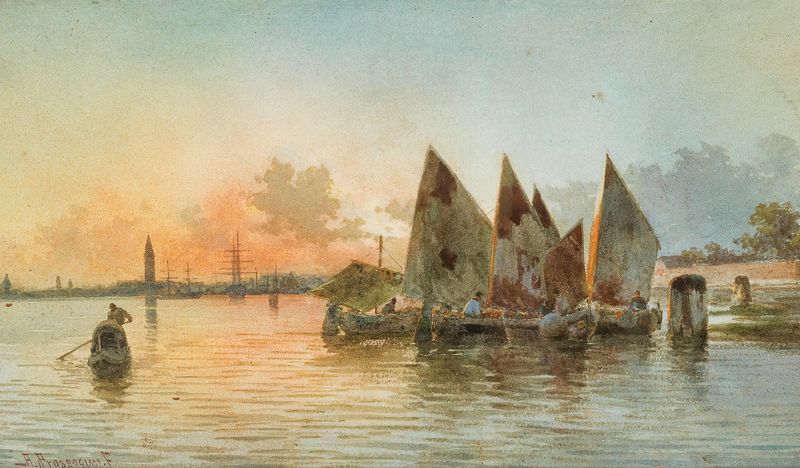
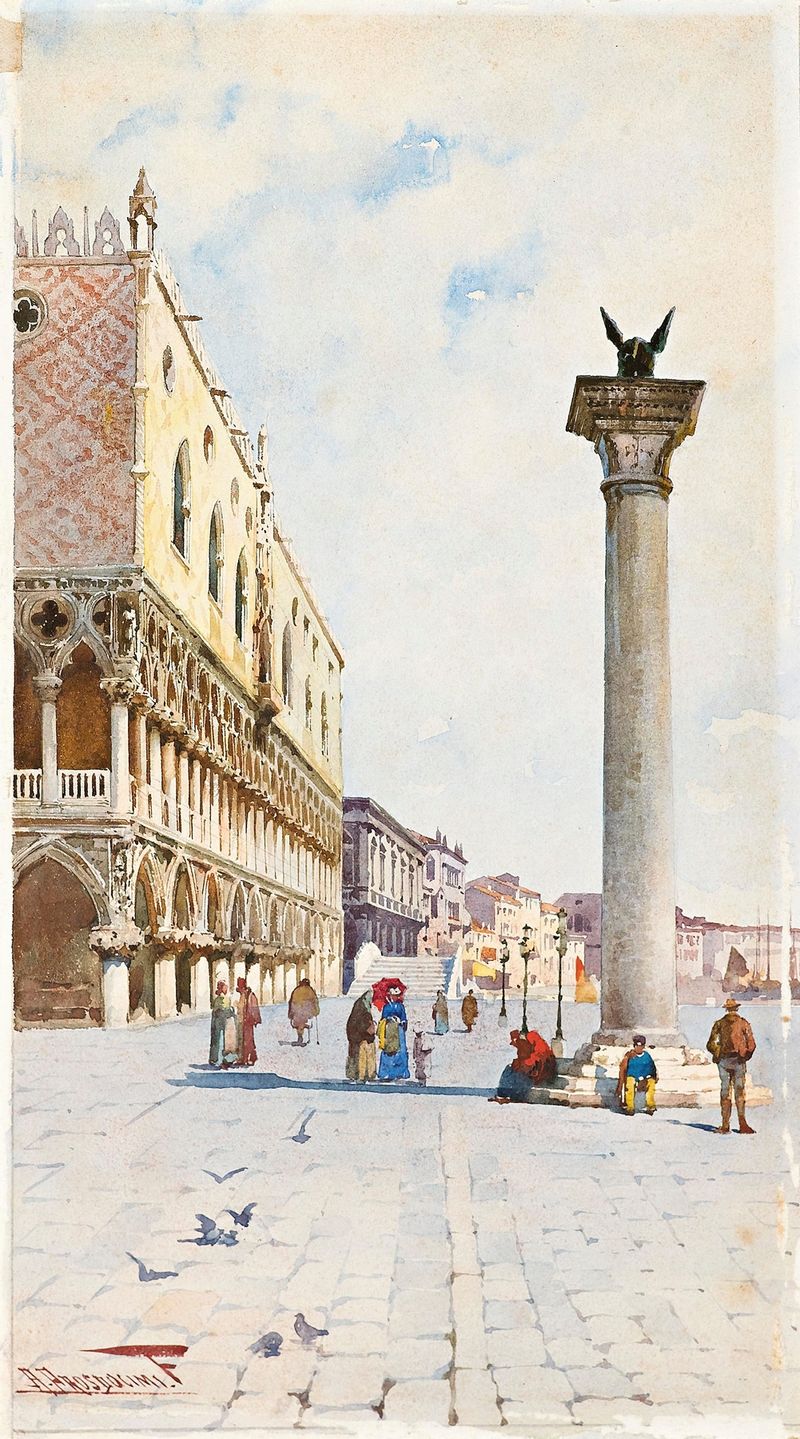
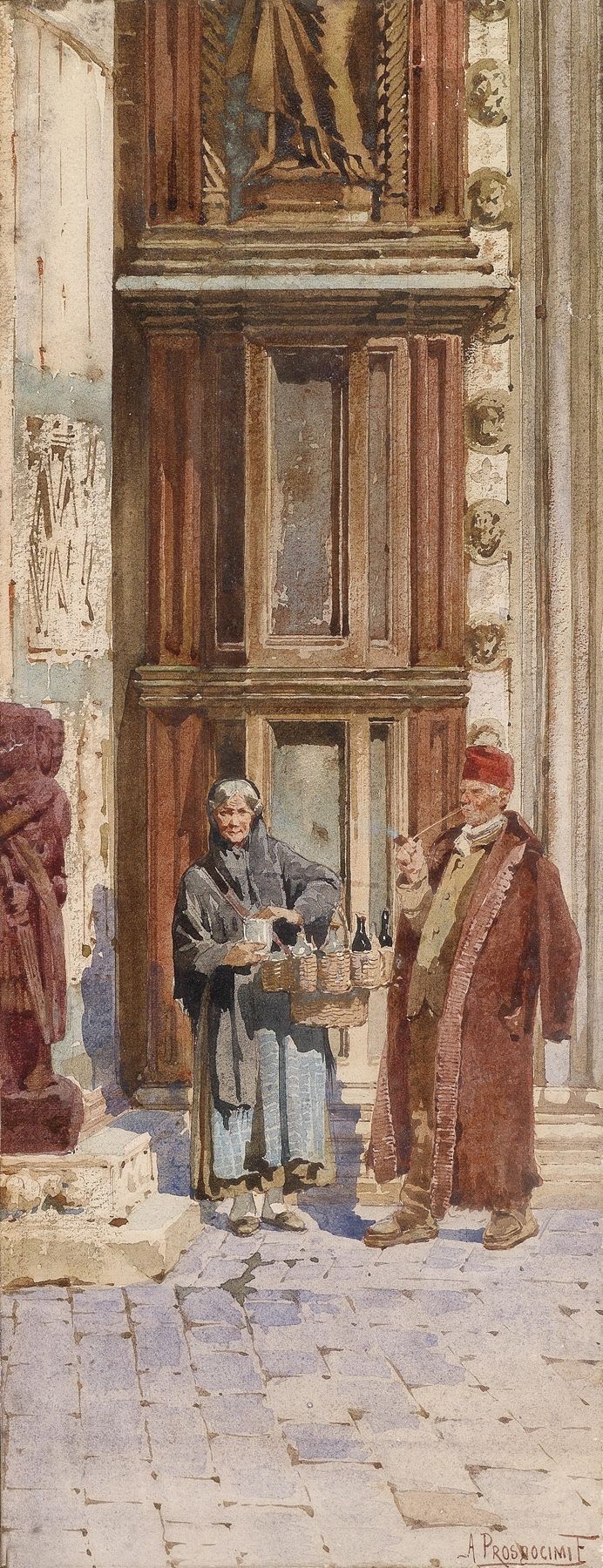

More Architecture Art
Browse all →
The statue of Liberty
Frédéric Auguste Bartholdi

View of Houses in Delft, Known as ‘The Little Street’
Johannes Vermeer

View of Houses in Delft, Known as ‘The Little Street’
Johannes Vermeer

The Cathedral in Rouen. The portal, Grey Weather
Claude Monet

The yellow house
Vincent van Gogh

The Church in Auvers-sur-Oise, View from the Chevet
Vincent van Gogh