Schloss am Wasser — History & Facts
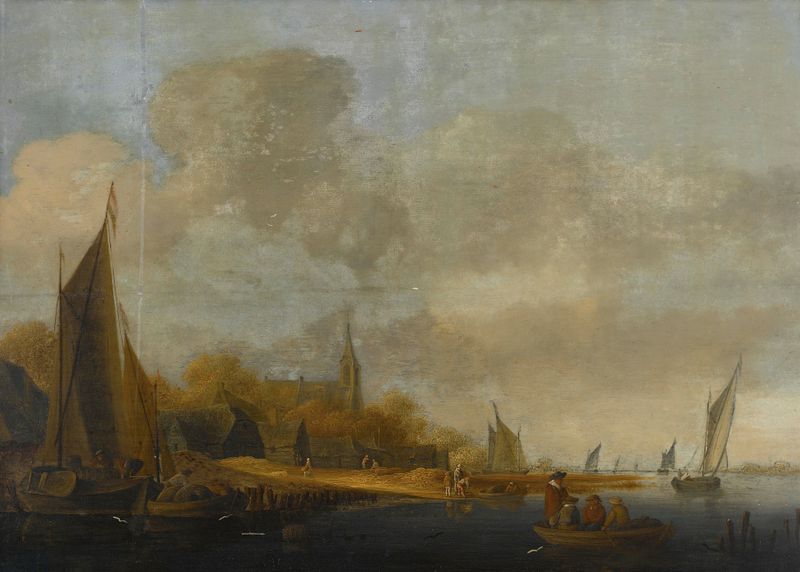
What if beauty was never meant to be finished? The notion lingers as one gazes at a tranquil landscape where emptiness envelops a solitary castle, seemingly adrift on the water's reflective surface. Focus on the castle at the center, its elegant silhouette rising like a memory against the soft hues of twilight. Notice how the light delicately caresses the building's facade, creating an ethereal glow that accentuates its isolation. The muted blues and greens of the water blend harmoniously with the sky, evoking a sense of calm yet hinting at an underlying melancholy.
The sparsely populated landscape urges the eye to explore the stillness, while the ripples on the water summon thoughts of time gently passing. Within this serene vista lies an exploration of absence. The quietness of the scene speaks volumes about solitude, while the castle, both majestic and abandoned, raises questions about legacy and loss. The delicate brushwork reveals the artist's mastery of light and shadow, crafting an emotional narrative of what once was.
This duality of beauty and emptiness fosters a meditative experience, inviting viewers to reflect on their own connections to places and memories that may linger in silence. In 1642, Schloss am Wasser was created during a time when Jan Coelenbier was establishing his reputation as a landscape painter in the Dutch Golden Age. Influenced by the Baroque tradition, Coelenbier sought to capture not just the physical beauty of locations, but also the emotional resonance they carry. Amidst the burgeoning art scene, he was exploring themes of nature's tranquility and its inherent solitude, a subject that would resonate deeply in his body of work.