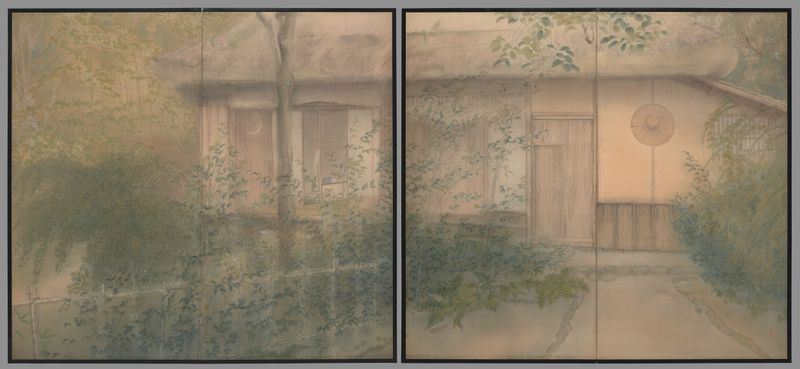
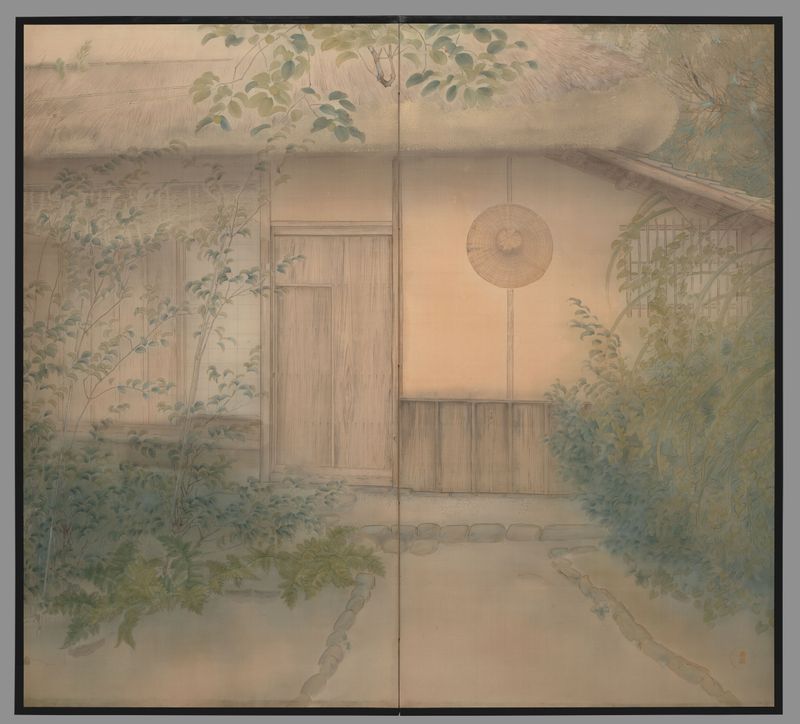
Scholar’s Studio: Rakushisha no aki (Autumn at the Rakushisha) (left screen) — History & Facts
In this stillness lies the madness of reality, the kind that seeps into the soul and lingers like an uninvited guest. Focus on the lush autumnal hues that sweep across the canvas, drawing your gaze to the vibrant reds and golds that echo the fleeting nature of life. Look to the left at the solitary scholar, his quiet contemplation contrasting sharply with the whirlwind of colors around him. Notice how the dappled light filters through the trees, illuminating his serene expression while casting shadows that hint at the chaos of thoughts within. Hidden beneath this tranquil facade lies a tension between the scholar’s peace and the tempest of the natural world.
The wild brushstrokes suggest a frenetic energy, a battle between the ordered mind and the chaotic beauty of autumn. The scattered leaves, caught mid-fall, symbolize both the passage of time and the ephemeral nature of knowledge, begging the question: what remains once the chaos settles? Created in 1925, this work emerged during a period of transformation for the artist, Hatta Kōyō. Living in post-war Japan, he was profoundly influenced by the evolving artistic landscape, where traditional practices met modernist experimentation.
This piece reflects not only his mastery over ink and color but also his introspection amid a society grappling with change, capturing a moment that resonates deeply amid the madness of existence.