Scholar’s Studio: Rakushisha no aki (Autumn at the Rakushisha) — History & Facts
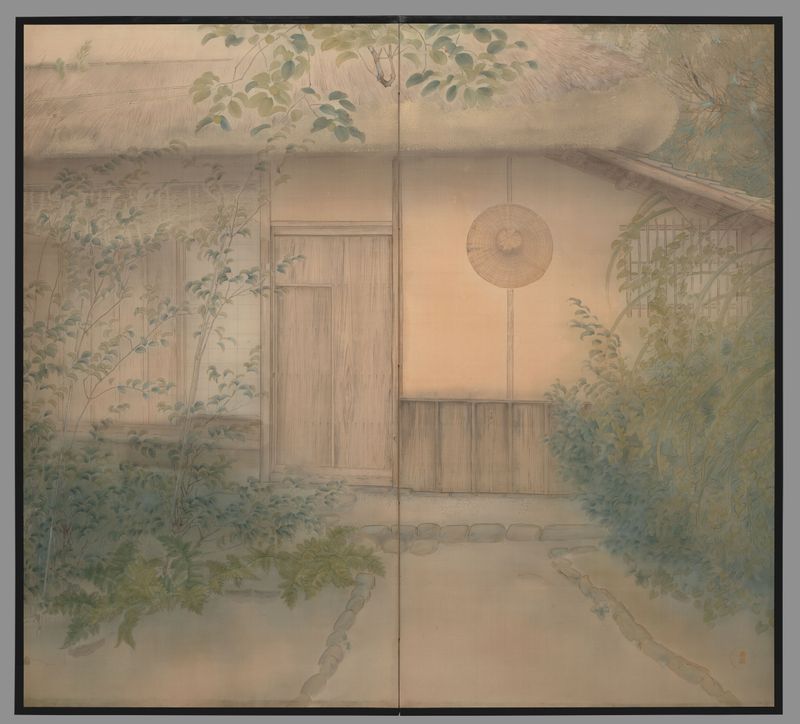
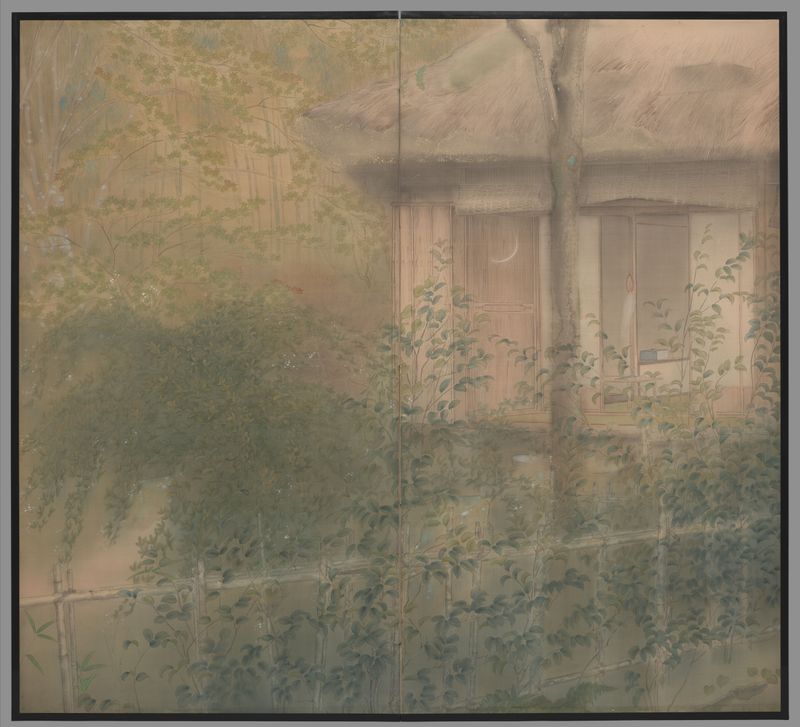
What if silence could speak through light? In Scholar’s Studio: Rakushisha no aki, the haunting tranquility of autumn whispers of a legacy intertwined with nature and introspection. Look to the center of the canvas at the dilapidated yet dignified hermitage, where warm golden hues embrace the fading greens of summer. The light filters softly through the trees, illuminating the scattered leaves that seek to dance on the cool ground. Notice how the artist’s brushstrokes mimic the gentle breeze, leading your gaze to the distant mountains, their blue-toned silhouettes standing in serene contrast to the vibrancy of autumn's palette. Within this idyllic setting lies a profound narrative: the juxtaposition of decay and serenity, evoking the transience of life and the wisdom that accompanies it.
The remnants of the scholar’s studio suggest a history steeped in contemplation, while the surrounding nature symbolizes the cyclical passage of time. Each fallen leaf represents not just an ending, but a transformation, capturing the essence of a quiet legacy left behind. Hatta Kōyō painted Scholar’s Studio: Rakushisha no aki in 1925 while residing in Japan. At this time, he was deeply influenced by the traditional themes of Japanese aesthetics and the nationalistic spirit following the tumultuous years of the Taisho era.
His work reflects a significant moment where modernity began to intertwine with a reverence for the past, offering a poignant commentary on the relationship between humanity and the natural world.