Schweizer Alpenlandschaft — History & Facts
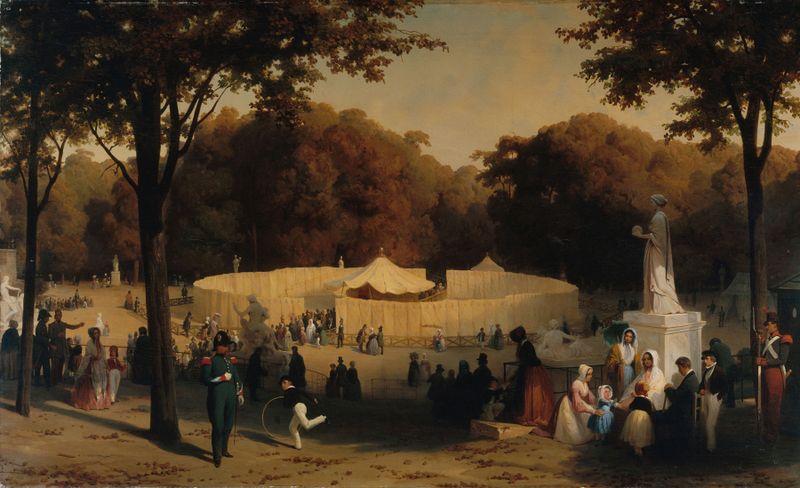
Can beauty exist without sorrow? In the vast embrace of nature, the juxtaposition of majesty and void echoes deep within the soul’s chambers. In this exquisite landscape, focus on the rolling slopes of the Swiss Alps, where the delicate play of light and shadow carves the rugged terrain. Notice how the artist skillfully captures the crispness of the air, infused with distant hues of cerulean and emerald. The peaks dominate the canvas, their icy crowns glistening under a soft sunlight that seems to whisper stories of solitude and grandeur.
The foreground, dotted with wildflowers, invites a sense of tranquility, creating a serene contrast to the imposing mountains above. Yet, amidst this breathtaking beauty lies an undercurrent of melancholy. The expansive skies, though bright, hold a sense of emptiness that invites contemplation. The vastness of the landscape suggests both liberation and isolation, as if the viewer stands on the precipice of discovery, yet grapples with a profound sense of insignificance.
Each brushstroke reflects not only the stunning visuals but also the silent acknowledgment of the void that beauty can often evoke. Karl Girardet created this painting during a period marked by both personal and artistic exploration, likely in the mid-19th century. Living in Switzerland, he was influenced by the Romantic movement, which sought to capture the sublime in nature. This work reflects the era's fascination with the emotional responses elicited by landscapes, as well as Girardet's own journey as he sought to balance the awe of the natural world with the introspective dialogues it inspires.