A Sunday outing — History & Facts
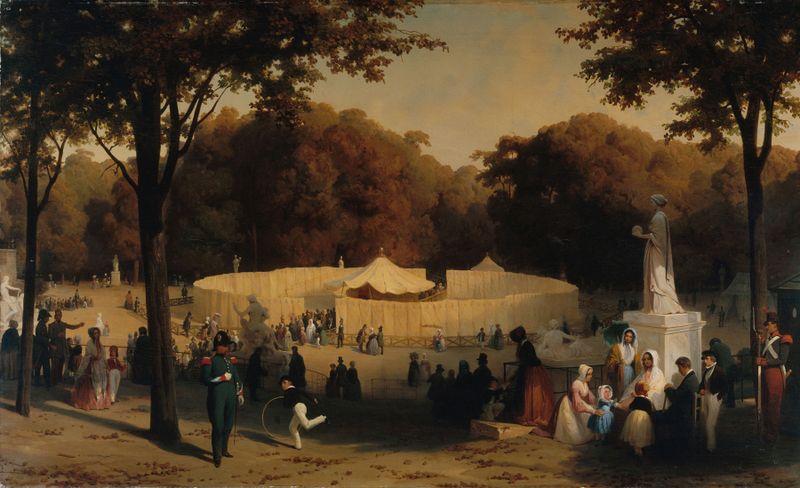
Who listens when art speaks of silence? In the gentle embrace of a sunlit afternoon, innocence dances delicately upon the canvas, inviting reflection on fleeting moments of joy. Look to the center of the composition, where two children play, their laughter almost audible through their vibrant gestures. The soft colors, primarily pastel blues and greens, create a serene atmosphere, while warm golden light bathes the figures, highlighting their carefree spirits. Note the way the children’s hair catches the light, every strand almost shimmering, reflecting a world untouched by time.
The background fades softly into a muted landscape, allowing the figures to pulsate with life, drawing the viewer’s gaze inward. Yet, it is the contrasting absence of adult figures that speaks volumes. The idyllic scene resonates with a poignant tension; innocence exists amidst a world that often demands maturity too soon. The way the sunlight casts long shadows hints at the inevitable passage of time, a reminder that these moments are ephemeral.
Here, in the simplicity of play, one senses both the purity of childhood joy and the bittersweet undercurrent of its impermanence. Girardet created this work during a period of artistic exploration, likely in the late 19th century, when the Impressionist movement began to influence the depiction of everyday life. Living in France, he was surrounded by a thriving art scene that embraced the beauty of ordinary moments. This painting encapsulates a nostalgic longing for childhood, reflecting both his personal experiences and the broader cultural shifts of an era in flux.