Süddeutsches Städtchen im Sommer — History & Facts
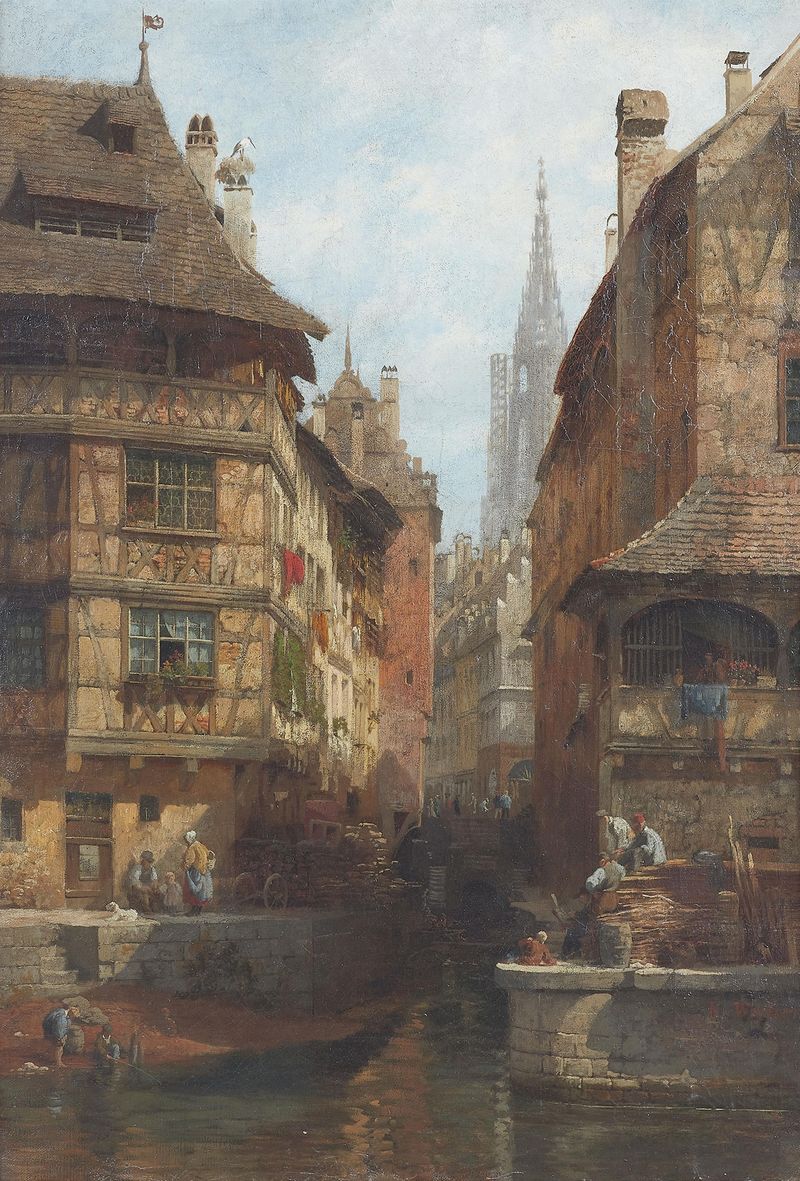
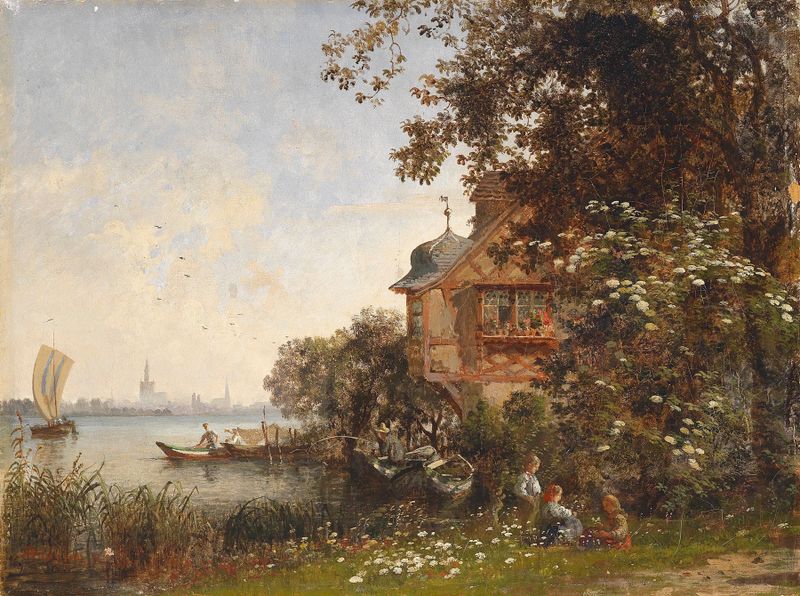
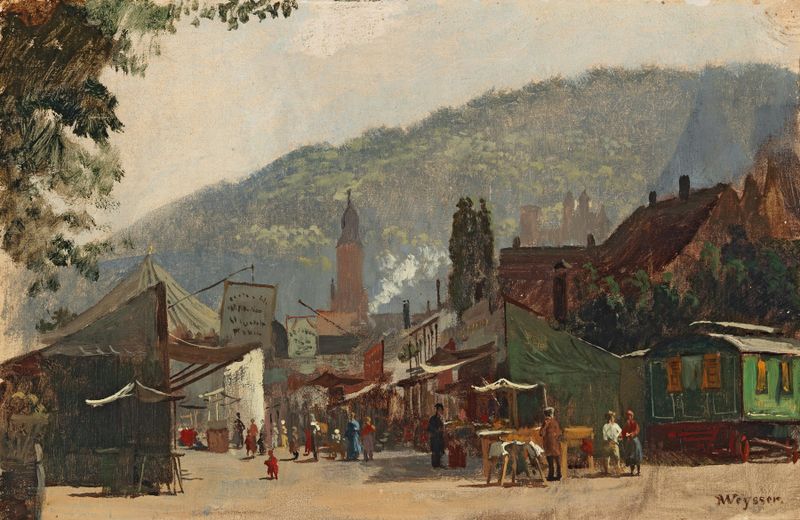
What if beauty was never meant to be finished? A fleeting moment captured on canvas invites us to consider the impermanence of summer and the quiet revolutions of life that unfold within it. Focus on the soft hues of green and gold that envelop the village, drawing your eye to the charming rooftops nestled among rolling hills. Notice how the sunlight bathes everything in a warm glow, illuminating the bustling streets where figures meander, conveying a sense of both vitality and serenity. The brushstrokes are delicate yet assured, skillfully showcasing the harmony of nature and architecture in this idyllic setting. Delve deeper, and you might perceive a subtle tension between the idyllic scenario and the whispers of change just beyond the frame.
The juxtaposition of bright, inviting colors with the shadows lurking at the edges suggests an impending shift, echoing the socio-political upheavals that were reshaping Europe during this time. Each character in the scene, immersed in their daily lives, remains blissfully unaware of the revolution stirring outside their picturesque village, hinting at the complexities of progress and tradition. Karl Weysser painted Süddeutsches Städtchen im Sommer in 1886, during a period of artistic exploration in Germany, as Impressionism began to influence local works. At this juncture, he was enjoying a budding reputation, yet felt the pressure of a shifting artistic landscape.
The world was ablaze with new ideas, reflecting a moment where personal and collective transformations coalesced, defining not just the artist’s journey but also the era itself.