Sea Cliffs — History & Facts
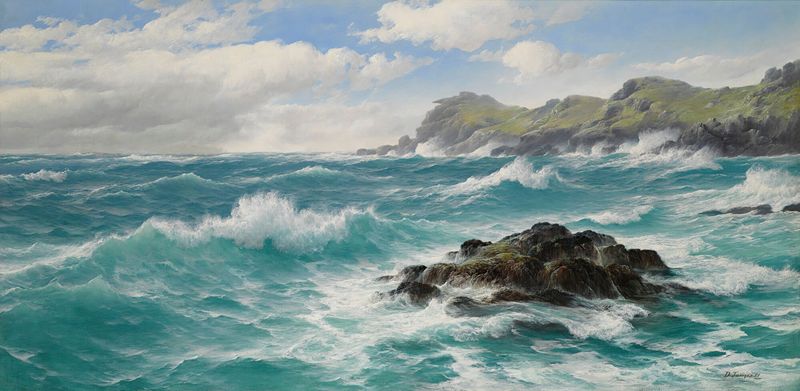
Could a single brushstroke hold eternity? In Sea Cliffs, the vastness of nature unfurls like a delicate whisper, inviting viewers to explore the beauty that resides in fleeting moments. Focus first on the vibrant blues and greens that dominate the canvas, where the cliffs rise majestically against the crashing waves below. Notice how the light dances across the water, reflecting an ethereal quality that breathes life into the scene. The harmonious composition draws the eye along the rugged coastline, inviting a sense of movement and wonder.
Each brushstroke is deliberate, creating textures that echo the rawness of the cliffs and the serenity of the sea, evoking a timeless beauty. Delve deeper, and you’ll find contrasts woven into the fabric of this work. The solidity of the cliffs stands in stark opposition to the fluidity of the ocean, symbolizing strength amidst change. The muted earth tones of the land anchor the vibrant blues above, illustrating nature's balance between stability and chaos.
As you examine the delicate interplay of light and shadow, consider how it reflects the artist’s contemplation of beauty—an eternal dialogue between the transient and the everlasting. In 1887, David James painted this atmospheric seascape while residing in England, a period marked by a heightened interest in the natural world. As Impressionism gained momentum, artists began to explore the interplay of light and environment, responding to nature with emotional depth. The world was shifting, and through his work, James sought to encapsulate both the sublime beauty of the British coastline and the deeper truths that lie within nature’s ever-changing canvas.