Seaside — History & Facts
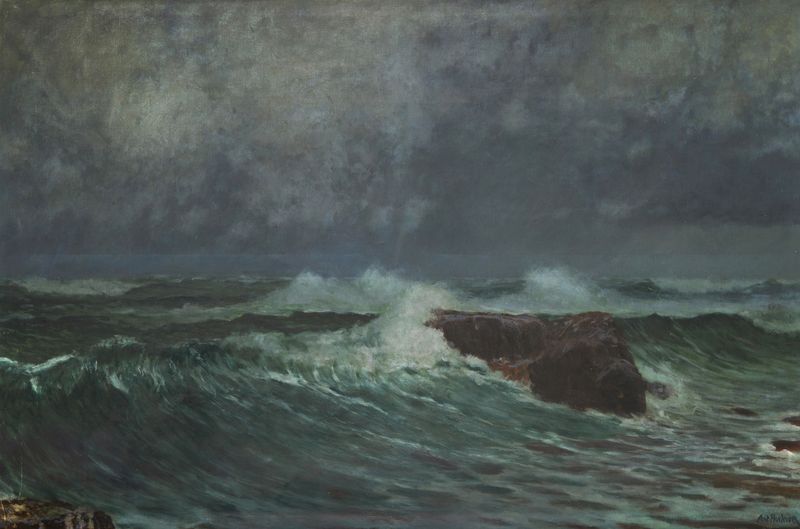
This notion of transformation resonates deeply within the realm of art, where every stroke breathes life into a still world. Focus on the sweeping horizon, where vibrant blues collide with soft pastels, suggesting the infinite possibilities of the sea and sky. Notice how the waves, rendered with delicate brushwork, dance towards the shore, creating an illusion of movement that invites you to step forward. The foreground, alive with sunlit sand, contrasts dramatically with the deeper hues of the water, drawing your eyes into the tranquility of the scene. Yet, within this serene seaside, there exists an undercurrent of tension.
The light, while warm and inviting, casts elongated shadows that hint at an impending dusk—perhaps a reminder of time's relentless passage. Look closely, and you may notice a solitary figure at the water’s edge, contemplating the vastness of the ocean, suggesting both solitude and connection to nature. This juxtaposition of freedom and introspection captures the complexity of human emotion in the face of nature’s grandeur. Antonín Hudeček painted this piece during a time when he was exploring the implications of light and color in his landscapes, likely in early 20th-century Bohemia.
Amidst the backdrop of a shifting art scene, he sought to convey the beauty of the natural world through impressionistic techniques, revealing the awe-inspiring qualities of ordinary landscapes. His work aligns with a broader movement that emphasized capturing fleeting moments of beauty, inviting viewers into a dialogue with the serene power of the environment.