
Shakespeare’s garden — History & Facts
A gentle breeze rustles through the leaves, whispering secrets of the past. The back view of a modest house emerges from a lush expanse of greenery, where every flower seems to nod knowingly. Shadows dance upon the cobblestone path, evoking a sense of quiet contemplation, as if the garden itself bears witness to untold stories of joy and sorrow. Look to the left at the vibrant blooms, their colors a rich tapestry of life against the muted tones of the house.
Notice how the sunlight filters through the branches, casting dappled patterns that cradle the scene in warmth yet hint at an underlying melancholy. The meticulous arrangement of the garden elements—the winding path, the sturdy walls—invites you to wander, even as it holds you back in remembrance. In this verdant sanctuary, the juxtaposition of beauty and loss is palpable. Each flower symbolizes a moment: the fleeting nature of time, the permanence of memory.
The house, cloaked in the stillness of its own history, stands as a testament to the life that once flourished within its walls. This is a space where grief and gratitude intertwine, each petal and stone echoing the laughter and tears of lives once lived. A.C. Wyatt painted this scene in the late 19th century, reflecting a time when the Romantic movement still reverberated through the art world.
Based in England, he was influenced by the growing interest in nature and the human experience, as well as a longing for a simpler past. This work captures not just the physical space of Shakespeare’s birthplace but also the emotional resonance of an enduring legacy.
More Artworks by A.C. Wyatt
Browse all →
Holy-Trinity Church, Stratford-on-Avon
A.C. Wyatt
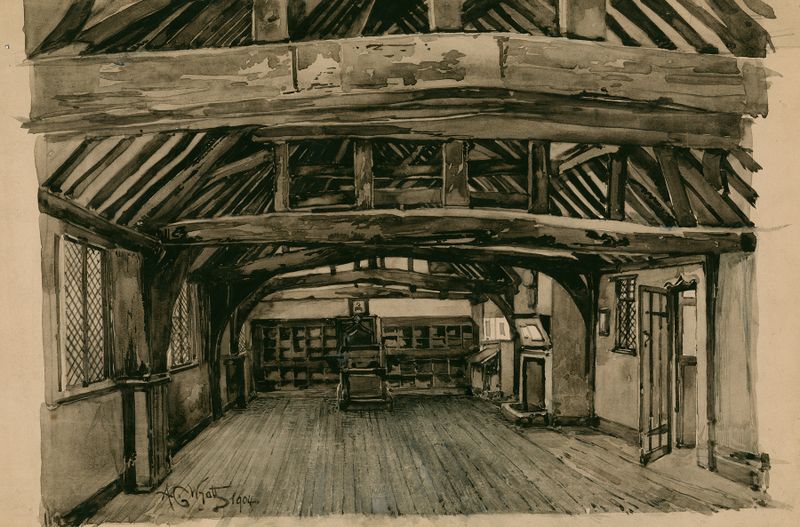
The Grammar School, Stratford-on-Avon; the room where Shakespeare is traditionally said to have been taught
A.C. Wyatt
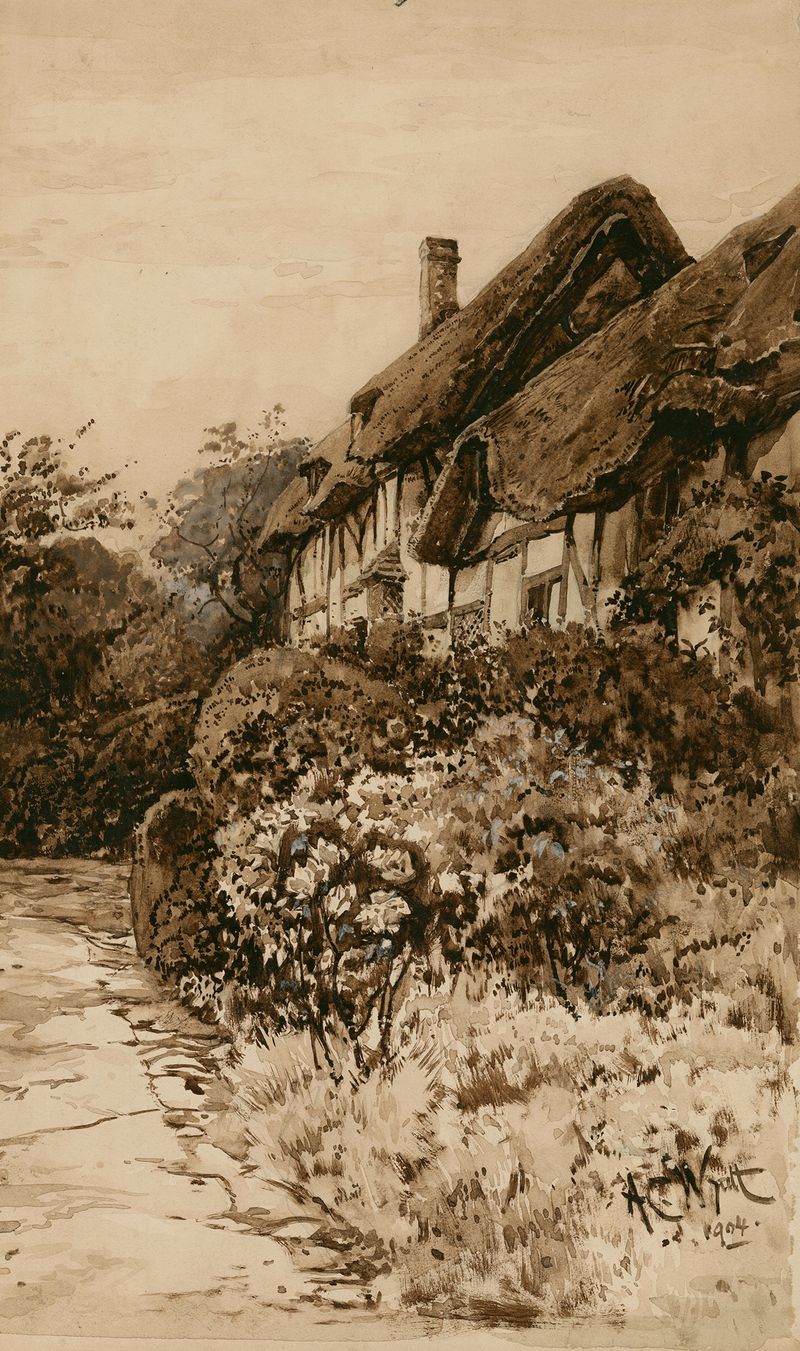
Ann Hathaway’s cottage, Shottery
A.C. Wyatt
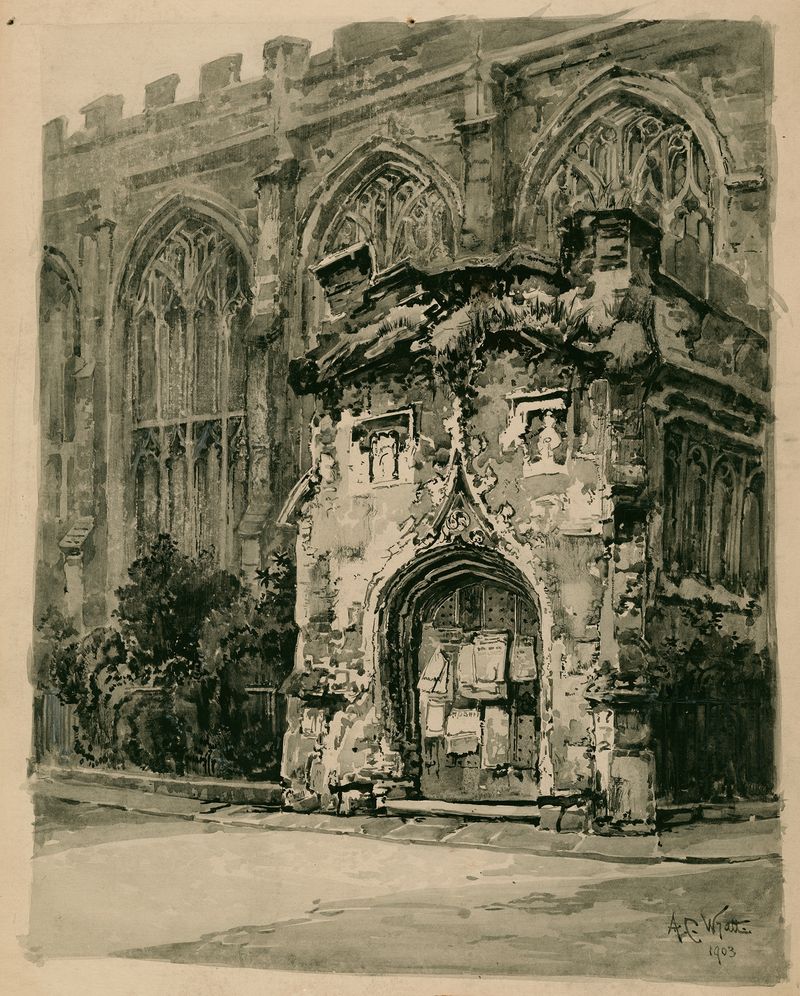
Guild-Chapel porch before restoration (opposite New Place where Shakespeare died)
A.C. Wyatt
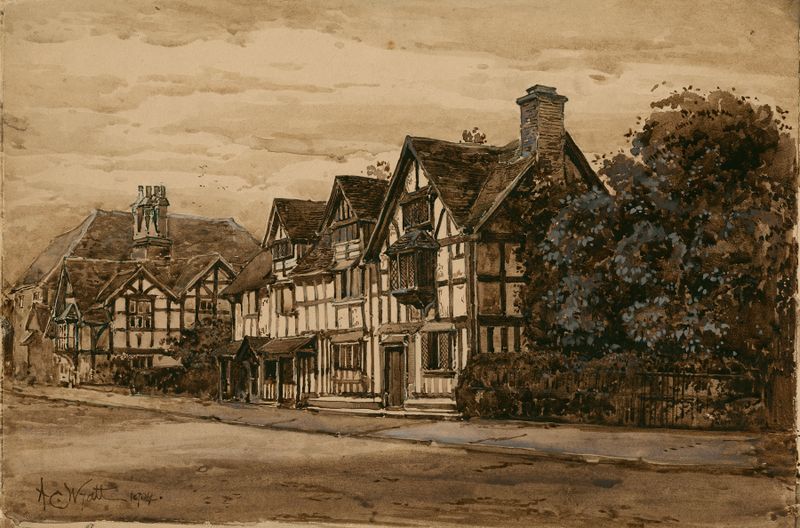
Shakespeare’s birthplace
A.C. Wyatt





