The Grammar School, Stratford-on-Avon; the room where Shakespeare is traditionally said to have been taught — History & Facts
The door creaks open, revealing a sun-drenched classroom filled with eager young minds. Shadows dance upon the worn wooden desks as a teacher gestures animatedly, his voice blending with the rustle of parchment. In the corner, a boy leans forward, eyes wide with wonder, grasping the weight of language that beckons him to unravel its mysteries. Look to the left at the golden light spilling from the tall windows, illuminating the worn faces of the students.
Notice how the teacher stands confidently at the front, his outstretched hand seeming to bridge the gap between past and future. The muted palette of browns and greens speaks to the age of the institution, while warm highlights emphasize the gravity of learning. Each detail, from the dusty books to the attentive expressions, creates a palpable sense of anticipation and respect for knowledge. Amidst the harmonious arrangement of figures, a subtle tension lies in the contrasts presented: the teacher's authority versus the students' vulnerability, the weight of history against the lightness of youthful curiosity.
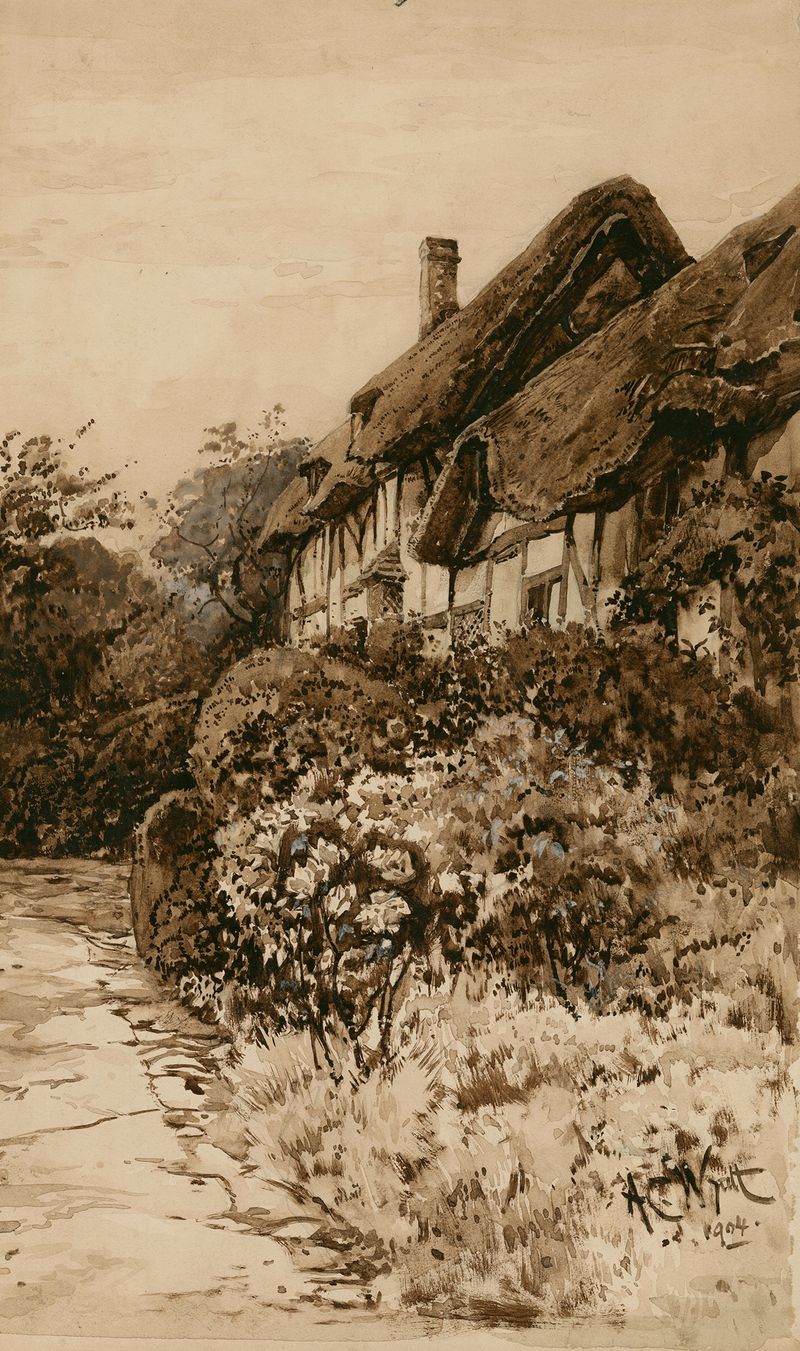
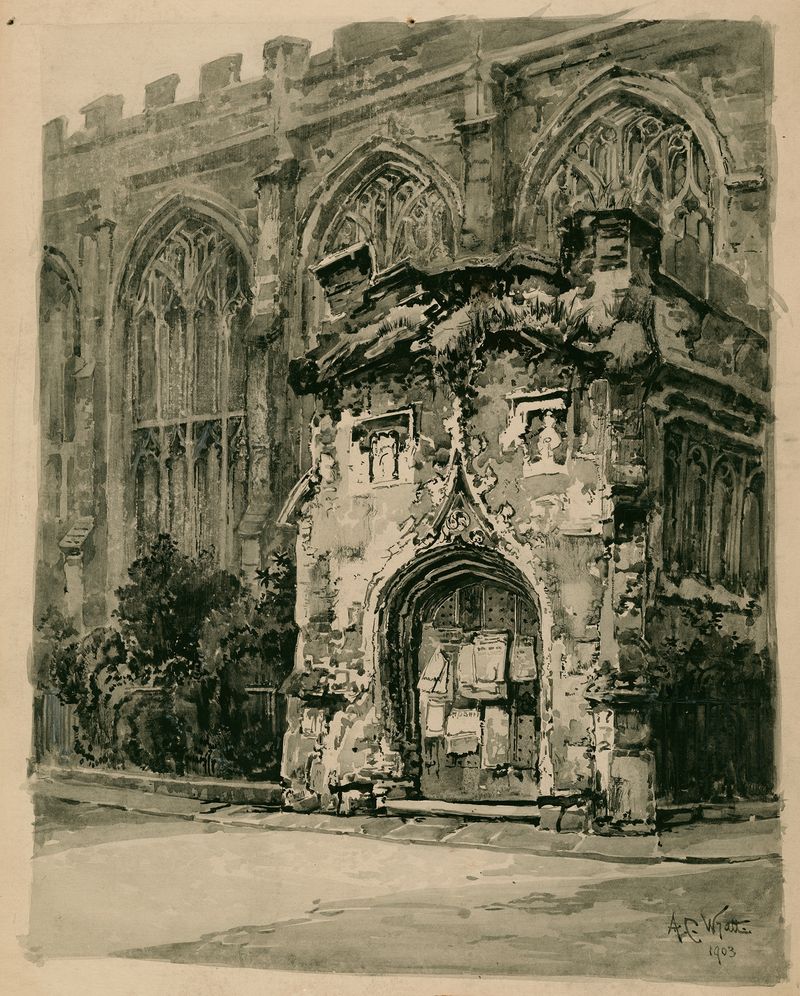
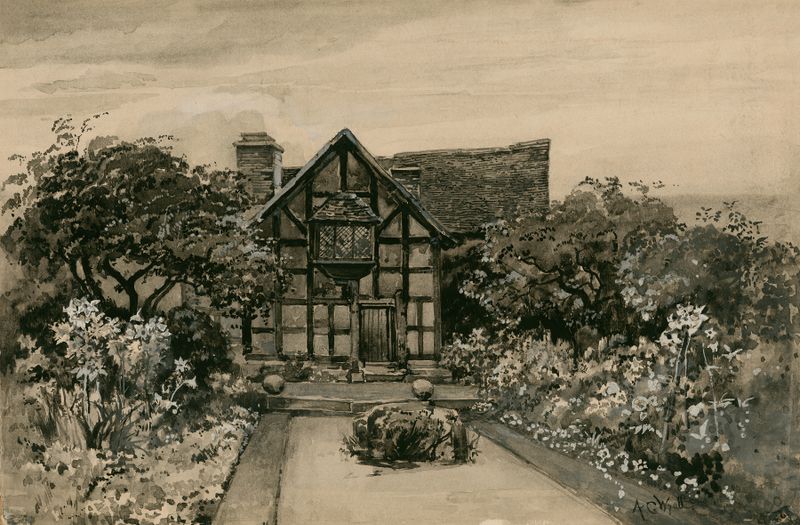
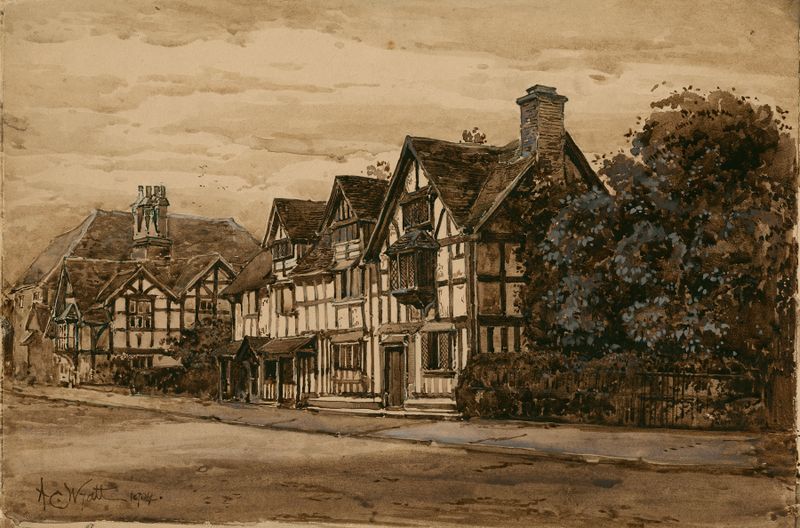
The old classroom serves as a metaphor for the balance between tradition and innovation, where young minds prepare to inherit the literary legacy that will flourish beyond these walls. This emotional undercurrent is a powerful reminder of the transformative power of education. A.C. Wyatt painted this scene in 1904, capturing a moment that resonates with the history of Stratford-on-Avon, where Shakespeare's legacy looms large.
At the time, Wyatt was engaged in exploring the architectural significance of English heritage, and this painting reflects the national pride in the arts that permeated Britain. In an era poised between Victorian values and modernist movements, he dedicated his craft to celebrating the rich narratives ingrained in the fabric of everyday life.