Sheep wash in the western district — History & Facts
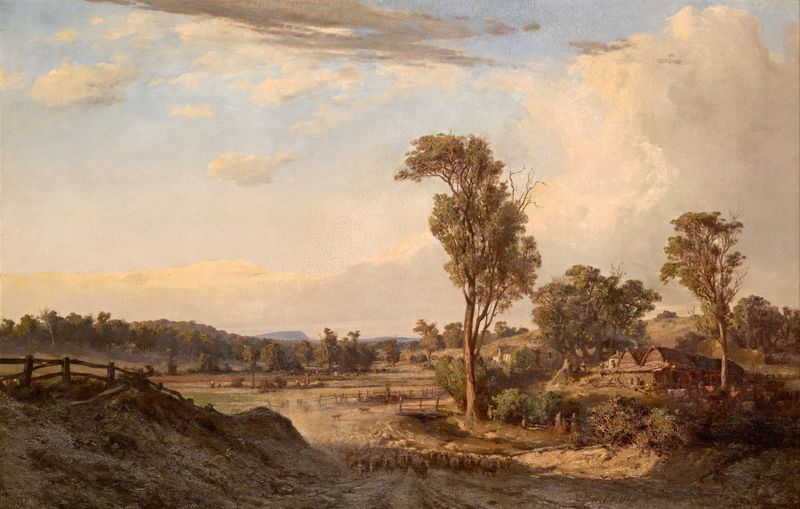
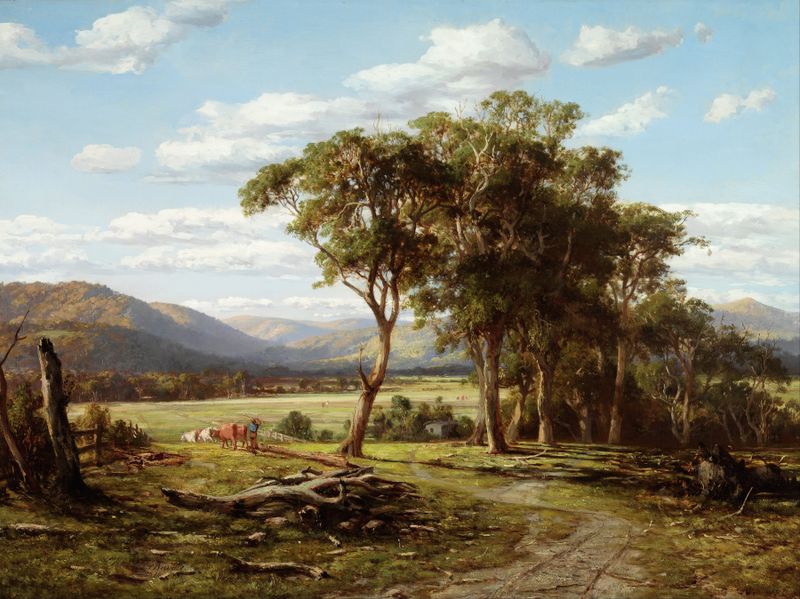
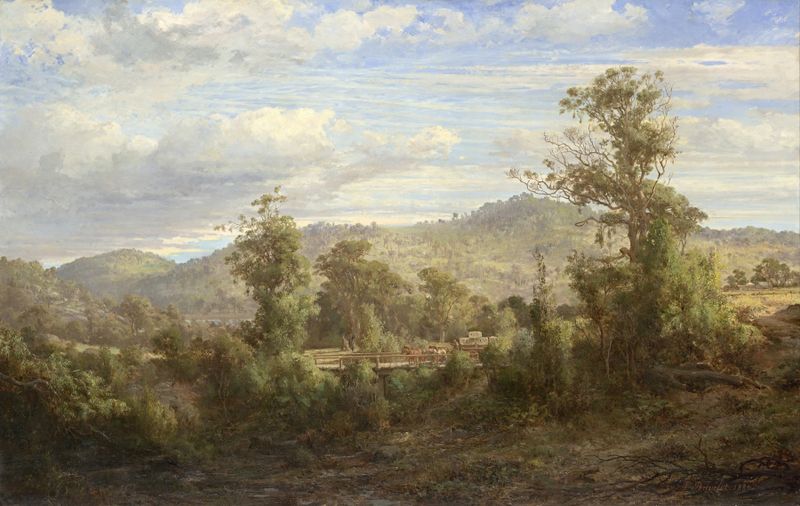
In the stillness of a pastoral landscape, secrets linger as sheep wade through the water — a quiet tapestry of betrayal and trust, woven through the natural world. Focus on the gentle curves of the hills that cradle the scene. The soft, muted greens and browns evoke a sense of tranquility, while the distant sheep, painted in dynamic strokes, draw the eye. Notice how the light dances across the water’s surface, reflecting both the sheep and the secluded surroundings.
This delicate interplay of light and shadow invites contemplation, suggesting that beneath this serene exterior lies a deeper narrative. The juxtaposition of the vibrant life of the sheep against the calm expanse of the landscape captures the tension between innocence and the hidden turmoil of betrayal. The water, a transparent veil, symbolizes the fluidity of trust — easily disturbed, yet momentarily clear. The placement of the animals hints at their role in the cycle of life and death, perhaps alluding to the fragility of connections in nature, much like human relationships. Louis Buvelot painted this work during a time of evolving artistic expression in the mid-19th century, as he settled in Australia after emigrating from Switzerland.
Influenced by the Romantic movement, he sought to capture the Australian landscape with a fresh eye, while his own life was marked by a search for belonging in a new country. The exploration of rural themes in his work reflects both personal and universal struggles, resonating with audiences then and now.