Summer afternoon, Templestowe — History & Facts
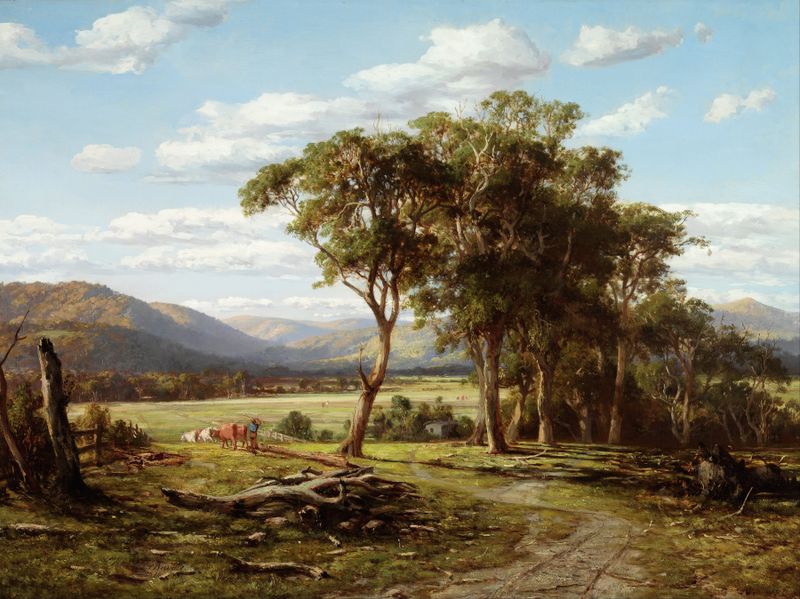
When did color learn to lie? In the delicate balance between reality and perception, a landscape unfolds, beckoning the viewer into an ethereal embrace of faith and nature. Look to the foreground, where lush green fields stretch like a soft, inviting carpet beneath an expansive blue sky. The gentle brushstrokes evoke a tranquil summer afternoon, while the interplay of light and shadow breathes life into the scene. Notice how the horizon melts into a hazy warmth, as if blurring the line between the tangible and the imagined, inviting you to linger in this serene moment. Beneath the surface, the painting conveys a deeper tension between authenticity and illusion.
The vibrant hues evoke a sense of melancholy, as if the idyllic beauty is both a comfort and a deception—a reminder of fleeting moments we strive to capture. The juxtaposition of light and shadow symbolizes the dual nature of faith itself: bright and illuminating, yet elusive and often obscured by doubt. This work emerged from the mind of an artist who navigated the shifting tides of the 19th-century Australian landscape. Louis Buvelot painted during a time of exploration and discovery, capturing the essence of his surroundings while grappling with the complexities of identity and belonging.
Though the exact date remains unknown, it is clear that this piece reflects his commitment to portraying the beauty of the Australian landscape, transforming it into a poetic dialogue between nature and the human spirit.