Shepherd and his flock, in a river meadow — History & Facts
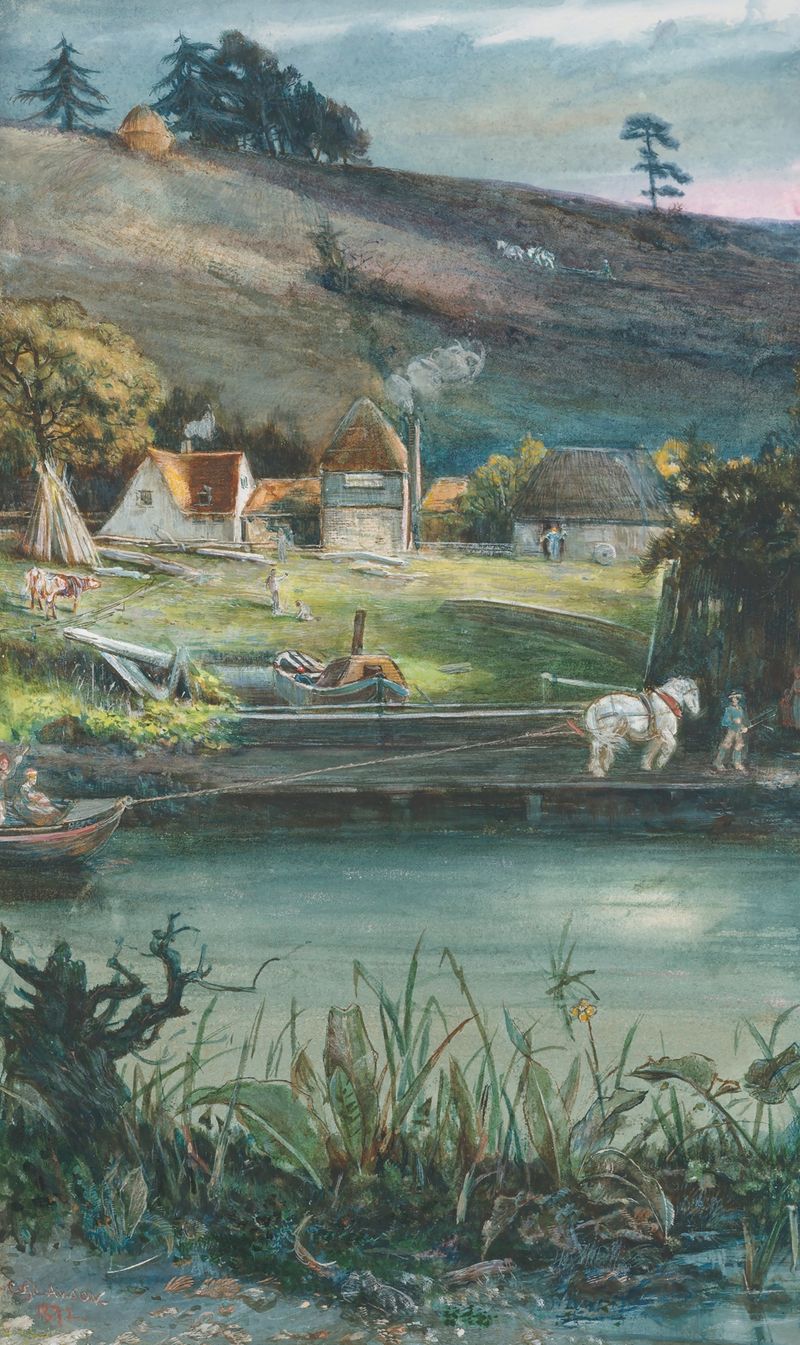
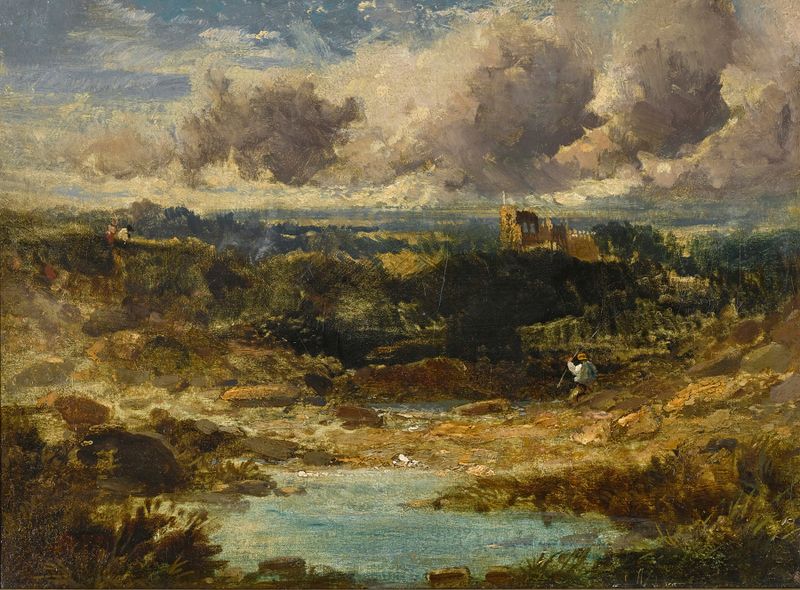
In the quiet embrace of nature, creation emerges laden with complexity, urging us to look closer, to see beyond surface allure. Focus on the gentle undulation of the river, where light dances upon the water’s surface, creating a shimmering pathway that draws the eye into the heart of the scene. To the left, vibrant green meadows cradle a shepherd and his flock, their figures rendered with delicate brushwork that captures both movement and stillness. The warm palette of earthy tones and the soft blues of the sky evoke a sense of tranquility, yet the tension lies in the shepherd’s contemplative posture, suggesting a deeper narrative beneath this pastoral beauty. The juxtaposition of the serene landscape against the shepherd’s solemn expression hints at the weight of responsibility, the care intertwined with the freedom of nature.
The flock, blissfully unaware of their guardian's burdens, symbolizes innocence and the cyclical nature of life—an intricate dance of dependence and solitude. Each blade of grass and ripple of water invites reflection on the balance of existence, revealing that beauty often lives alongside struggle. Cecil Gordon Lawson painted this work in 1868 amidst a burgeoning movement of naturalism in art. Working in England during a time of great social change, he sought to capture the essence of rural life, reflecting both the idyllic and challenging aspects of nature.
This period saw artists increasingly turning to the everyday and the emotional truths of their subjects, as they navigated the evolving landscape of modernity.