Shepherd at a Farmstead — History & Facts
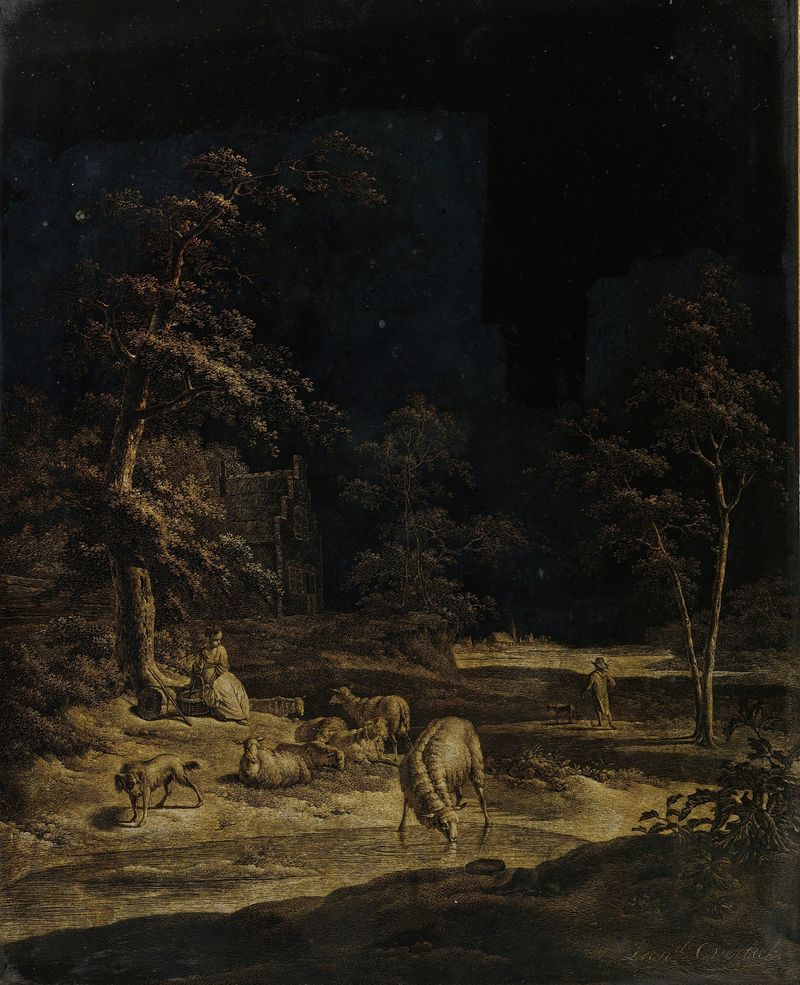
Can paint confess what words never could? In Shepherd at a Farmstead, the delicate balance between tranquility and toil unfolds before the viewer, inviting a deeper exploration of life’s rhythms. As you gaze into the piece, focus on the shepherd to the left, whose posture exudes a sense of calm authority. Notice how the light filters through the foliage, illuminating his figure while casting gentle shadows on the nearby structures. The earthy palette, with its deep greens and warm browns, grounds the scene in a natural harmony, while the soft brushwork creates a lifelike texture that draws you into this pastoral setting. Upon closer inspection, the contrasting elements of labor and serenity become evident.
The shepherd’s relaxed stance juxtaposes the surrounding signs of daily work—the plowed fields and grazing animals. This juxtaposition evokes a narrative of balance between nature and human effort, revealing an intimate dialogue between man and his environment. The subtle expressions on the animals' faces hint at a shared understanding, emphasizing the connection that binds them to the land and to one another. Leendert Overbeek painted this work between 1780 and 1815, a period marked by the Netherlands’ gradual shift towards industrialization.
Living during a time when pastoral life was increasingly romanticized, he sought to capture the essence of agrarian existence, reflecting both a personal affinity for nature and the collective longing for simpler times as societal changes loomed.