Ship in the Harbour at Odessa — History & Facts
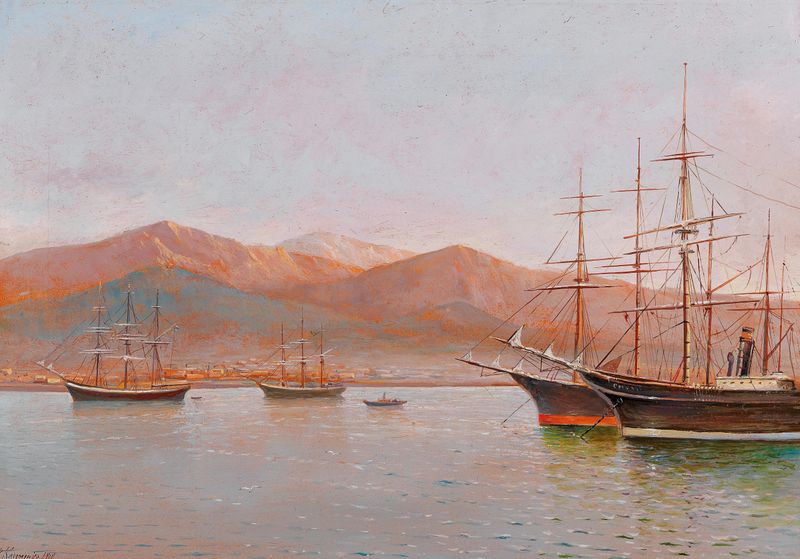
Can paint confess what words never could? In Ship in the Harbour at Odessa, the canvas breathes with a quiet sorrow that resonates deeply within the soul. Each brushstroke carries the weight of absence, evoking a profound sense of loss that lingers long after the viewer has stepped away. Focus on the gentle undulation of the water in the foreground, where soft blues and greens blend into ripples of darker hues. Notice how the light dances across the surface, illuminating ghostly reflections of the docked ship.
To the right, the silhouette of the harbor stands solid against the moody sky, its muted colors echoing the melancholy of a bygone era. This interplay between the vibrant life of the vessel and the stillness of the harbor creates a poignant contrast that speaks of longing and separation. Delve into the details: observe the weathered texture of the ship, hinting at stories untold and journeys unfinished. The way the clouds gather above, heavy yet ephemeral, suggests an impending storm—both literal and metaphorical—representing the turbulence of change.
Each element coalesces to frame the harbor as a bittersweet sanctuary, a place where dreams dock but may never set sail again. Painted in 1910, Klimenko's work emerged during a time of significant cultural and political shifts in Eastern Europe. As various movements began to redefine artistic expression, he sought to capture the essence of his homeland’s spirit amidst an era fraught with instability. This piece reflects both personal and collective sentiments of loss, standing as a testament to an artist navigating a world on the brink of transformation.