Short Hills, NJ — History & Facts
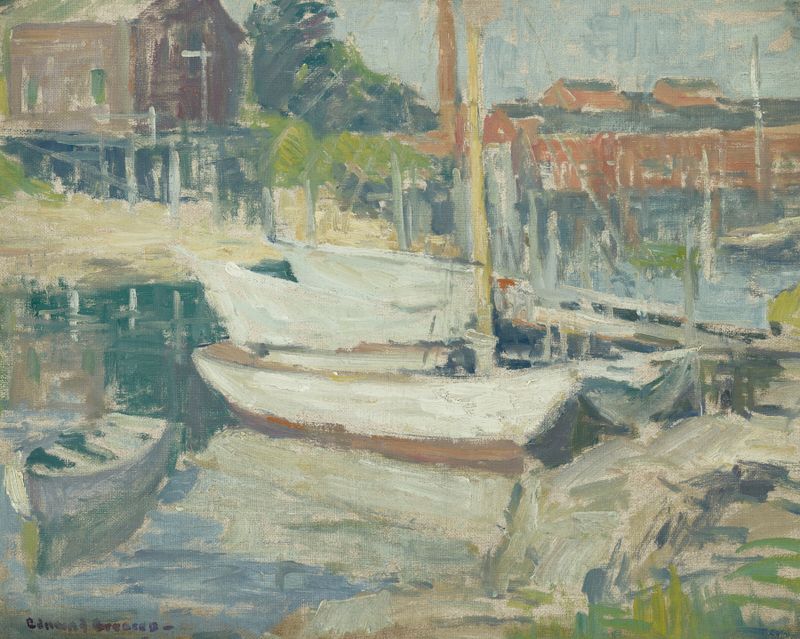
What secret hides in the quiet of the canvas? In the stillness of Short Hills, NJ, a dream punctuated by gentle strokes invites us into a world both serene and introspective. Look to the left at the soft, rolling hills, softly illuminated by the golden hues of late afternoon light. The blending of greens and blues creates a harmonious landscape, while wisps of white clouds linger like whispers in the sky. Notice how the delicate brushwork suggests movement in the trees, subtly contrasting the tranquility of the scene.
This balance of energy and calm draws the viewer deeper into the moment, crafting an atmosphere that feels both familiar and elusive. The painting captures a fleeting sense of nostalgia, embodying the longing for a simpler time. The empty path winding through the landscape speaks of journeys taken and those yet to come, inviting contemplation. The interplay of colors reflects a dreamlike quality, hinting at memories and aspirations intertwined, as if the scene exists at the threshold between reality and imagination. In 1910, Edmund William Greacen painted this work during a period when American artists were exploring Impressionism's influence, particularly in landscape rendering.
Living in New Jersey, he found inspiration in the natural beauty surrounding him. This was a time of personal growth for Greacen, as he sought to establish his voice amidst an evolving art scene that embraced both traditional and modern expressions.