
Shōrinji Temple — History & Facts
This sentiment resonates deeply within Shōrinji Temple, where tranquility dances on the edge of madness. The serene façade belies the emotional turmoil that permeates the scene, inviting viewers to question the stability of their own perceptions. Focus first on the temple's intricate architecture, which stands majestically against a soft, expansive backdrop. Notice the delicate lines that define the roof and eaves, drawing your gaze upward toward the heavens.
The subdued palette of greens and browns complements the whispering trees, while muted gold accents hint at hidden treasures of history and tradition lurking beneath the surface. The careful brushwork reveals an artist's intent to evoke both serenity and unrest, a juxtaposition that haunts the viewer. As you delve deeper, consider how the seemingly peaceful composition masks underlying tensions. The horizon, almost imperceptibly bending, suggests the instability of reality, while the contrasting colors echo both enlightenment and shadow.
The gentle curves of nature intertwine with rigid human craftsmanship, reflecting a struggle between the manicured and the wild. This delicate balance serves as a reminder that beauty often exists alongside chaos, encapsulating a world where madness whispers softly beneath a veneer of harmony. In 1817, Okada Beisanjin painted this work during a period of personal and societal change in Japan, where traditional aesthetics began to confront the burgeoning influences of modernity. The artist was deeply entrenched in the emerging Nihonga style, which sought to reintegrate classical Japanese techniques with contemporary themes.
Amidst this artistic transformation, he utilized Shōrinji Temple to evoke the dualities of beauty and madness, illuminating the complex emotional landscape of his time.
More Artworks by Okada Beisanjin
Browse all →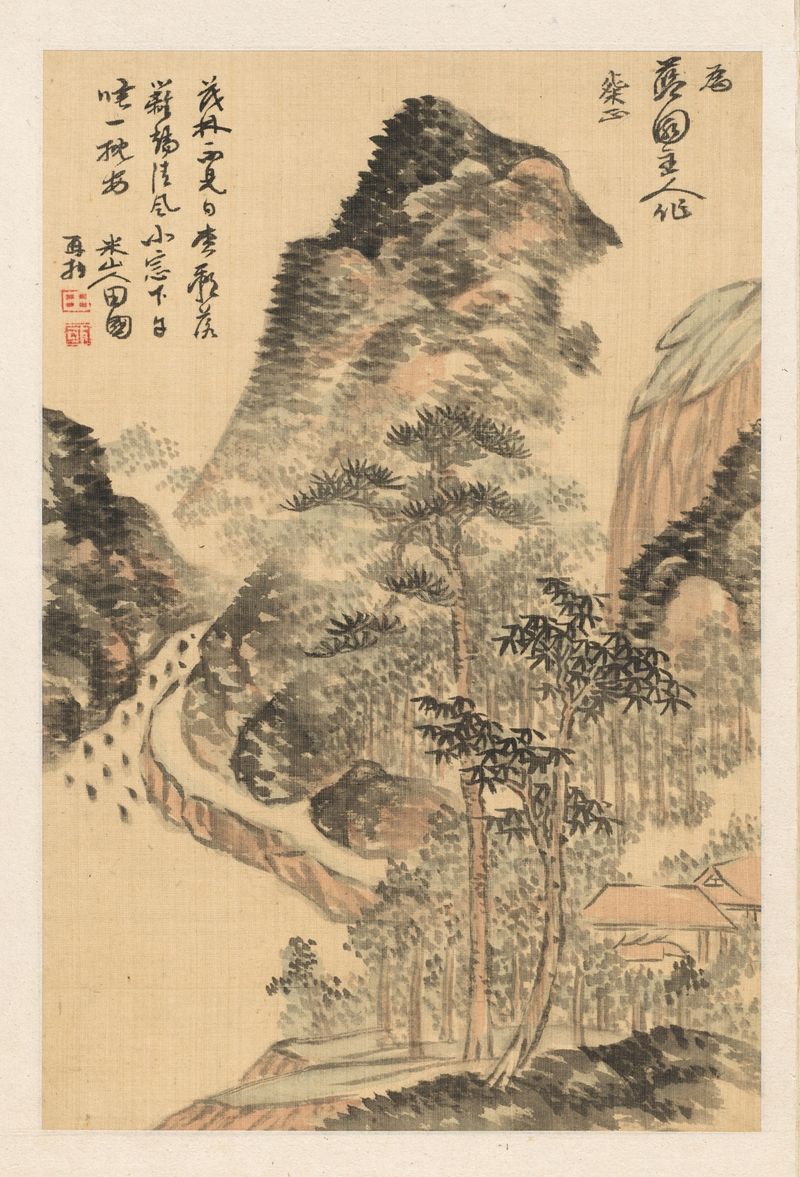
More Architecture Art
Browse all →
The statue of Liberty
Frédéric Auguste Bartholdi

View of Houses in Delft, Known as ‘The Little Street’
Johannes Vermeer

View of Houses in Delft, Known as ‘The Little Street’
Johannes Vermeer

The Cathedral in Rouen. The portal, Grey Weather
Claude Monet

The yellow house
Vincent van Gogh

The Church in Auvers-sur-Oise, View from the Chevet
Vincent van Gogh