
Singer Building at Night — History & Facts
In the glow of twilight, the remnants of a once-magnificent structure pulse with the echoes of time. This painting unfurls a narrative of both beauty and decay, a delicate reminder of what was and what remains. Look closely at the luminous layers of deep blues and stark blacks that envelop the building, guiding your gaze upward. The warm, golden lights twinkle like distant stars against the starkness of night, illuminating the once-proud facade.
Notice how the artist employs a dramatic contrast between shadow and light, evoking a sense of nostalgia and loss that invites contemplation and reverie. Amidst the fading grandeur, the crumbling edges speak volumes of a forgotten era, juxtaposing hope with inevitable decline. The artist captures a fleeting moment where time stands still; the vibrancy of the city is in a quiet transition, echoing the bittersweet nature of human progress. In this scene, one can feel the weight of history pressing down, hinting at the stories that linger in the shadows, waiting to be unearthed. This work emerged in the midst of the early 20th century, a time when Charles Vezin was deeply engaged with urban landscapes.
His experiences of witnessing the rapid industrial change around him in a bustling city played a significant role in shaping his artistic vision. As the world transformed, he sought to document the fragility of architecture and memory, capturing the fleeting moments of beauty amidst decay.
More Artworks by Charles Vezin
Browse all →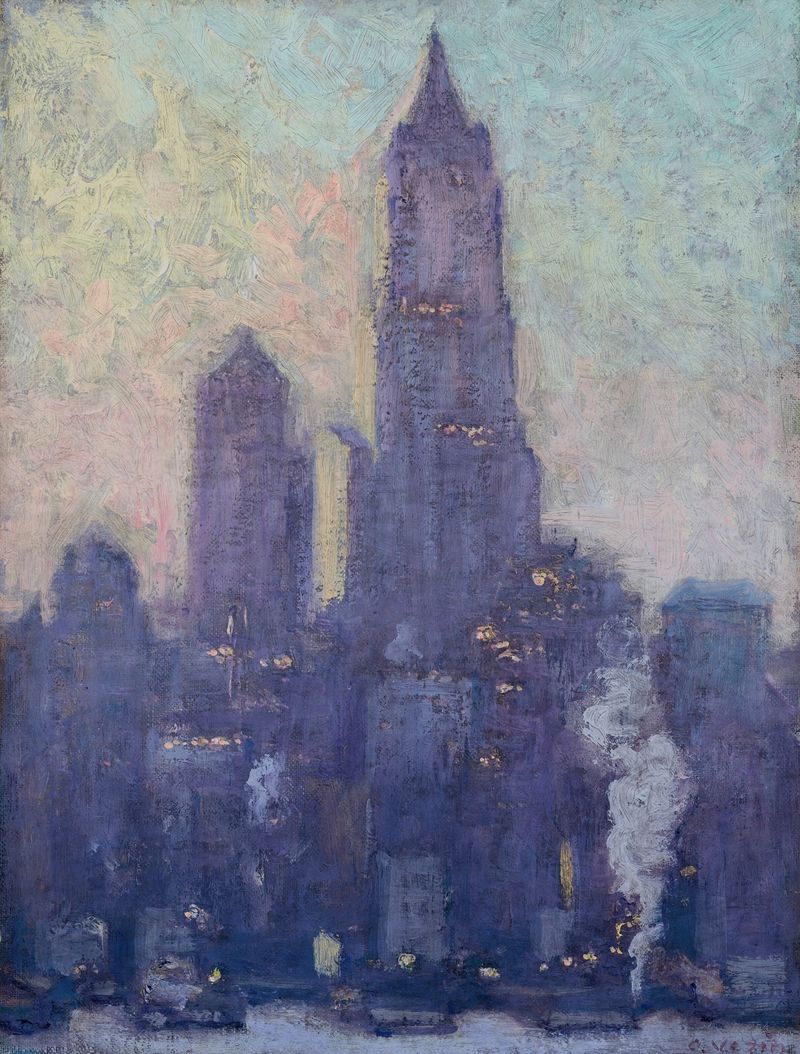
More Architecture Art
Browse all →
The statue of Liberty
Frédéric Auguste Bartholdi

View of Houses in Delft, Known as ‘The Little Street’
Johannes Vermeer

View of Houses in Delft, Known as ‘The Little Street’
Johannes Vermeer

The Cathedral in Rouen. The portal, Grey Weather
Claude Monet

The yellow house
Vincent van Gogh

The Church in Auvers-sur-Oise, View from the Chevet
Vincent van Gogh