The First Lights — History & Facts
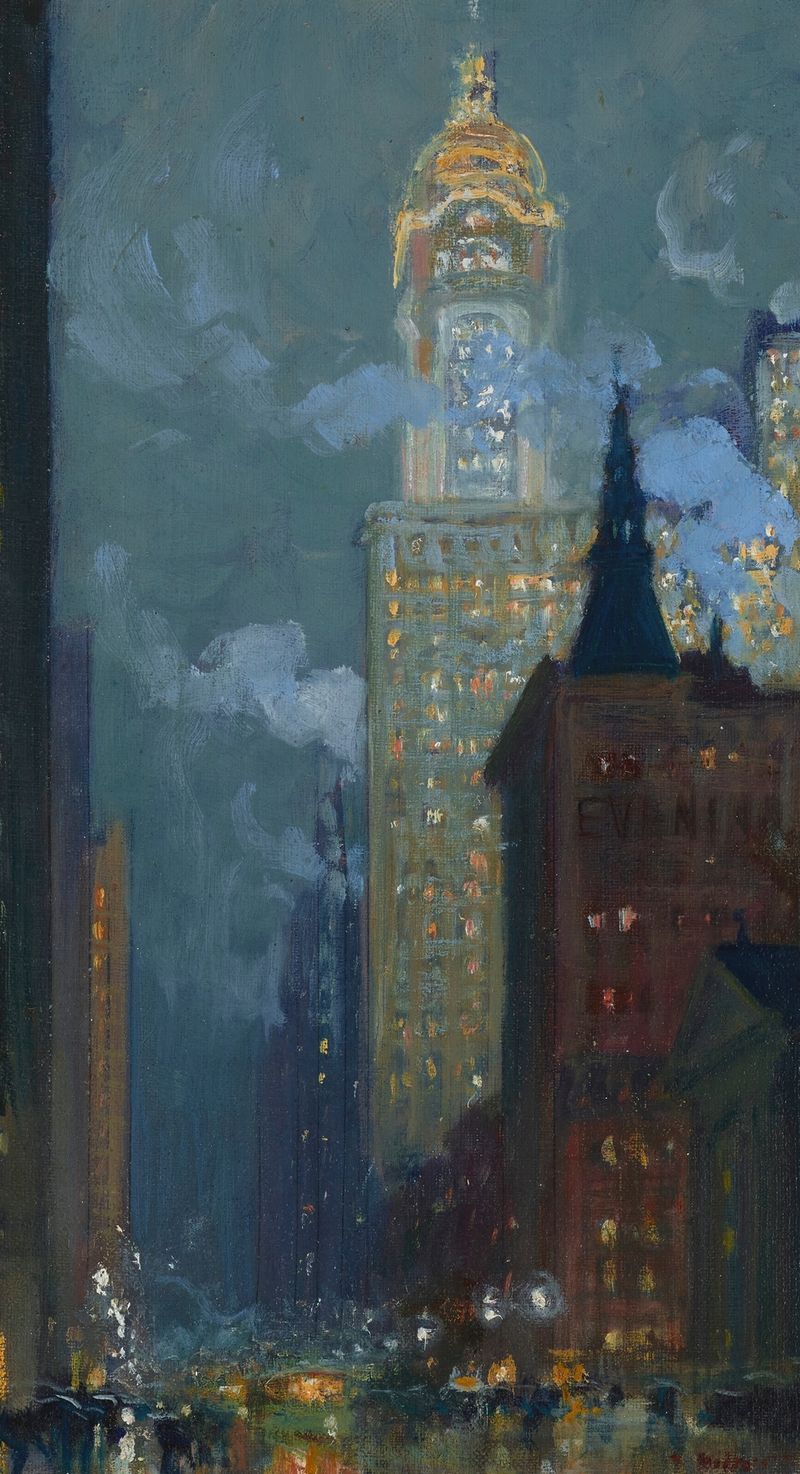
Can beauty exist without sorrow? In the enchanting chaos of modernity, the answer swirls in the interplay of light and shadow. As you engage with the artwork, your gaze is immediately drawn to the luminous interplay of colors radiating from the central figures. Focus on the vibrant strokes that capture the dawn breaking behind the iconic Woolworth Building, where hues of gold and pink bleed into the azure sky. The meticulous detailing of the architecture contrasts with the soft, fluid brushwork in the foreground, inviting you to explore the tension between the solidity of the structure and the ephemeral nature of morning light. Hidden within this scene are emotional tensions that speak to the duality of existence.
The building, a symbol of ambition and progress, stands resolute while the swirling clouds above hint at the chaos of the urban environment below. The figures, almost lost in the grandeur of the architecture, embody the struggle between individual dreams and the overwhelming aspirations that society imposes. Each stroke reveals a layer of complexity, as tranquility coexists with the underlying restlessness of city life. Created in the early 20th century, the painting reflects Charles Vezin’s deep engagement with the burgeoning urban landscape of New York City.
During this period, he was influenced by Impressionism, seeking to capture the dynamic energy that enveloped the Woolworth Building, which was completed in 1913. This work illustrates not only the architectural marvel of its time but also resonates with the artist’s own quest to depict the human experience amidst a rapidly changing world.