Sintflut (The Deluge) — History & Facts
Could a single brushstroke hold eternity? The essence of loneliness permeates the canvas, evoking a world both haunting and transient, where the weight of existence feels palpable in every hue. Look to the center, where tumultuous waves rise, a tumult of blues and grays crashing against each other. The artist employs sweeping strokes to convey movement, while the lighter shades above suggest a fleeting respite in the storm. Notice how the composition is dominated by the contrast between dark, swirling waters and the thin, hopeful slivers of light that peek through the chaos.
The jagged silhouettes of desperate figures emerge from the depths, their outstretched arms reaching for salvation, yet they remain engulfed by the deluge. In this dramatic interplay of light and shadow, the painting reveals profound emotional layers. Each figure represents not just individuals but fragments of humanity lost in despair, their isolation mirrored by the vastness of the turbulent sea. The colors bleed into one another, blurring the line between hope and hopelessness, creating a tension that speaks to the fragility of life and connectedness.
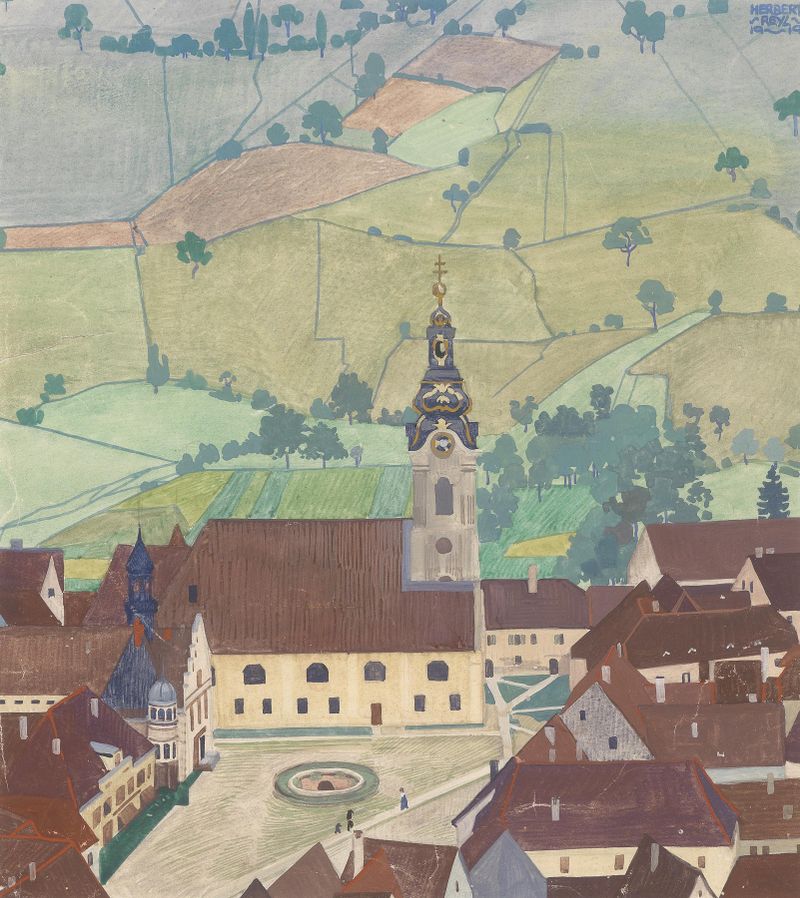
The waves, while fearsome, also offer a paradoxical beauty, suggesting that within destruction lies the possibility of rebirth. Herbert von Reyl-Hanisch created this striking piece in 1922, a time marked by the aftermath of World War I and a growing consciousness of existential struggles. Working in Europe, he grappled with the emotional scars left by the conflict, and his art reflects a deep response to the themes of loss and solitude that resonated throughout society. In Sintflut, the artist channels this collective pain, transforming it into a visual lament that lingers in the viewer’s mind.