Sitges Study — History & Facts
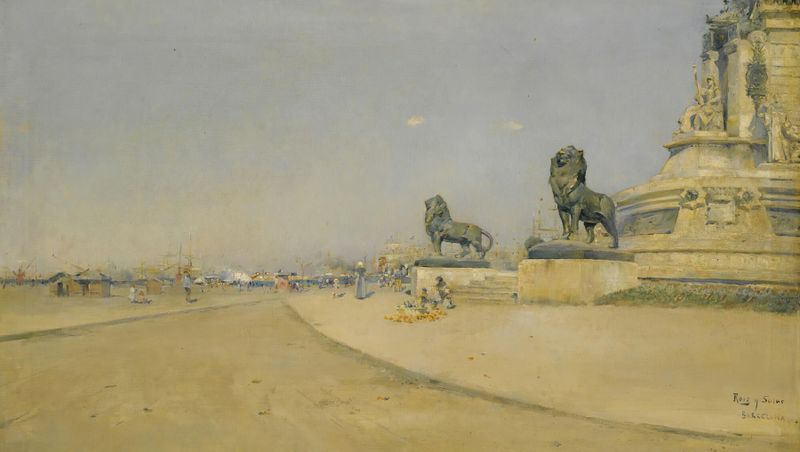
Could a single brushstroke hold eternity? In Sitges Study, the ephemeral nature of a fleeting moment is captured on canvas, inviting us to reflect on the delicate interplay between dreams and reality. Look to the left, where soft blues and greens meld into gentle strokes—Roig i Soler’s palette breathes life into the scene, evoking the serene coastline of Sitges. The creamy, sunlit highlights dance across the water, while warm golden hues of the sandy shore beckon the viewer’s gaze. The composition is expertly balanced, drawing the eye towards the horizon where sky meets sea, hinting at an endless journey ahead. Yet, within this tranquil vista lies a subtle tension.
The way the brushstrokes seem to shimmer suggests a moment caught between wakefulness and a dream—an invitation to linger just a little longer. Shadows play across the canvas, mirroring the duality of light and dark in our own experiences. This interplay nudges the viewer to consider whether this idyllic landscape is indeed a memory or an aspiration, blurring the lines of perception. In 1896, Roig i Soler painted this work while immersed in the vibrant artistic community of Catalonia, a time when Impressionism was flourishing across Europe.
His focus on light and its transient effects reflected both a personal desire to capture the ephemeral and a broader movement that sought to embrace the beauty of the ordinary. The seaside charm of Sitges, a favorite retreat for artists, added to the experience, allowing him to channel the essence of place and moment into his work.