Sitges — History & Facts
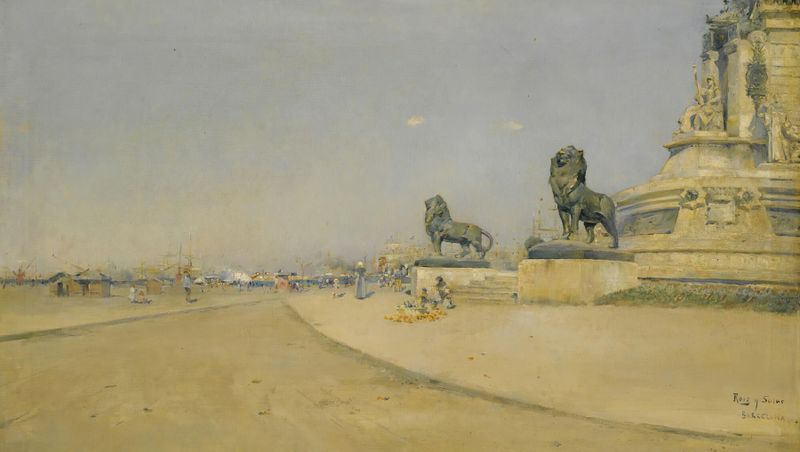
Is this a mirror — or a memory? The question lingers like the soft hues of dawn that envelop the coastal town, evoking nostalgia for moments that dance between reality and imagination. Focus on the gentle waves that lap at the shore, their rhythmic movement inviting you to explore the composition. Look to the left where the sun spills golden light across the buildings, illuminating the warm terracotta facades. The brushwork is deft yet tender, capturing the essence of a sun-drenched day.
Notice how the cool blue sky contrasts with the warmth of the land, creating an atmosphere that is both inviting and serene. Hidden within this tranquil scene is a celebration of life’s fleeting nature. Each wave that crashes against the rocks whispers of change and resilience, while the shadows hint at the passage of time. The delicate interplay between light and dark alludes to the duality of joy and melancholy, urging the viewer to reflect on their own memories tied to the sea and sun.
This harmony of color and emotion reveals a deeper connection to the essence of creation itself. Joan Roig i Soler painted Sitges in the 19th century, encapsulating a moment in a vibrant artistic climate. During this time, Spain was experiencing a shift towards modernity, with burgeoning movements embracing Impressionism. Roig, influenced by the picturesque landscapes of his homeland, sought to immortalize the beauty of everyday life, channeling the spirit of creativity into his work.