Smugglers in the Tatra Mountains — History & Facts
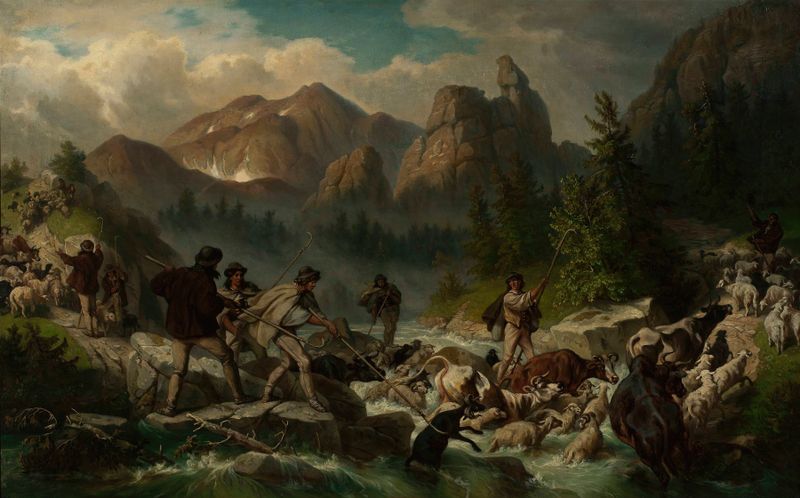
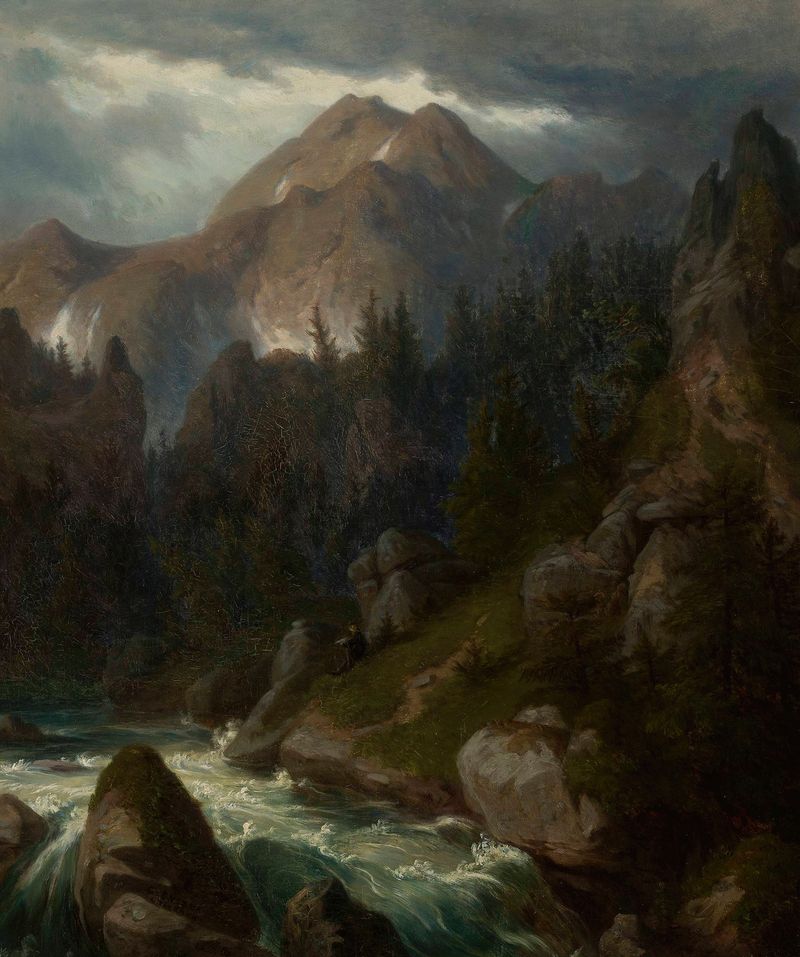
In the haunting expanse of the Tatra Mountains, shadows stretch long over craggy paths, hinting at the secrets that linger in the air. This world, where the earth meets the sky in a sublime embrace, whispers of decay and hidden stories. To truly appreciate Smugglers in the Tatra Mountains, look to the left at the rugged peaks, their jagged edges softened by a haze that blurs the line between reality and imagination. Focus on the figures cloaked in shadow, their postures tense yet purposeful as they navigate the treacherous terrain.
The interplay of light and dark, masterfully rendered, evokes a sense of urgency, while the muted colors reflect the somber mood of the scene. Within this work lies a tension between nature and humanity. The crumbling rocks symbolize the relentless passage of time, while the smuggler figures embody resilience against a backdrop of decay. Each brushstroke captures a moment suspended in time, suggesting not only the physical struggle but also an emotional burden carried by those who tread these mountains.
The scene evokes a sense of nostalgia for lost innocence, where survival intertwines with moral ambiguity. In 1870, Schouppé was immersed in the Romantic movement, which sought to capture the sublime in nature. Painting this piece during a time of social upheaval in Europe, he reflected a growing fascination with the rugged landscapes of his homeland, blending realism with the emotional depth characteristic of his contemporaries. This artwork not only illustrates the landscape but also serves as a commentary on the human condition, steeped in the complexities of desire and survival.