Mount Pyszna in the Tatra Mountains — History & Facts
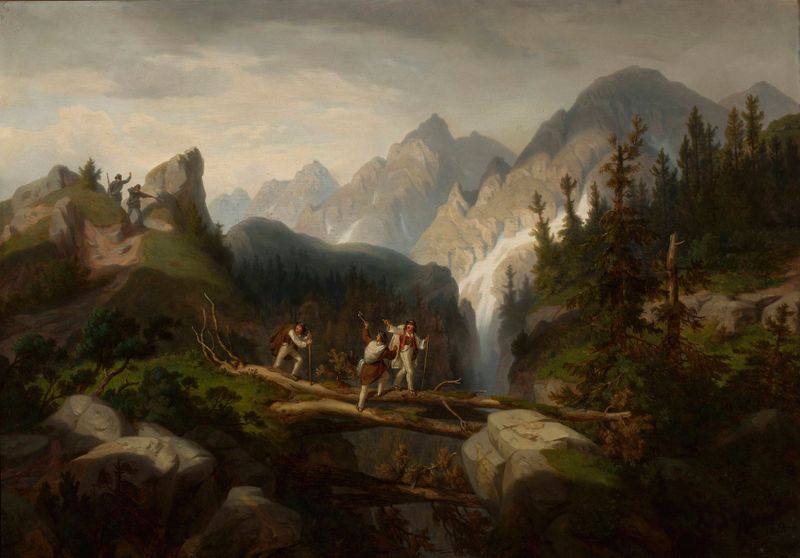
In a world filled with turmoil, landscapes often become silent witnesses to the revolution within our souls. They stand, unyielding, as we grapple with our inner conflicts. Focus on the majestic peaks that dominate the upper portion of the canvas, their sharp, rugged outlines standing in stark contrast to the soft, rolling valleys below. Notice how the cool hues of blue and gray in the mountains evoke a sense of grandeur, while patches of vibrant green and yellow suggest life and renewal at the base.
The dynamic interplay of light and shadow draws your eye across the landscape, inviting you to explore the depth of the scene as if it were a whispered promise of untamed beauty. Hidden within this serene portrayal are threads of emotional tension and transformation. The towering mountains symbolize strength and resilience, standing firm against the fleeting elements of nature, while the lush valleys hint at the fertile ground for new ideas and growth. The contrasting sharpness of the peaks and the gentle curves of the foreground suggest a dialogue between stability and change, echoing the revolutionary spirit of the era. In 1885, Schouppé painted this work during a period of profound transformation in Europe.
As the art world was shifting with the rise of Impressionism, he found himself navigating between the established traditions of the past and the burgeoning movements that sought to redefine artistic expression. This painting reflects that tension, representing not only the beauty of the Tatra Mountains but also the undercurrents of evolution in society and art.