Sneeuwlandschap met sloot — History & Facts
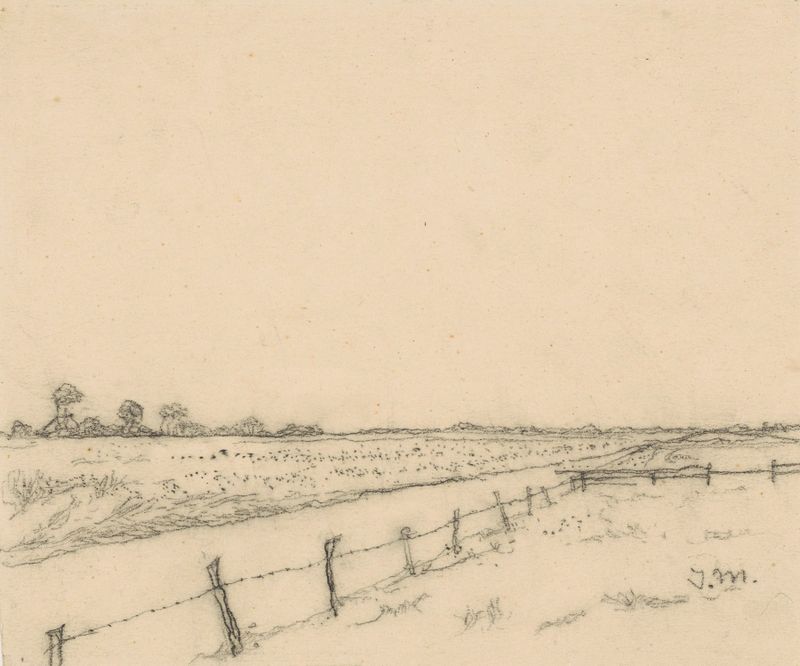
In the delicate embrace of winter, memories glisten like freshly fallen snow, inviting us to reflect on the ephemeral nature of existence. Look to the center of the canvas, where a serene landscape unfolds, a quiet expanse of white interrupted only by the subtle curves of a meandering ditch. The soft hues of blue and gray infuse the scene with tranquility, while gentle brushstrokes create a textured surface that evokes the crispness of the cold air. Notice how the muted tones harmonize, capturing the silvery light that breaks through the clouds, illuminating both the snow and the stillness that envelops it. As you absorb this frosty vista, consider the contrasts at play—the stillness of the land against the fleeting essence of time, the purity of the snow juxtaposed with the darkness of the ditch.
Each element speaks to the cyclical nature of life, inviting contemplation on the passage of time and the beauty that exists in quiet moments. Every shadow and highlight reflects a world suspended in time, where nature's tranquility offers solace and introspection. In 1913, Jan Mankes painted this work during a period of personal solitude in the Netherlands, seeking solace in the landscape around him. The early 20th century was marked by a burgeoning modern art movement, yet Mankes remained grounded in the traditional, focusing on intimate landscapes that reflected deeper emotional truths.
His commitment to capturing nature's essence reveals a profound connection to the world and his place within it.