Solskinsformiddag i Civita d’Antino — History & Facts
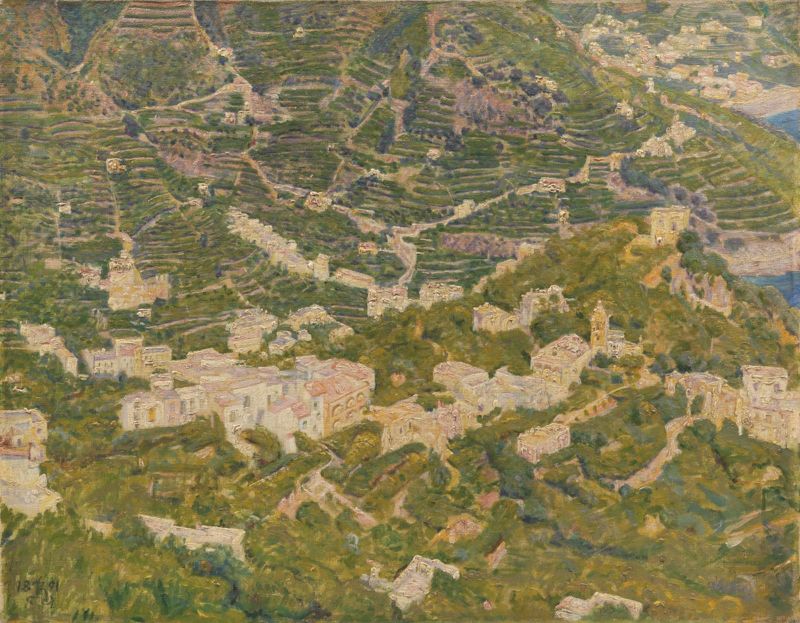
This profound reflection captures the essence of creation, where artistry becomes a sanctuary for the spirit. In the delicate dance between light and shadow, Zahrtmann invites us into a world where every brushstroke breathes life into stillness. Focus on the vibrant blue sky filling the upper canvas, a breathtaking backdrop that draws the viewer's gaze. Notice how the sunlight cascades over the modest village of Civita d’Antino, illuminating the terracotta rooftops and earthy colors of the architecture.
The composition balances natural elements with human presence, leading us to the figures nestled below, their activities tethered to the rhythm of the landscape. The use of soft, warm hues contrasts beautifully with the cooler tones of the sky, creating a harmonious atmosphere that envelops the viewer. Delve into the emotional resonance of the scene—there lies a profound sense of tranquility amid the villagers’ quiet lives. The gentle play of light evokes a moment frozen in time, where the simplicity of daily routines becomes a canvas for introspection.
Each figure, engaged in their own task, reflects the universal theme of connection to place and community, inviting contemplation on the delicate interplay between human existence and nature's grandeur. Kristian Zahrtmann painted Solskinsformiddag i Civita d’Antino between 1904 and 1905 during his stay in Italy, a period marked by his growing interest in integrating local scenes with his distinct artistic style. Influenced by the vibrant colors and light of the Italian landscape, he sought to capture the essence of life in a way that spoke to his emotional landscape. This work reflects not only his personal journey but also the broader movements in art at that time, embracing a modern approach that celebrated the beauty of everyday moments.