Grandmother’s Garden — History & Facts
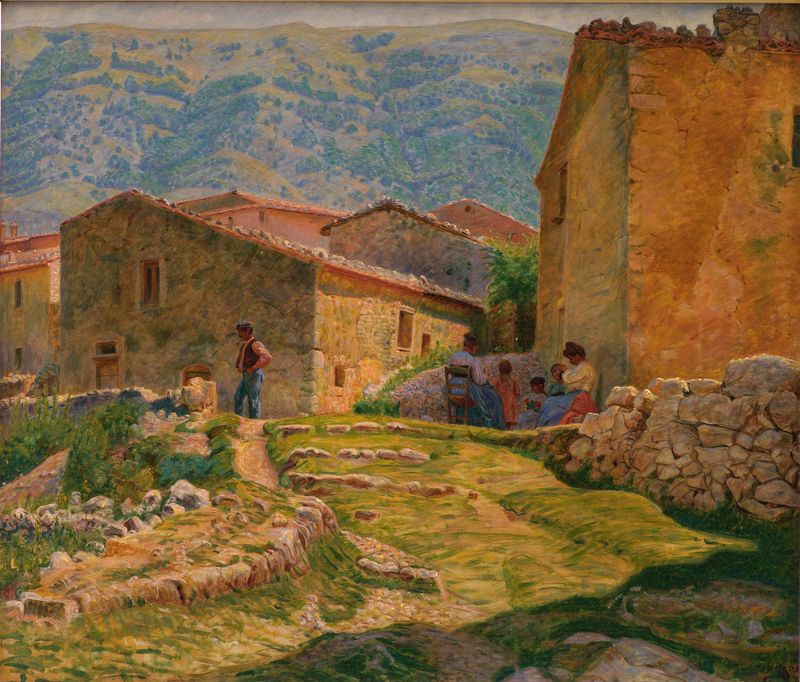
The sun spills golden light across a riotous tapestry of blooms, illuminating vibrant petals and verdant leaves in a grandmother's cherished sanctuary. Laughter dances on the air as a child, curious and wide-eyed, explores the riotous colors, while an elderly woman kneels nearby, gently tending to her beloved plants. The scene is alive with warmth, the soft breeze carrying a whisper of nostalgia, as if time has slowed just enough for this moment of connection to breathe. Look to the left and behold the tapestry of flowers, a breathtaking mix of reds, yellows, and purples that draw you in with their rich hues.
The careful composition leads your gaze from the child’s playful movements to the grandmother's wise, nurturing presence, expertly captured through gentle brushstrokes. Notice how the warm sunlight bathes the figures, casting soft shadows upon the ground, creating an intimate harmony between their actions and the life surrounding them. Within this enchanting garden lies a profound exploration of creation and legacy. The intermingling of generations reveals an emotional tapestry of growth, where the child represents the future and the grandmother embodies the past, each directly linked through the art of nurturing.
The garden itself serves as a metaphor for life’s cycle, where beauty flourishes through care, while shadows remind us of the fleeting nature of existence, encouraging reflection on what is left behind. In 1869, Kristian Zahrtmann was deeply engaged in the vibrant artistic movements of Denmark, drawing inspiration from nature and the domestic sphere. Living in a time of artistic exploration, he sought to capture intimate moments that resonated with universal themes. During this period, he created Grandmother’s Garden, reflecting not only his personal experiences but also the broader societal appreciation for the simple beauty found in everyday life.