
Sommertag am See — History & Facts
In the gentle stillness of a summer's day, the air is thick with an unspoken longing, as if time is suspended over the lake’s surface. Look to the left at the serene waters, where soft hues of blue and green blend seamlessly under a golden sun, inviting reflection. Notice the delicate brush strokes that capture the rippling light, each stroke breathing life into the tranquil scene. The composition draws the eye toward the distant horizon, where the gentle silhouettes of trees stand like silent sentinels, framing a world that feels both familiar and distant. Yet, amid this idyllic setting, there is an undercurrent of melancholy that lingers in the air.
The solitary figure, rendered with tender grace, gazes out over the water, embodying a sense of introspection and longing. The contrast between the vibrant surroundings and the figure's quiet demeanor evokes a profound sense of solitude, suggesting that even in moments of beauty, one can feel an absence that weighs heavily on the heart. In 1905, Johann Jungblut was nestled in the rich artistic environment of early 20th-century Germany, where the transition from Romanticism to modernism was palpable. He painted Sommertag am See during a time of personal introspection, influenced by the shifting tides of societal changes and an increasing fixation on representing emotional depth within nature.
This work encapsulates both the external beauty of the landscape and the internal complexities of human emotion, marking a pivotal moment in his artistic journey.
More Artworks by Johann Jungblut
Browse all →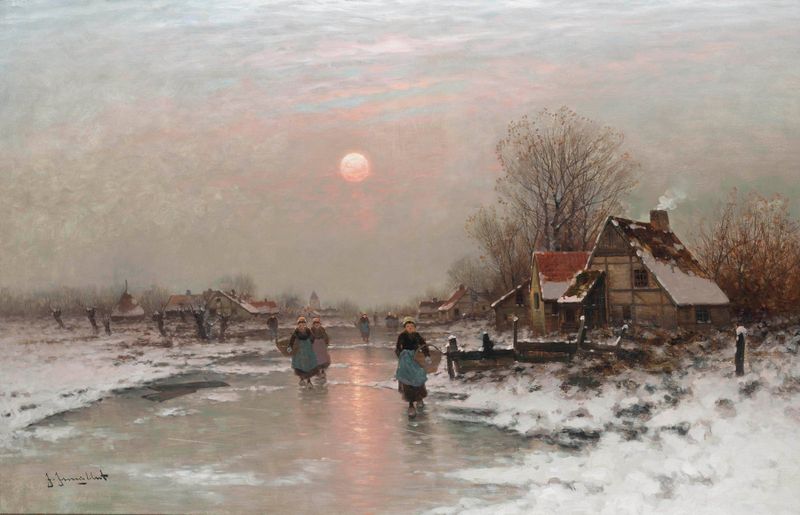
Dutch peasants on a frozen waterway at sundown
Johann Jungblut
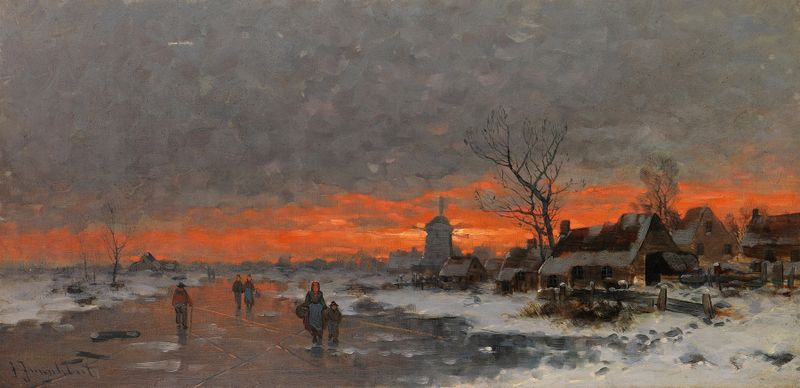
Winterlandschaft mit Dorfsilhouette im Abendrot
Johann Jungblut

Fun on the Ice
Johann Jungblut
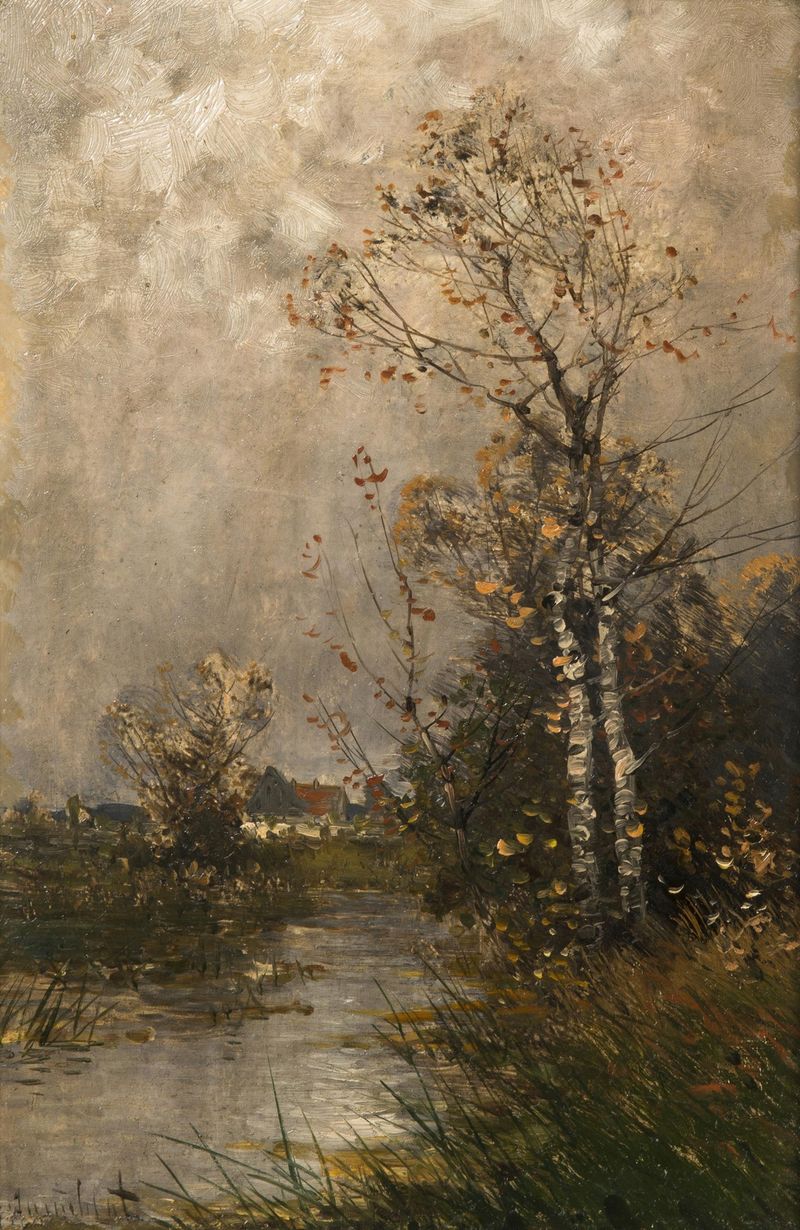
Autumn
Johann Jungblut
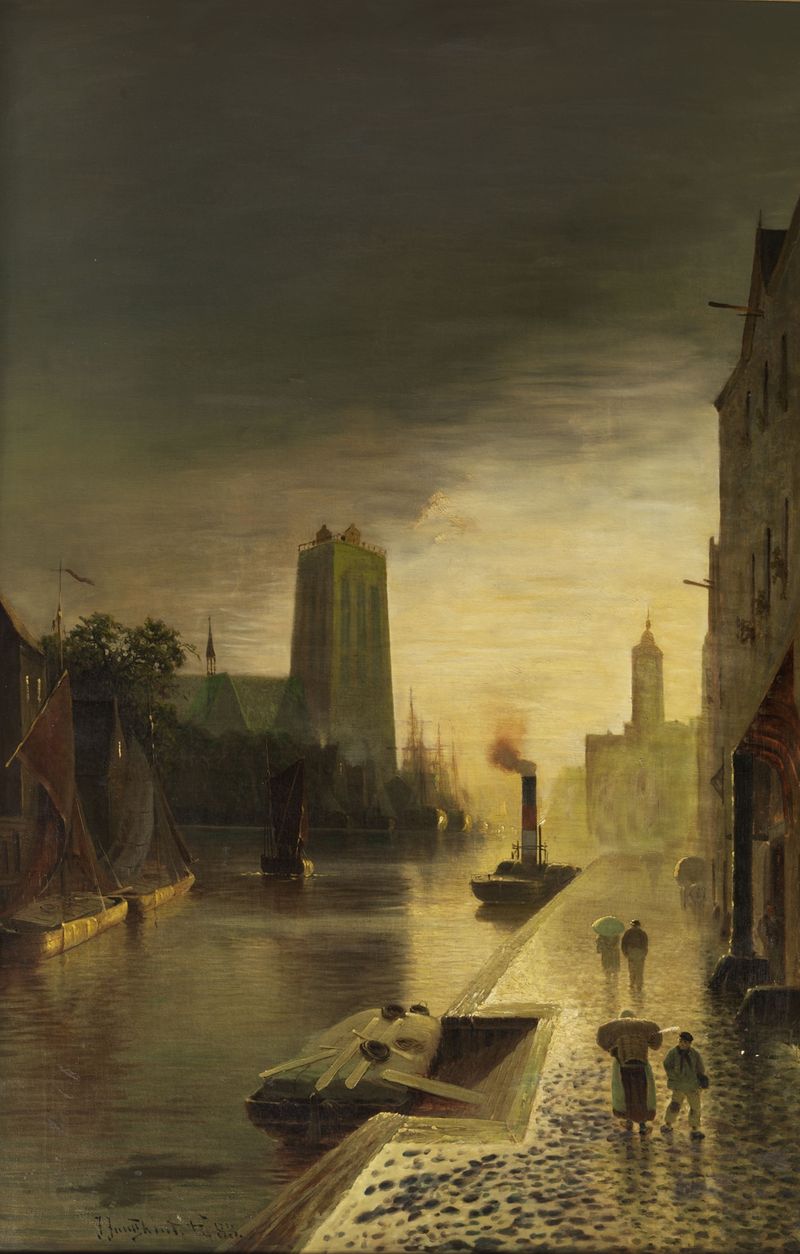
Ansicht von Gent
Johann Jungblut

Winter sun over iced lake
Johann Jungblut

Winter
Johann Jungblut
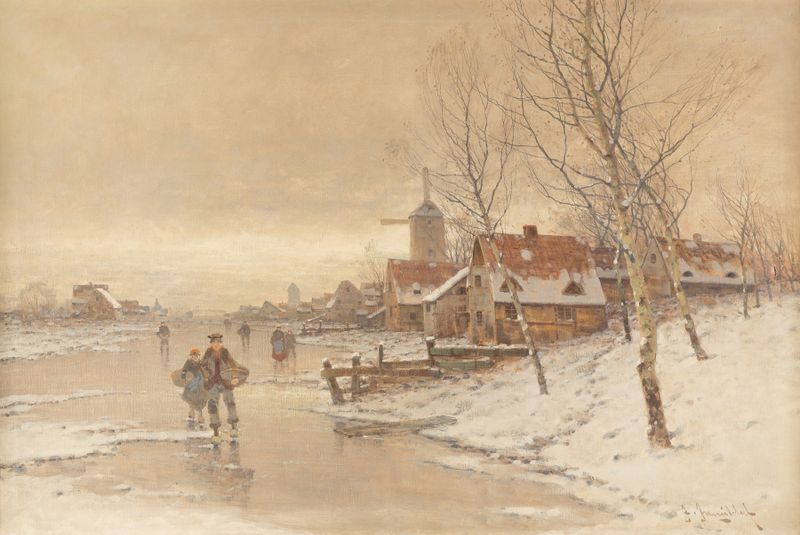
Winter landscape
Johann Jungblut
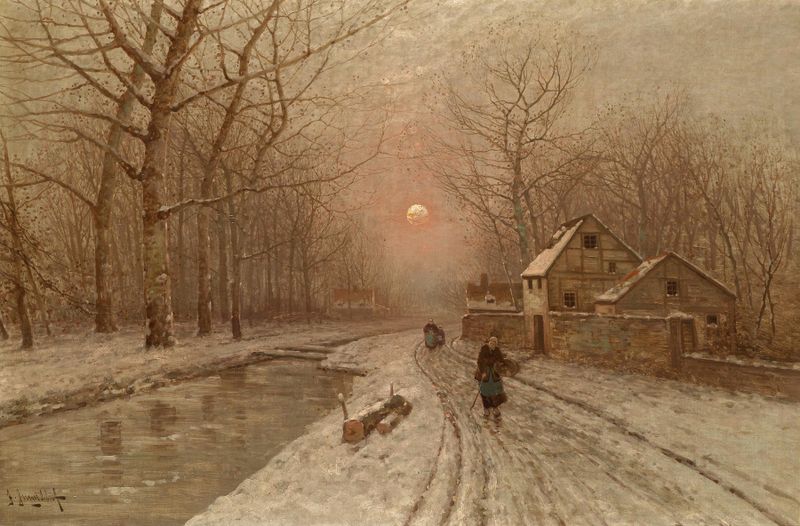
Abendstimmung über einer Dorfstraße
Johann Jungblut





