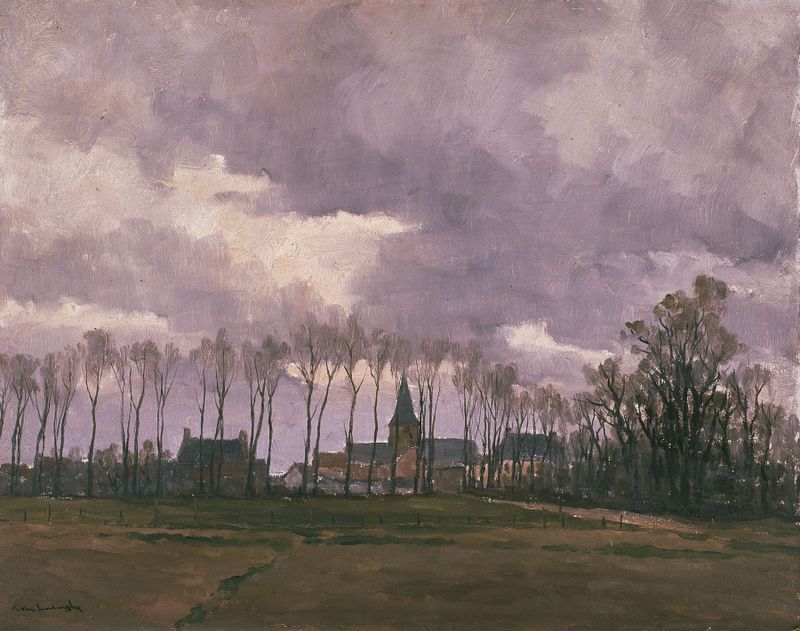
Southern Landscape with Olive Trees — History & Facts
In the quiet embrace of nature, the beauty of existence is juxtaposed with the inevitability of decay, urging us to reflect on our own transience. Look to the left at the vibrant olive trees, their gnarled branches stretching towards an indigo sky. The painter employs soft, earthy tones that embody the warmth of the southern sun, contrasting subtle shadows that hint at the passage of time. Notice the undulating landscape, rendered in fluid strokes, guiding your gaze through a serene yet melancholic vista, where life and stillness coexist in harmony. Dig deeper into the composition, and you’ll find a tender juxtaposition of vitality and decay.
The olive trees, symbols of endurance, stand sentinel over a landscape that hints at a once-vibrant past. There’s a palpable tension within the serene beauty; the colors, while vibrant, carry undertones that suggest the fragility of life. Each leaf, each ripple of the earth seems to whisper stories of seasons gone by, a poignant reminder that even nature bears the weight of mortality. In the early 20th century, Karel Van Lerberghe painted this piece during a time of introspection in his life, as Europe was grappling with the aftershocks of the First World War.
It was a period of reflection and rebirth in the art world, where natural themes began to resonate profoundly with the human experience. This artwork encapsulates that essence, weaving together personal and collective memory through the lens of the natural world.